

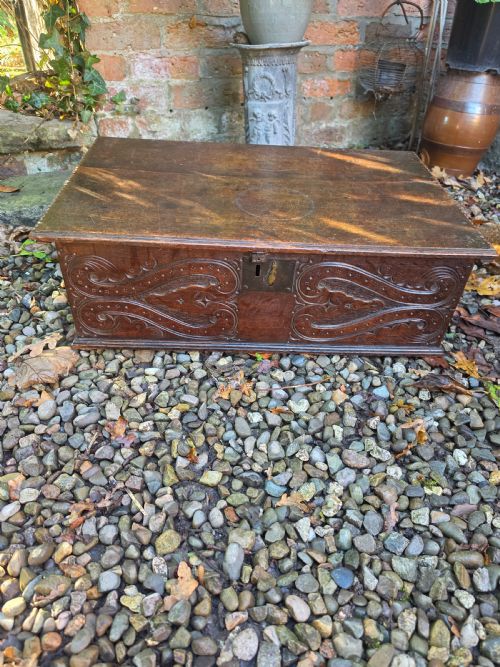
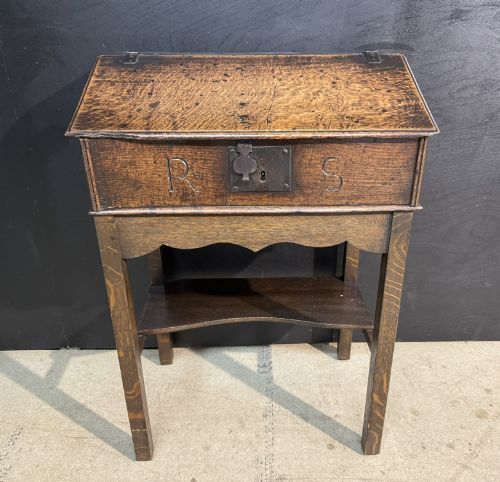
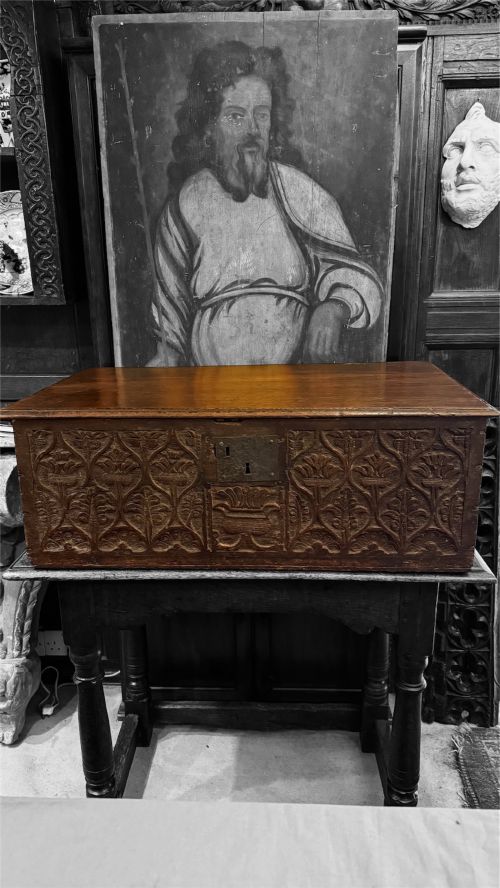
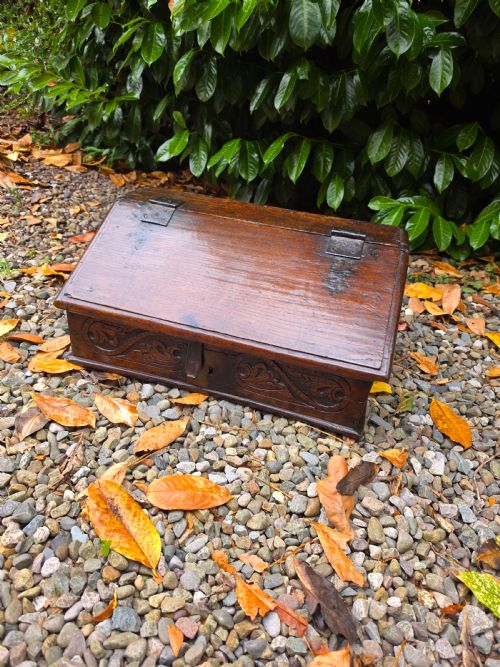


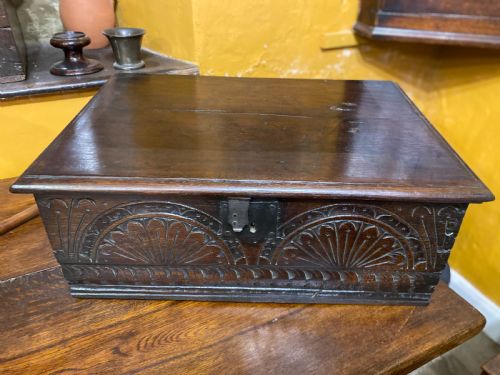


Jacobean Document Box
A jacobean document box is a sturdy timber receptacle designed to protect legal papers and scriptures, offering genuine seventeenth-century utility for modern interiors.
Jacobean Document Box
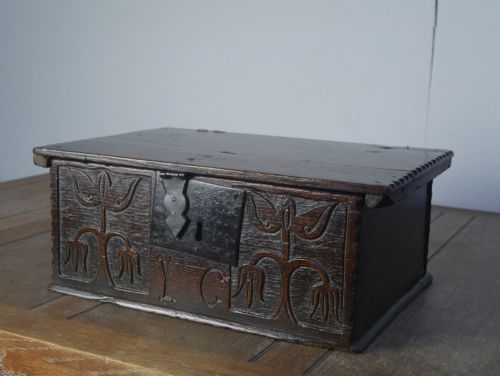
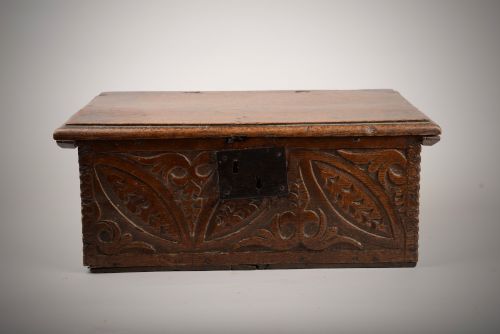
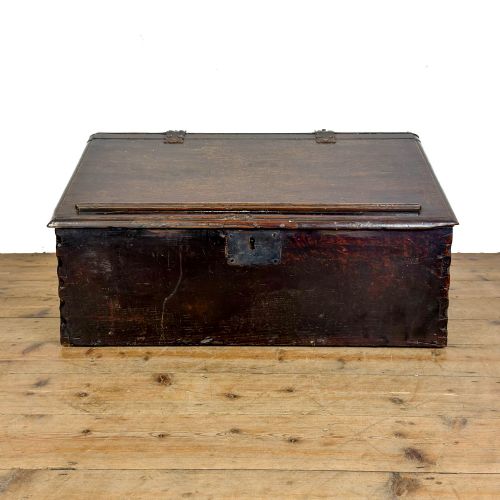
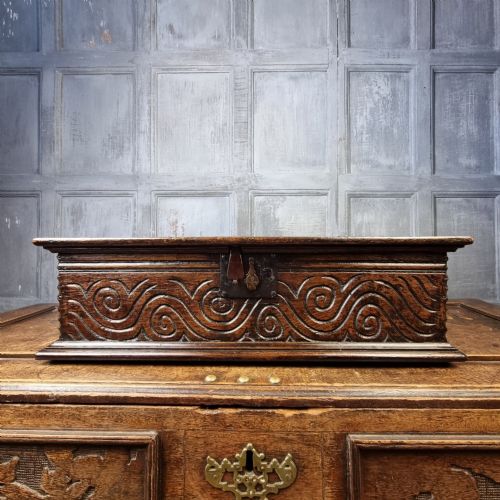
A jacobean document box appears primarily as a Bible box, desk box, or table box originating from the seventeenth century and later periods. These forms share a compact rectangular carcass built to sit upon a table or stand, frequently featuring a sloping or hinged lid designed for writing or reading.
The pieces on this page span the seventeenth century through to later centuries, encompassing English country oak and regional variations such as Welsh oak. Buyers encounter simple planes alongside carved decoration, chip carving, and specialised forms containing internal drawers or a demi-lune front panel.
Originating in ecclesiastical or domestic settings, these receptacles served as portable repositories for important deeds and sacred texts. The examples found here range from plain utilitarian boxes to carved ecclesiastical pieces with notable historical provenance.
What varies in quality
The depth and crispness of the hand carving separate simpler panels from richly embellished examples like those bearing Charles II or William III styles. Finer boxes retain their original wrought iron or brass hardware and internal fittings, such as small drawers.
Surface patination and timber selection dictate the visual presence of a box, with straight-grained or well-figured oak commanding attention. Structural integrity also varies according to how well joints and timber have survived centuries of domestic use.
Jacobean Document Box Retail Price Guide 2026
Typical asking prices for jacobean document box among the pieces listed under this phrase on Sellingantiques today, from the lower quarter to the upper quarter. They describe what is for sale here now, not the wider market.
Listings feature oak boxes spanning the seventeenth century through to the nineteenth century, utilising brass and wrought iron hardware.
The Jacobean Document Box Glossary
- Bible Box
- A small wooden chest originally built to hold a family Bible, often featuring a sloping lid that doubled as a reading desk. These pieces represent one of the primary forms of early tabletop storage.
- Oak
- A durable hardwood native to Britain, used extensively for seventeenth-century furniture framing and panel construction. Its prominent medullary rays create a characteristic grain pattern when quartersawn.
- Chip Carving
- A decorative technique where small chips are removed from the surface of the timber to create geometric patterns. This method appears frequently on early boxes of English and Welsh origin.
- Wrought Iron
- Iron heated and hammered into shape by a blacksmith to create durable hinges, lock plates, and straps. This material provides the robust functional hardware found on early document containers.
- Slant Front
- An angled top panel designed to facilitate writing or the display of open volumes. This feature marks the transition from simple storage chests to functional slant-front desks.
Jacobean Document Box: Frequently Asked Questions
What is a jacobean document box?
A jacobean document box is a small, heavy timber chest designed to safeguard important papers, legal documents, or scriptures. They were built to sit securely on tables, chests, or dedicated stands within homes and churches.
Most examples date from the seventeenth century and are constructed from solid oak with iron or brass hardware. Their hinged lids often double as writing surfaces, reflecting their dual role in domestic administration.
How were these boxes used?
These boxes served as secure storage for valuable documents, title deeds, and religious texts at a time when paper was precious and domestic furniture was sparse. The portable nature of the boxes allowed households to move important papers quickly if necessary.
When fitted with a sloping lid, the top doubled as a portable desk for reading and writing correspondence. Clergy and laypeople alike utilised them to keep parish records or family Bibles safe from damp and damage.
How do I live with a jacobean document box?
Living with an early oak box involves placing it where it can be appreciated as both sculpture and storage. They sit comfortably on sideboards, low tables, or specialised stands, housing modern stationery or keepsakes.
Keep these timber pieces away from direct heat sources and strong sunlight to prevent the oak from drying out or splitting. An occasional application of traditional wax helps maintain the rich patination developed over centuries.
How do I tell periods apart?
Distinguishing periods relies on observing shifts in construction techniques, hardware styles, and decorative motifs. Seventeenth-century pieces typically display straightforward joinery, hand-carved panels, and heavy wrought iron hinges.
Later adaptations or pieces from the eighteenth and nineteenth centuries often show subtle changes in nail construction, timber preparation, and decorative vocabulary. Comparing the wear patterns around keyholes and hinges also offers clues to the age of the piece.