



Jacobean Dining Sideboard
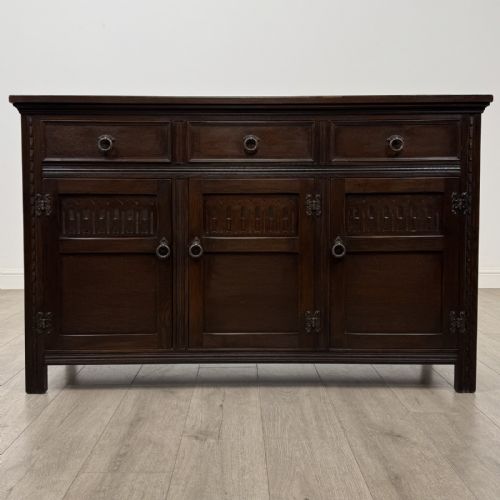
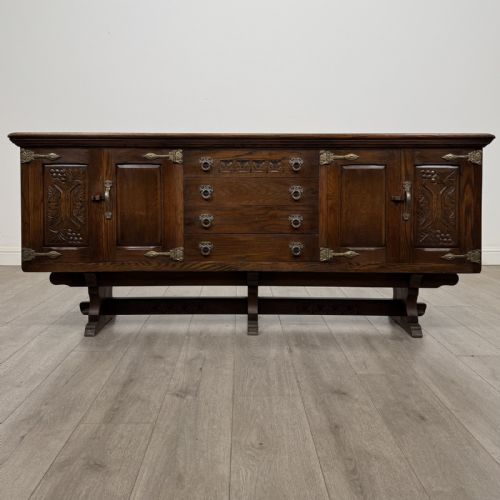
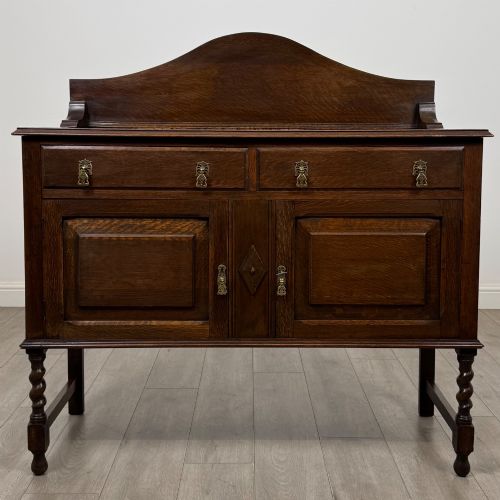
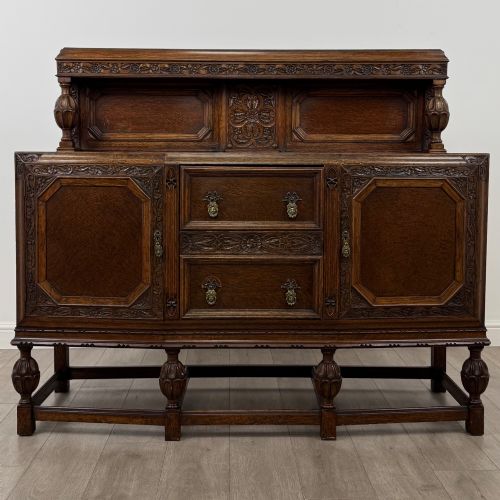
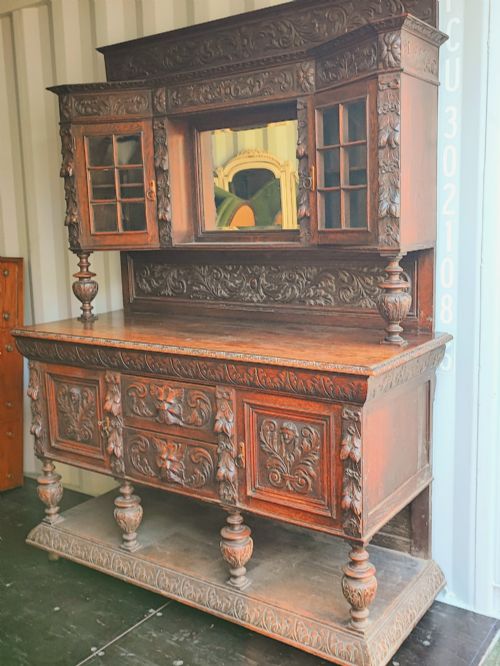
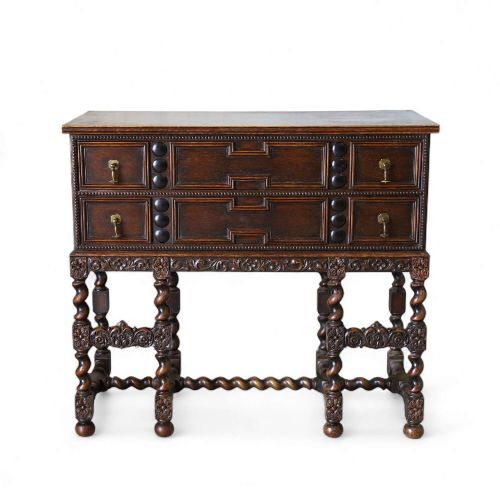
These jacobean dining sideboard examples bring substantial oak presence to a room, offering deep carving and sturdy storage built for heavy daily use.
Jacobean Dining Sideboard
A jacobean dining sideboard provides generous storage for dining rooms through heavy wooden construction, often taking the form of large sideboards, buffets, court cupboards, and dresser bases. These pieces emerge predominantly in revival styles and specific historical periods, including the Victorian era, Edwardian years, and the 1920s and 1930s.
The version most commonly met on this page is the carved oak sideboard featuring panelled doors and drawers, sometimes elevated on stretcher bases or barley-twist legs. Pieces frequently incorporate mirrorbacks or geometric panels, drawing on Jacobean Revival, Carolean Revival, and Gothic Revival aesthetics to create a commanding architectural focal point.
How they were made
The primary material across these pieces is solid oak, selected for its strength and heavily worked by carpenters using deep relief carving techniques. Joinery relies on traditional methods to support heavy frameworks, drawers, and sturdy structural supports.
Metal hardware plays a functional and decorative role, featuring brass face handles alongside iron fittings and glass elements such as mirrorback panels. Leather also appears in specific contexts within dining suites, complementing the dark, waxed surfaces of the timber.
Jacobean Dining Sideboard Retail Price Guide 2026
Typical asking prices for jacobean dining sideboard among the pieces listed under this phrase on Sellingantiques today, from the lower quarter to the upper quarter. They describe what is for sale here now, not the wider market.
Listings feature oak construction almost exclusively, paired with brass, iron, and mirror glass across Edwardian, Victorian, and 1920s periods.
What varies in quality
The depth and crispness of the hand carving separate simpler production models from more ambitious workshop pieces, where surface ornamentation covers panels and structural supports with three-dimensional detail. Finer examples display meticulous symmetry in geometric panelling and well-executed joinery that maintains structural integrity across large cabinet fronts.
The quality of secondary materials, such as heavy brass hardware, bevelled mirror glass, and substantial timber thickness for stretcher bases, distinguishes standard utilitarian storage from substantial dining furniture designed to anchor a room.
Maple and Co
The Jacobean Dining Sideboard Glossary
- Jacobean Revival
- A nineteenth and twentieth century design movement that reinterprets the heavy, straight-lined furniture styles of the early seventeenth century. It relies heavily on dark oak, geometric mouldings, and deep panel carving.
- Stretcher base
- A lower framework of horizontal wooden bars connecting the legs of a table or sideboard for added stability. This feature is common on heavier oak furniture from the seventeenth century onwards.
- Barley-twist
- A rounded furniture leg or support turned on a lathe to resemble a spiralling stalk of barley. It became particularly popular during revival periods in the Victorian and Edwardian eras.
- Court cupboard
- A traditional enclosed wooden storage piece with an upper section set back from a larger base cabinet. These items often feature carved panels and heavy support posts.
- Dresser base
- A low wooden sideboard fitted with drawers and cupboards beneath a flat top surface, originating before the addition of elevated shelving plate racks.
Jacobean Dining Sideboard: Frequently Asked Questions
What periods do these sideboards come from?
The pieces seen here span from the nineteenth century through the Edwardian period into the 1920s and 1930s. Many are revival pieces rather than original seventeenth-century furniture.
Craftsmen in these later eras reproduced older styles using solid oak and traditional carving methods to satisfy the demand for historic interior aesthetics.
How do I identify Jacobean Revival work?
Jacobean Revival furniture is characterised by heavy oak construction, geometric moulded panels, and dark wood finishes. Carved ornamentation often includes strapwork, floral motifs, and symmetrical patterns.
Turned supports such as barley-twist legs or columns further signal this historical revival style.
What materials are used in these pieces?
Solid oak serves as the primary structural and visual material across almost all listings. Hardware typically includes brass face handles and metal fittings.
Some examples incorporate glass or mirrorback panels into the upper superstructure, while related dining suites may feature leather elements on chairs.
How were court cupboards used?
Court cupboards provided enclosed storage for food, utensils, and valuable tableware in dining rooms and great halls. The upper and lower compartments kept household provisions secure and dry.
Over time, their primary function shifted from practical storage to displaying fine ceramics and silver.