




Jacobean Buffet Table
These jacobean buffet table pieces are heavy timber servers and cupboards built to anchor a dining room.
Jacobean Buffet Table
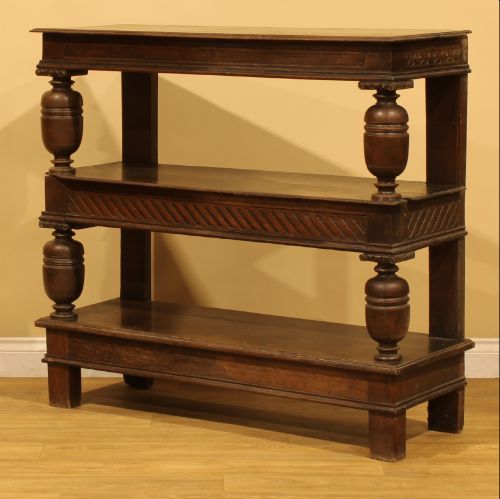
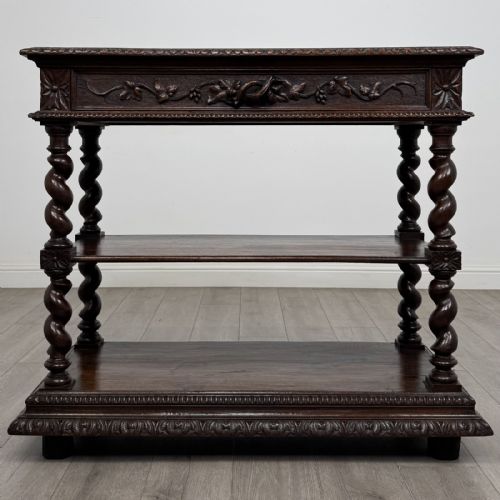
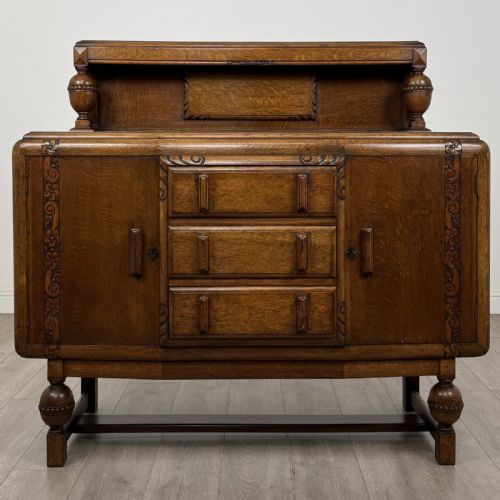
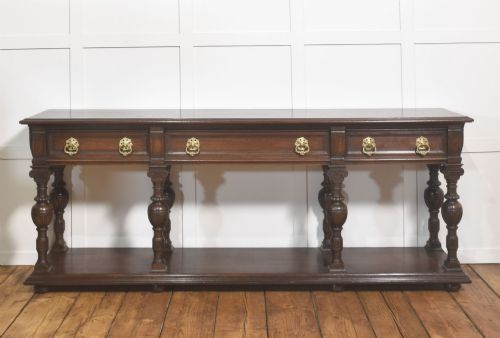
A jacobean buffet table is fundamentally a low storage piece or serving surface used to hold dishes and food in a dining space. The listings show these pieces appearing as sideboards, dresser bases, and court cupboards rather than formal tables with benches.
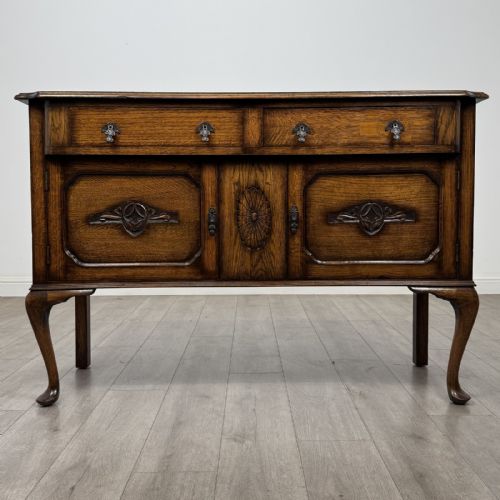
Most examples found here date from later revivals in the nineteenth and early twentieth centuries, particularly the nineteen twenties and Edwardian period, alongside genuine eighteenth-century survivals and earlier style interpretations. These revival pieces adopt the heavy proportions and dark timber finishes of seventeenth-century domestic furniture.
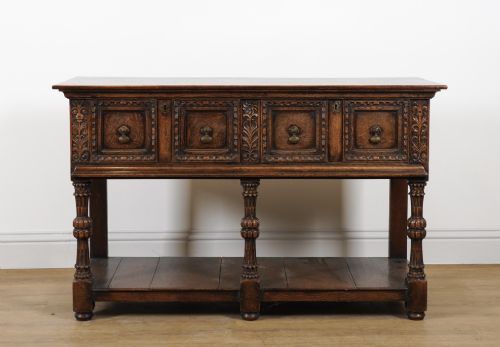
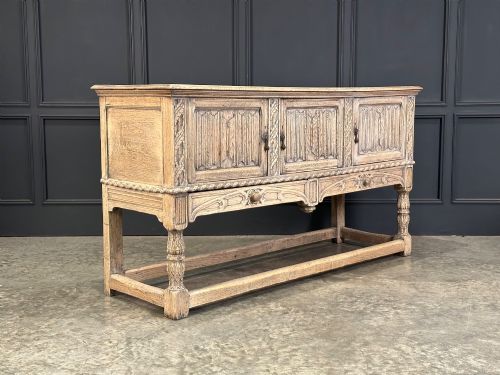
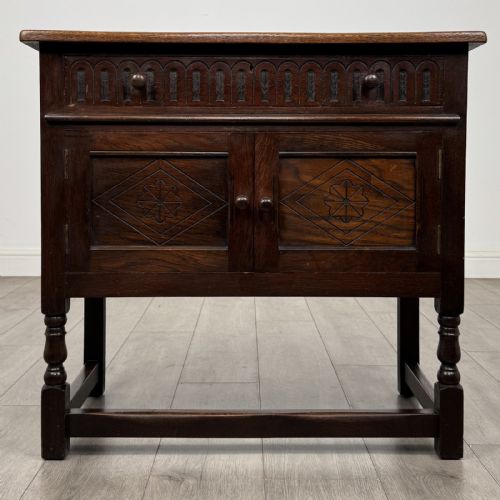
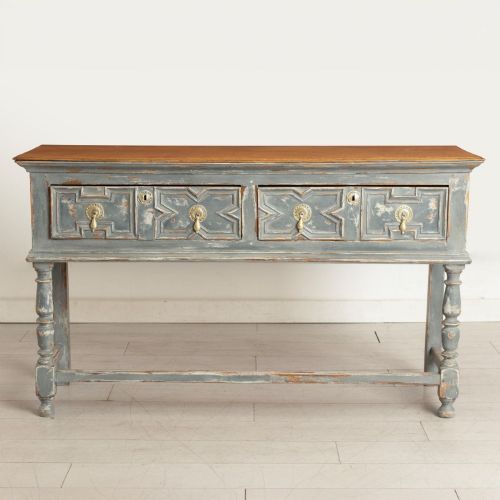
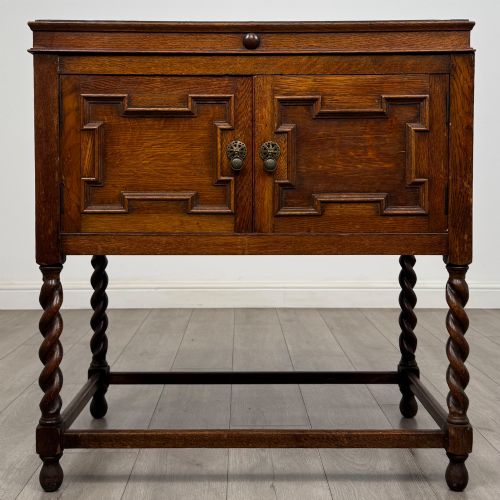
Formats range from open potboard dresser bases with lower shelves to enclosed cupboards with fitted drawers and carved stretcher bases. They serve as practical deep storage units while offering a broad top surface for display.
Materials and construction
Solid oak provides the primary structural timber across nearly every listing, selected for its density and capacity to take deep surface carving. Joinery relies on traditional pegged mortise and tenon joints to bear the weight of heavy timber tops and shelves.
Carving is executed directly into the solid wood, showing geometric panels, strapwork, and figural details like the Green Man motif. Hardware components utilise cast brass and iron for hinges, drop handles, and escutcheons.
Jacobean Buffet Table Retail Price Guide 2026
Typical asking prices for jacobean buffet table among the pieces listed under this phrase on Sellingantiques today, from the lower quarter to the upper quarter. They describe what is for sale here now, not the wider market.
Listings span multiple centuries, ranging from seventeenth-century originals through Victorian interpretations to nineteen-thirties oak sideboards.
Distinctions in quality
Quality rests on the depth and crispness of the hand-carved ornament, where sharp geometric facets and detailed figures distinguish master work from mechanical production. Timbers selected with pronounced medullary rays also separate finer items from plain utility boards.
Proportion and scale dictate the visual success of the piece, with smaller proportions commanding particular attention for domestic spaces. Original hardware and undisturbed patination on the oak surface elevate the standing of an individual example.
The Jacobean Buffet Table Glossary
- Potboard
- A lower open shelf built into a dresser base or buffet table, historically used for storing earthenware pots and heavy serving dishes. It sits just above the floor, supported by sturdy legs or stiles.
- Stretcher base
- A horizontal wooden brace connecting the lower legs of a table or sideboard to provide structural rigidity. These often feature shaped or turned profiles.
- Court cupboard
- A heavy enclosed wooden cabinet with doors, typically featuring a recessed upper section supported by carved posts or columns. They were traditionally used to store food and valuable plate.
- Barley twist
- A type of decorative wood turning resembling a twisted rope, common on the legs and supports of revival furniture. It adds vertical movement to otherwise heavy block construction.
- Geometric carving
- Relief decoration using repeating straight lines, diamonds, and triangles cut into the wooden panels. This surface ornamentation is characteristic of seventeenth-century English joinery.
Jacobean Buffet Table: Frequently Asked Questions
How are these different from sideboards?
These pieces generally feature heavier timber construction, deeper proportions, and characteristic period ornamentation such as strapwork carving or barley twist legs compared to later dining room furniture.
Many examples function as open dresser bases or enclosed cupboards rather than the more streamlined drawer configurations found in later nineteenth-century serving pieces.
Can I use one in a modern kitchen?
The deep proportions and solid oak surfaces make these pieces durable working counters or serving stations for dining spaces and large kitchens.
The lower cupboards and drawers provide substantial enclosed storage for everyday tableware and linens.
How do I date a revival piece?
Revival items from the Edwardian era and nineteen twenties often combine seventeenth-century stylistic motifs with machine-sawn interior timber and modern hardware fixings.
Examining the drawer linings, backboards, and secondary woods helps distinguish a nineteenth or twentieth-century interpretation from an eighteenth-century original.
What is a Green Man carving?
A Green Man is a sculptural representation of a face surrounded by or sprouting from foliage, symbolising rebirth and spring growth.
This motif appears frequently on carved oak panels and friezes within revival and Victorian woodwork.