





Jacobean Bookcase
A jacobean bookcase brings heavy timber and historic character into a room, offering sturdy shelving framed by period revival details.
Jacobean Bookcase
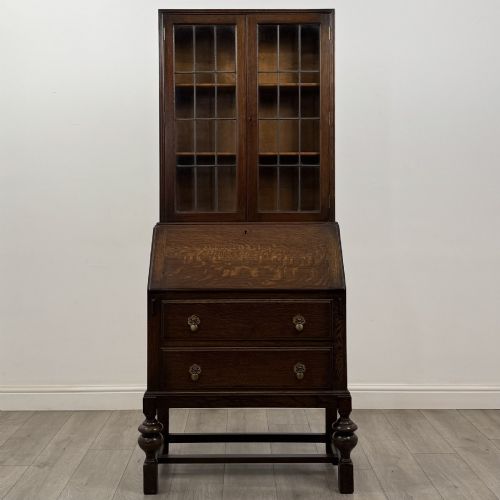
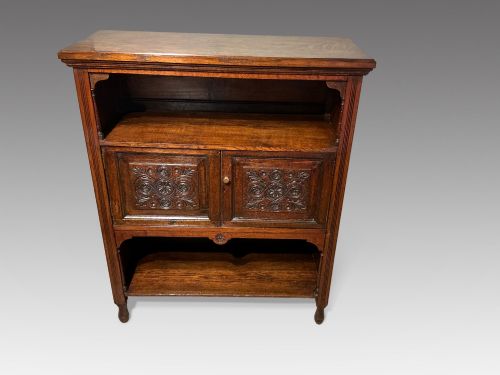
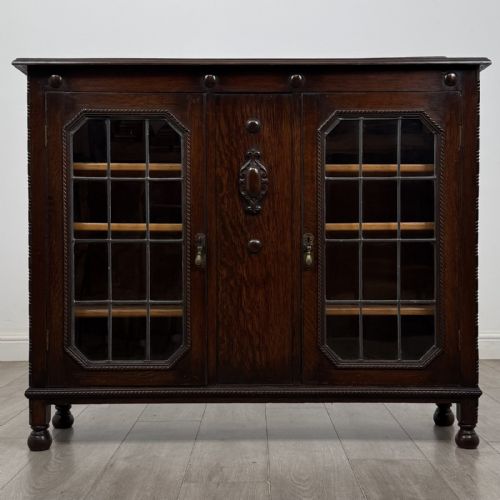
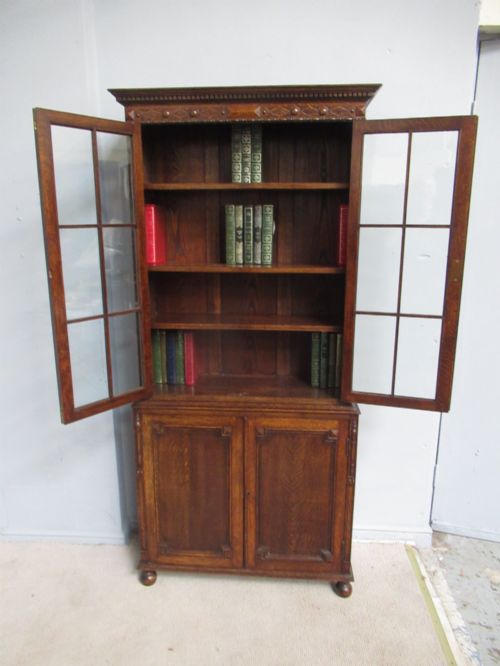
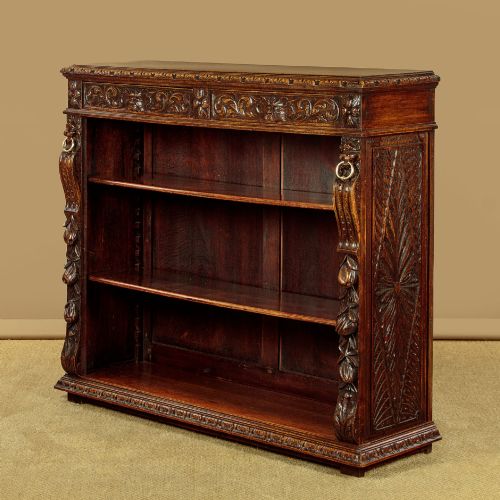
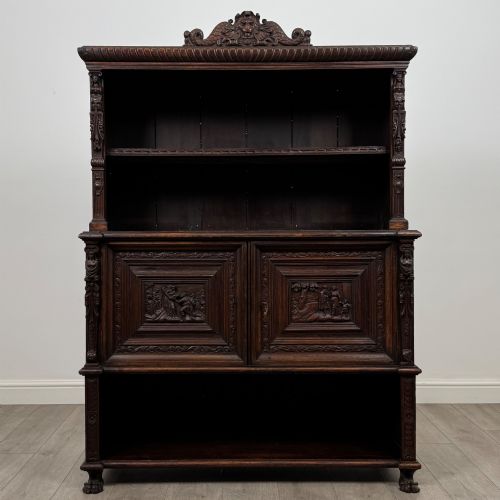
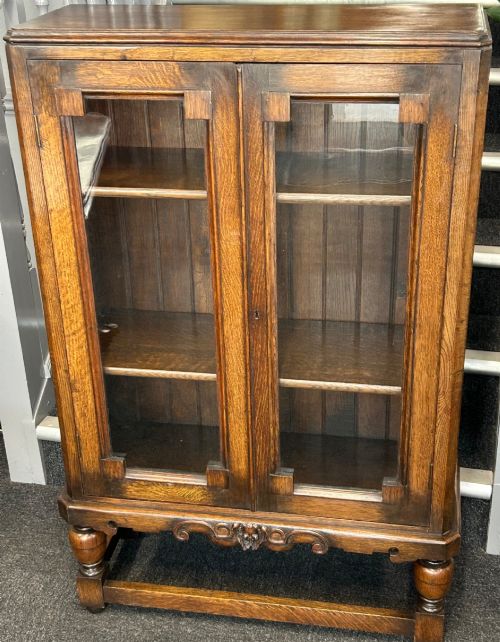
A jacobean bookcase typically takes the form of an open shelf unit, a glazed display cabinet, or a bureau bookcase fitted with a sloping fall-front desk. These pieces draw on 17th-century design traditions through subsequent revivals, appearing most frequently in forms produced during the late nineteenth and early twentieth centuries, including the Edwardian period and the 1920s.
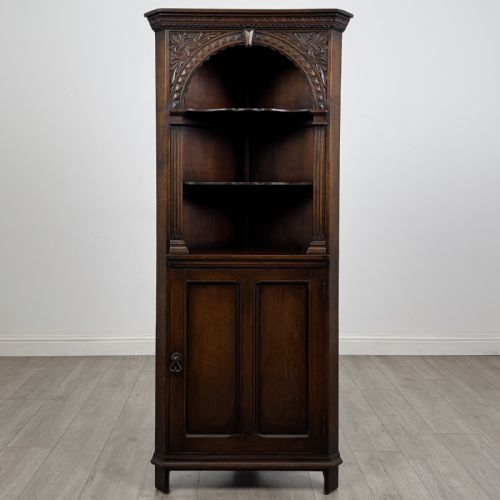
Makers of these cabinets worked primarily with oak, shaping upright carcass forms that range from compact open bookcases to large two-part cupboards and corner units. Surviving examples reflect historical revivals spanning Victorian interpretations up to interwar production, maintaining heavy timber construction and functional storage for volumes and display.
Materials and Construction
Carpenters constructed these bookcases predominantly from solid oak and dark oak, sometimes incorporating walnut for specific decorative surfaces or internal elements. Carved panels, applied mouldings, and carved friezes define the structural ornament, while timber frames support glazed doors or open shelving.
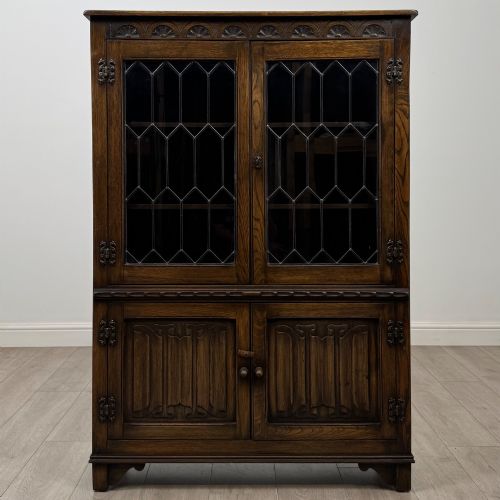
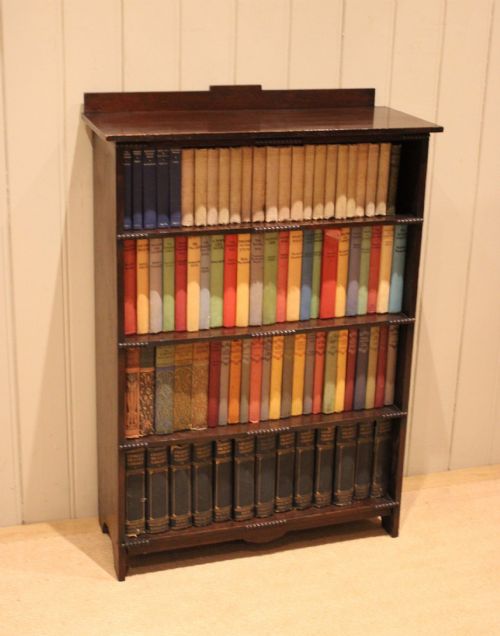
Joinery often includes turned supports such as barley twist columns and legs, alongside brass hardware and leaded glass panes held by iron or metal cames. Open bookcases utilise beaded edges and adjustable shelving systems, while bureau variants integrate drawers and fitted writing compartments.
Jacobean Bookcase Retail Price Guide 2026
Typical asking prices for jacobean bookcase among the pieces listed under this phrase on Sellingantiques today, from the lower quarter to the upper quarter. They describe what is for sale here now, not the wider market.
Listings feature oak as the primary material, alongside walnut, brass fittings, and leaded glass panes.
Assessing Quality and Execution
Quality in these pieces rests upon the selection of timber and the crispness of the carved detail on panels and friezes. Solid oak construction with substantial timber thickness separates robust library furniture from lighter decorative cabinets.
The integration of functional elements - such as smoothly operating drawers, well-fitted glazed doors with leaded glass, and substantial turning on legs like barley twists - distinguishes finer examples. The structural integrity of the base carcass and the precision of the joinery determine the overall standard of each piece.
The Jacobean Bookcase Glossary
- Jacobean Revival
- A style popular in the nineteenth and twentieth centuries that imitates the heavy, carved furnishings of the early seventeenth century. It relies heavily on dark oak and geometric ornamentation.
- Bureau Bookcase
- A combination piece featuring a sloping desk compartment above or below shelving and cabinet space. These units often include internal drawers and pigeonholes.
- Barley Twist
- A type of column or leg turned in a spiral resembling a stalk of barley. This decorative turning appears frequently on revival furniture from the Victorian and Edwardian eras.
- Leaded Glass
- Small panes of glass held together within a network of lead cames. This technique is common on the doors of cabinets and bookcases from the early twentieth century.
- Linenfold
- A style of wood carving that imitates folded fabric, frequently used on panelled cupboard doors. It provides a distinct textured surface on revival pieces.
Jacobean Bookcase: Frequently Asked Questions
What periods do these bookcases come from?
The pieces available originate primarily from the late nineteenth century and the early twentieth century, including Victorian, Edwardian, and 1920s production. Many adopt earlier revival styles rather than dating to the 17th century.
Craftsmen during these later eras drew heavily on historical design motifs, producing solid oak furniture that emulates older traditions while serving modern domestic needs.
How do I distinguish open bookcases from display cabinets?
Open bookcases feature accessible shelving without doors, making them suitable for everyday library use and quick retrieval of volumes. Display cabinets and bureau bookcases incorporate glazed doors, leaded panels, or fall-front desks.
Enclosed versions protect contents from dust and allow for the exhibition of decorative objects alongside books, whereas open variants focus strictly on shelf storage.
Where were these pieces used historically?
These cabinets served as functional storage in studies, libraries, and parlours of period homes. Larger two-part cupboards and bureau bookcases provided both workspace and extensive book storage.
Smaller variants suited narrower alcoves or corners, while open bookcases held working libraries within domestic and institutional settings.
How do I care for a dark oak bookcase?
Maintain the timber by keeping the piece away from direct heat sources and strong sunlight, which can dry out and fade the dark oak finish. Dust regularly with a soft cloth and apply appropriate furniture wax sparingly.
Avoid excessive moisture on unglazed surfaces and check leaded glass doors periodically to ensure the cames remain stable within their wooden frames.