


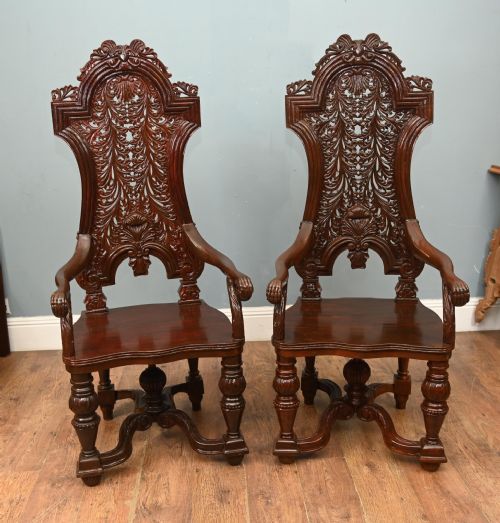

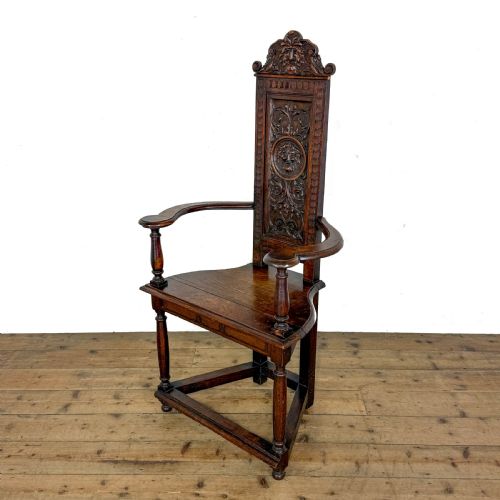


Jacobean Armed Chair
A jacobean armed chair is a heavy timber seat built for status, and you will mostly find revival pieces here alongside genuine seventeenth-century examples.
Jacobean Armed Chair
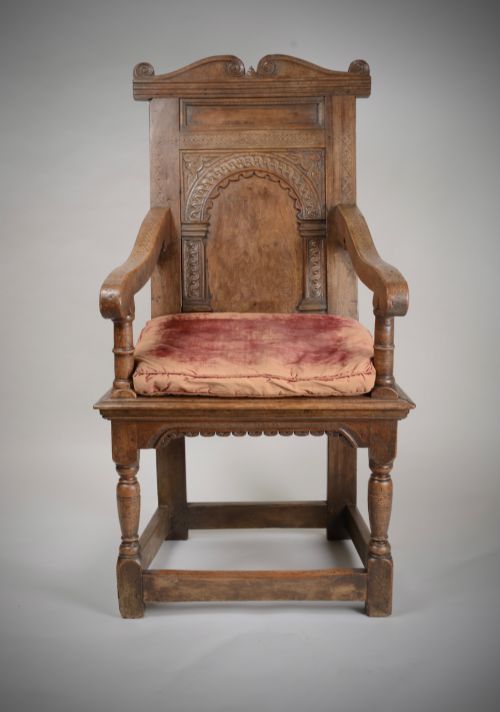
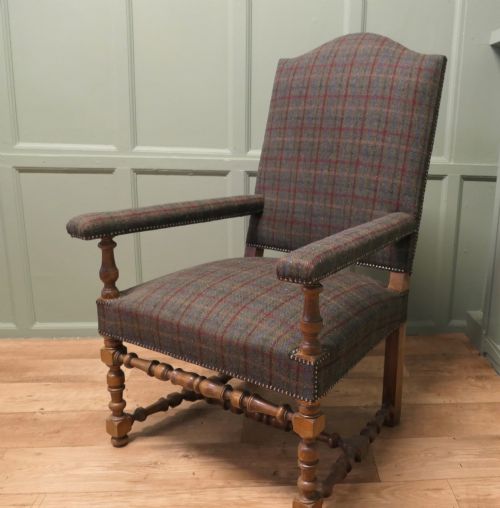
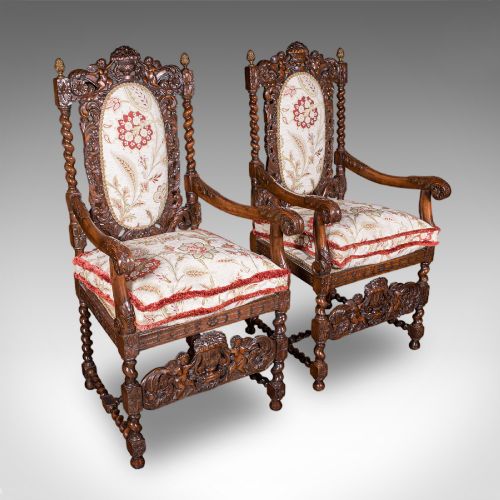
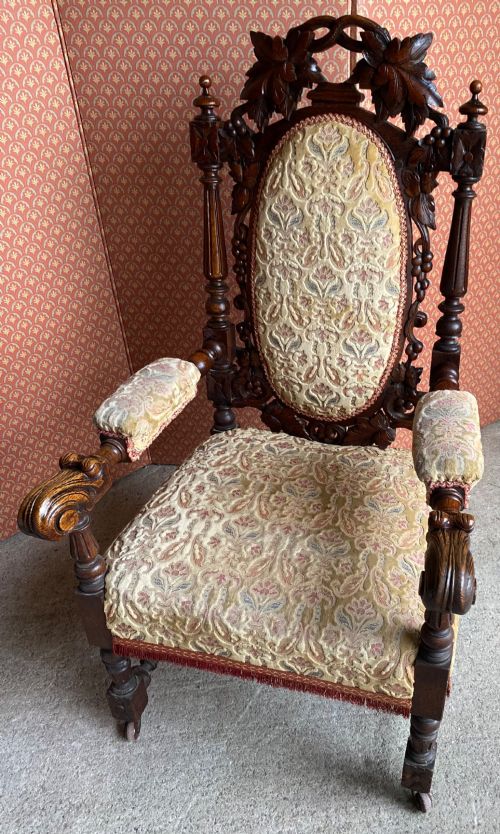
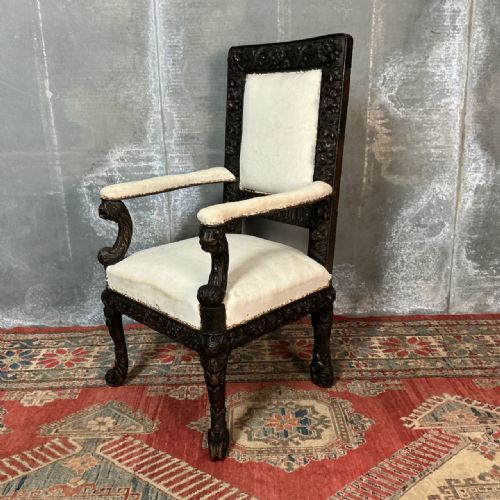
A jacobean armed chair provides a heavy timber seat built with solid uprights, panelled backs, and substantial armrests designed for status in early rooms. You will mostly meet nineteenth-century revival pieces on this page, alongside genuine seventeenth-century examples originating from English, Welsh, and Scottish workshops.
The forms vary across armchairs, desk chairs, hall chairs, and large throne chairs with turned legs or barley twist supports. Surviving examples demonstrate how these seats functioned as principal furniture pieces in halls, libraries, and parlours across multiple centuries of production.
What varies in quality
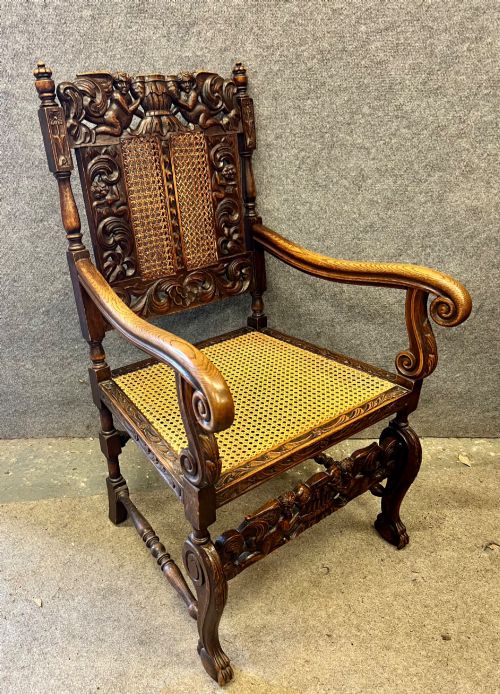
The depth and crispness of the hand-carved ornamentation separate standard revival pieces from finer workshops, as does the selection of figured timber. Original seventeenth-century framing displays genuine tool marks and structural weathering that later copies attempt to mimic.
The integrity of the structural joints and the retention of primary elements, such as original cane seats or early leather upholstery, determine the historical weight of the piece.
Jacobean Armed Chair Retail Price Guide 2026
Typical asking prices for jacobean armed chair among the pieces listed under this phrase on Sellingantiques today, from the lower quarter to the upper quarter. They describe what is for sale here now, not the wider market.
Some nineteenth-century makers went to great lengths to carve faux wormholes into brand new oak just to trick visiting squires.
The Jacobean Armed Chair Glossary
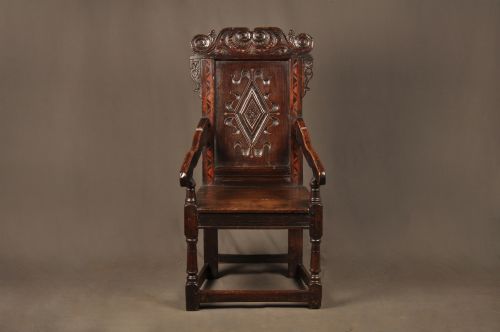
- Wainscot chair
- A solid wooden armchair constructed with panelled backs and substantial armrests, typical of seventeenth-century domestic interiors.
- Carolean
- A seventeenth-century stylistic period spanning the reign of Charles II, known for richer carving, scrolling motifs, and open crest rails.
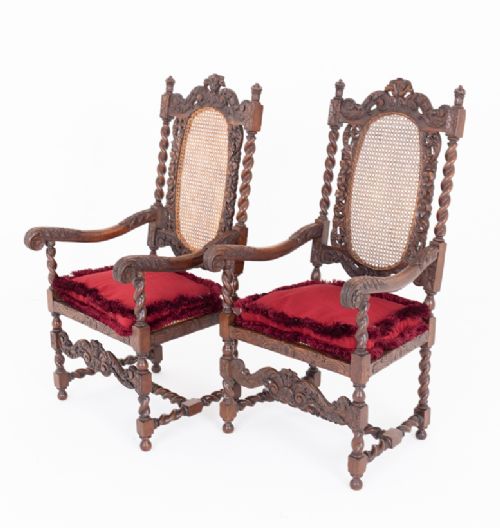
- Barley twist
- A turned wooden furniture leg or stretcher shaped to resemble a spiralling rope.
- Baronial
- A nineteenth-century revival descriptor denoting heavy proportions, dark oak timber, and theatrical heraldic carving.
- Cane
- Woven rattan material utilised for chair seats and back panels to provide a resilient, flexible support.
Jacobean Armed Chair: Frequently Asked Questions
How do I spot a real seventeenth-century chair?
Authentic seventeenth-century pieces display hand-cut peg joints, dry patinated oak surfaces, and construction methods appropriate for early hand tools.
Revival pieces built in the nineteenth or twentieth century often reveal mechanical saw marks, uniform machine turning, or timber finishes applied to simulate age.
Where were these chairs used originally?
Original wainscot and great chairs stood at the head of the dining table or beside the hearth in wealthy households, denoting the seat of the master.
Later revival examples served similar decorative and functional roles in Victorian libraries, grand hallways, and drawing rooms.
Are upholstered versions period correct?
Many surviving early chairs featured plain wooden seats intended for loose cushions, while others received leather or textile upholstery secured with brass nails.
Nineteenth-century revival makers frequently added plush velvet, tapestry fabric, or buttoned leather to increase comfort for contemporary users.
How do I care for old oak timber?
Maintain stable indoor humidity levels and keep wooden surfaces away from direct heat sources to prevent the historic oak from splitting or warping.
Apply occasional traditional wax polish to nourish the grain and protect the patina without building up synthetic residues.