

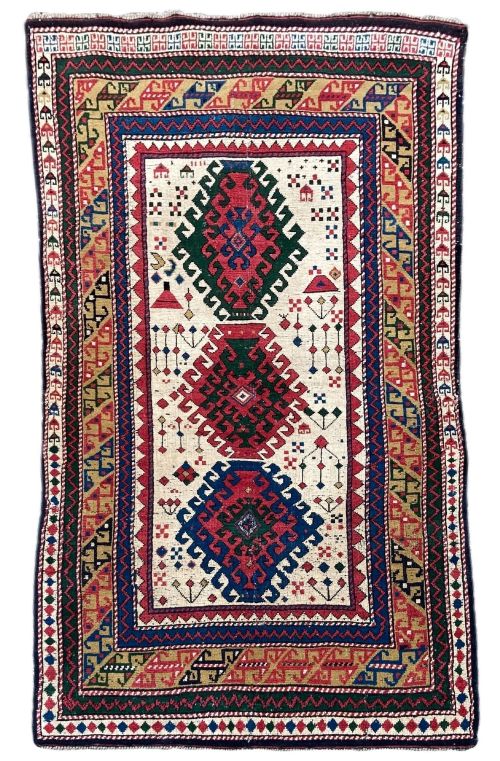
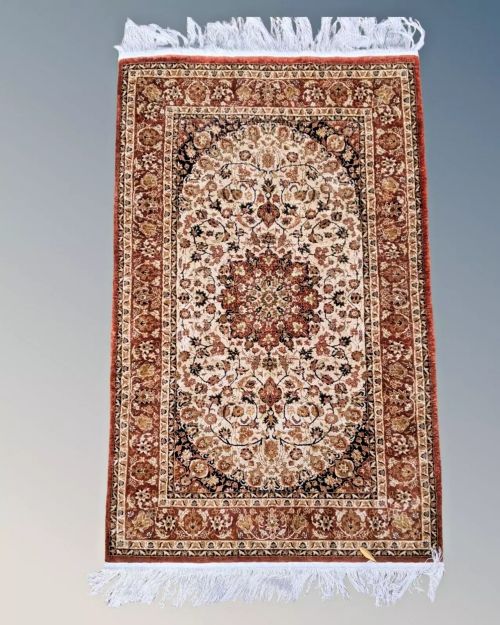
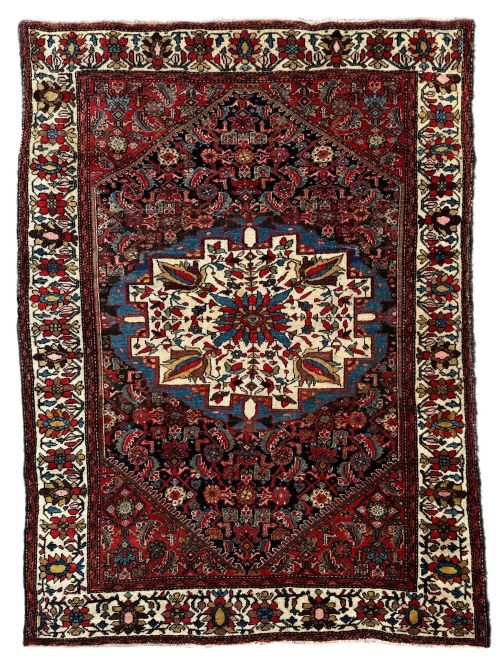
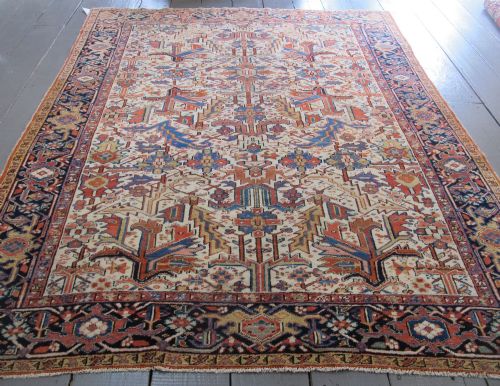




Ivory Medallion Area Rug
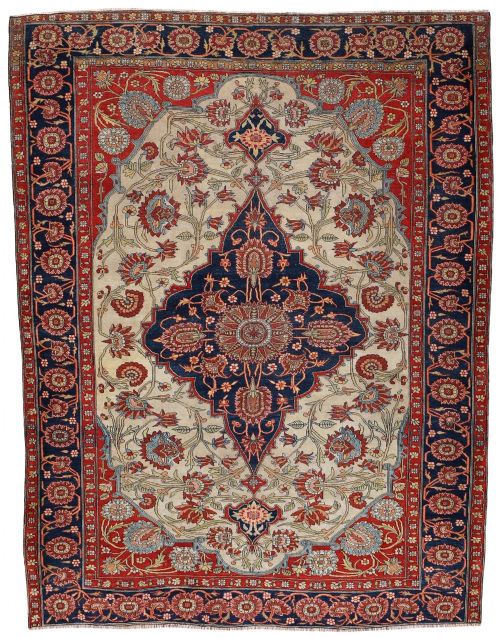
An ivory medallion area rug anchors a room with pale central motifs woven by master hands across Persia and the wider East.
Ivory Medallion Area Rug
An ivory medallion area rug draws the eye to a distinct central motif set against a pale cream or ivory ground. These floor coverings emerge from regional weaving traditions spanning Persian workshops, Ottoman looms, and Kashmiri centres.
The pieces on this page encompass various formats including compact scatter rugs and larger room carpets. Most examples date from the late nineteenth century through to the early decades of the twentieth century.
Makers utilised traditional regional layouts, positioning geometric or floral medallions centrally to balance the surrounding borders. Buyers encounter distinct tribal and city styles, from Heriz carpets to delicate Isfahan and Tabriz weaves.
Materials and construction
Weavers constructed these carpets using durable wool foundations and pile, occasionally introducing cotton for warp and weft threads. Selected fine pieces incorporate silk highlights to accentuate intricate floral details and borders.
Dyers employed natural pigments to achieve deep tones for the field designs and soft ivory shades for the backgrounds. Skilled hands knotted the pile tightly by hand onto vertical looms, ensuring structural longevity.
Ivory Medallion Area Rug Retail Price Guide 2026
Typical asking prices for ivory medallion area rug among the pieces listed under this phrase on Sellingantiques today, from the lower quarter to the upper quarter. They describe what is for sale here now, not the wider market.
Listings feature pieces spanning several decades from 1870 to 1930, utilising wool, cotton, and silk materials.
Distinctions in quality
Knot density and precision of execution dictate the refinement of each piece. Superior examples display crisp medallion outlines and balanced proportions within the field.
The choice of materials elevates certain carpets, particularly where weavers utilised lustrous wool or added silk highlights. Preserved pile height and intact original borders distinguish the finest survivals from heavily worn specimens.
The Ivory Medallion Area Rug Glossary
- Medallion
- A distinct central ornamental design placed in the middle of the rug field. This focal motif often mirrors the corner spandrels.
- Ground
- The background colour of the main field surrounding the central medallion. In these pieces, this surface typically appears in pale ivory or cream tones.
- Pile
- The upright yarn surface of the carpet formed by individual knots tied to the foundation. This textured layer determines the softness and depth of the rug.
- Warp
- The vertical threads stretched tightly on the loom before knotting begins. These parallel strands form the structural skeleton of the woven textile.
- Weft
- The horizontal threads passed alternately over and under the warp strands after each row of knots. This process secures the pile firmly in place.
Ivory Medallion Area Rug: Frequently Asked Questions
Where were these rugs made?
These floor coverings originate primarily from traditional weaving centres across Persia, including Tabriz, Isfahan, Heriz, and Kirman. Other pieces emerge from Ottoman Turkish looms and Kashmiri workshops.
Each region developed distinct knotting techniques and design vocabularies. Local dye recipes also contributed to the specific character of each woven region.
How do I date an older carpet?
Examining structural materials, knot density, and natural dye palettes helps determine the approximate period of production. Stylistic shifts in medallion design also offer clues to the decade of manufacture.
Comparative analysis with documented examples from the late nineteenth and early twentieth centuries refines the dating process. Minor irregularities in hand-woven pieces often indicate older artisan production.
Can I place these rugs in high traffic areas?
Sturdier wool carpets handle moderate foot traffic well when protected by a quality underlay. Placing them away from direct sunlight preserves the natural dyes.
Fragile pieces featuring delicate silk highlights require lighter use to prevent pile wear. Rotating the rug periodically ensures even exposure and balanced usage.