





Italian Wood Armchair
An italian wood armchair brings centuries of continental craftsmanship into a room, offering both sculptural presence and functional seating.
Italian Wood Armchair
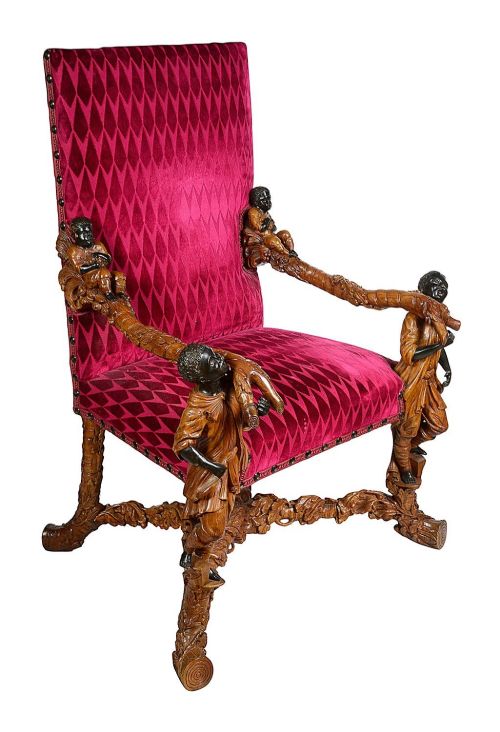
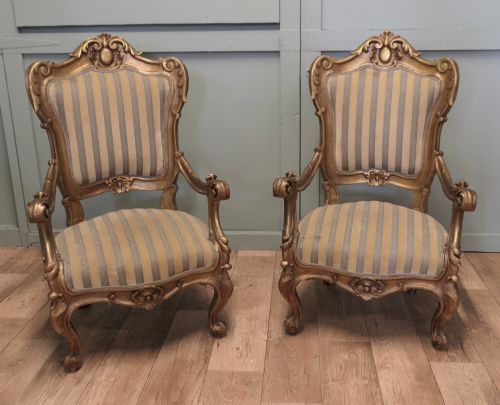
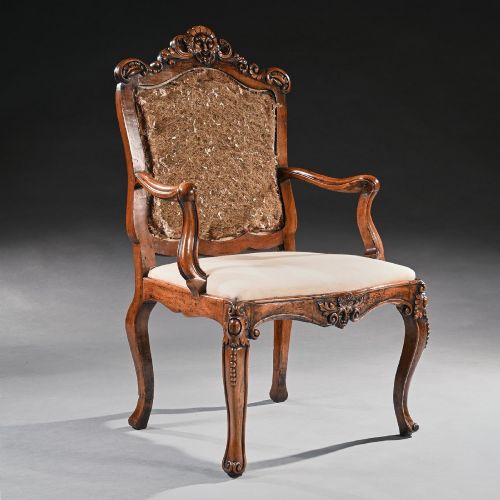
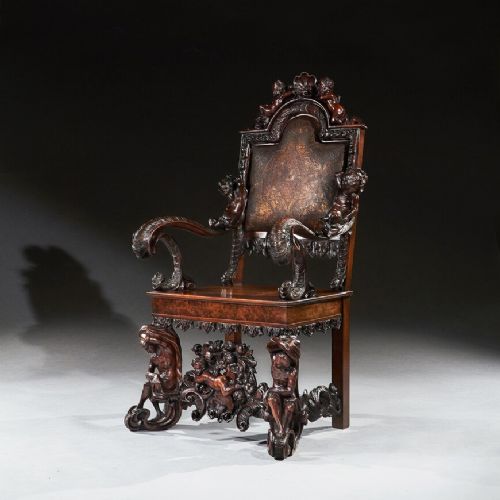
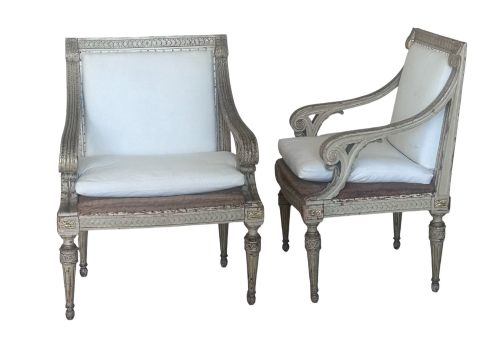
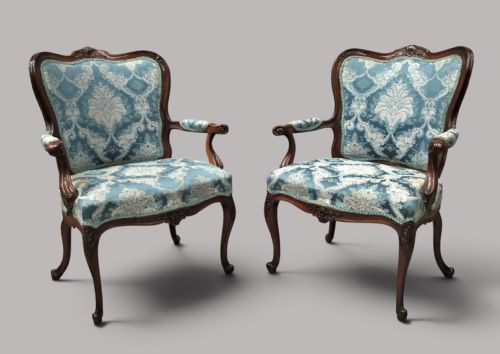
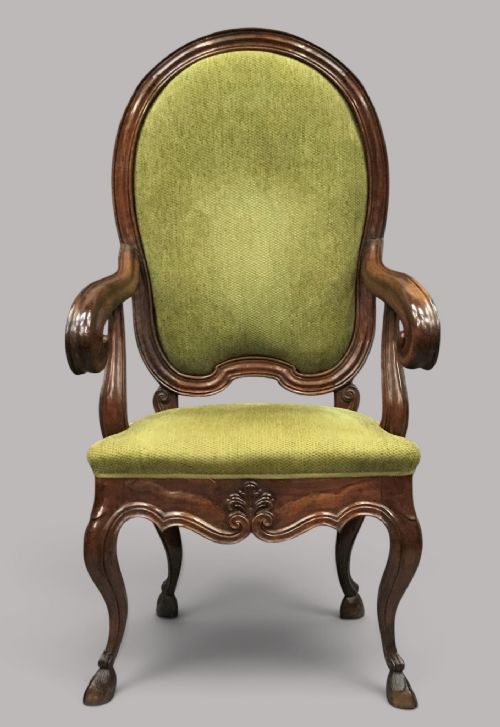
An italian wood armchair encompasses seating spanning from the seventeenth century through to the twentieth century, embracing periods such as the baroque, rococo, and neoclassical. These seating options emerge primarily in solid walnut, carved wood, and painted finishes, often retaining period textiles or needlework.
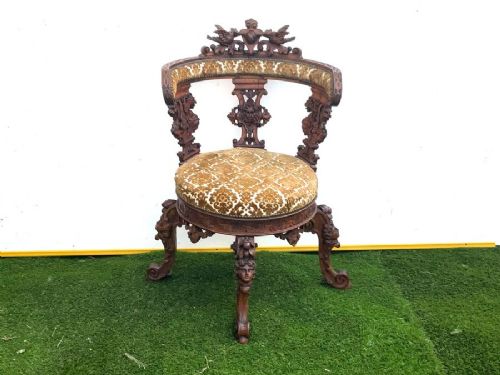
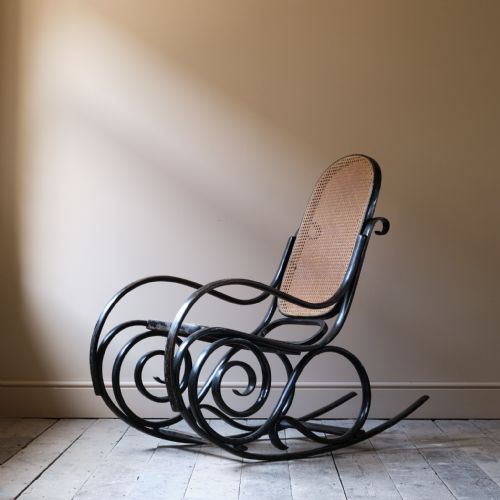
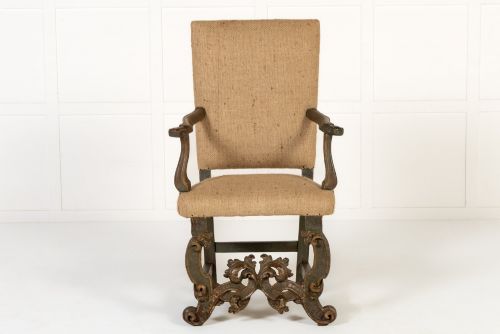
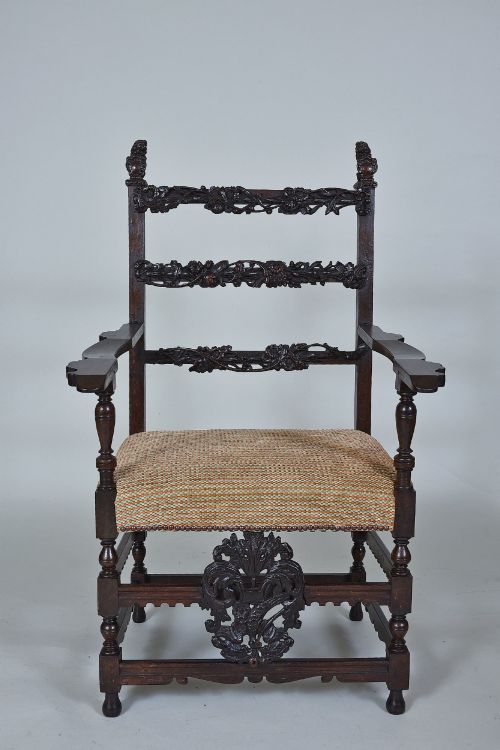
The pieces on this page range from high-back audience chairs and gondola chairs to figural corner seats and rocking chairs. Walnut examples frequently showcase elaborate carving along the head rail and arms, while painted and parcel gilt versions reflect lighter decorative schemes.
Buyers are most likely to encounter eighteenth-century walnut armchairs and nineteenth-century revival pieces among these listings. Regional variations also appear, including Piedmontese forms and Venetian styles.
Assessing Quality and Execution
Quality rests upon the crispness of the hand carving and the depth of the relief work across the wooden frame. Superior pieces display fluid, confident lines in walnut or well-preserved gilding over gesso that retains its original burnish.
The integrity of the structural timber and the retention of period elements, such as original painted surfaces or early textiles, elevate an example. Workshop execution distinguishes standard regional production from exhibition quality pieces designed for noble interiors.
Italian Wood Armchair Retail Price Guide 2026
Typical asking prices for italian wood armchair among the pieces listed under this phrase on Sellingantiques today, from the lower quarter to the upper quarter. They describe what is for sale here now, not the wider market.
The listings span four centuries of Italian seating, with walnut and painted finishes appearing most frequently across the eighteenth and nineteenth centuries.
Andrea Brustolon
The Italian Wood Armchair Glossary
- Gesso
- A plaster-like mixture applied to wood surfaces as a smooth base for gilding or painting. It provides the crisp foundation necessary for intricate surface decoration.
- Parcel Gilt
- A finishing technique where portions of an object are highlighted with gold leaf while other areas remain painted or exposed as wood. This creates a contrasting two-tone effect.
- Barocchetto
- The Italian rococo style characterised by lighter, more playful asymmetrical curves and ornamentation. It developed during the early to mid-eighteenth century.
- Bobbin Turned
- A form of woodturning where cylindrical components feature repetitive spherical or ovoid swellings resembling bobbins on a thread. This technique appears on seventeenth and nineteenth-century regional seating.
Italian Wood Armchair: Frequently Asked Questions
How do I identify an eighteenth century piece?
Look for deep hand carving in solid walnut and construction methods typical of the period, such as pegged joints and patinated timber surfaces.
Compare the silhouette against established regional forms like Venetian rococo or barocchetto designs to confirm the era.
Where should I place an antique armchair?
These chairs function well as focal points in studies, drawing rooms, or hallways where their carved woodwork can be viewed from multiple angles.
Ensure the placement avoids direct sunlight and dramatic humidity changes to protect fragile gilding and old textiles.
What is the difference between walnut and giltwood?
Walnut chairs expose the natural grain and warm brown tones of the hardwood, often enhanced by clear polishing or wax.
Giltwood chairs are entirely covered in thin sheets of gold leaf over a gesso ground, creating a bright reflective surface.
Can I use these chairs for daily seating?
Many antique armchairs remain structurally sound for regular use, provided the joints are stable and the underframe is secure.
Consider having a professional conservator assess the internal framing and upholstery support before placing the chair into heavy rotation.