






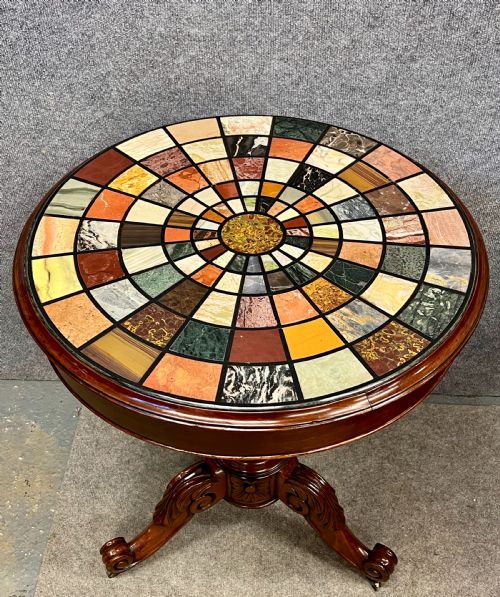


Italian Specimen Table
An italian specimen table brings the mineral riches of the Grand Tour directly into a room through precise stone inlay.
Italian Specimen Table
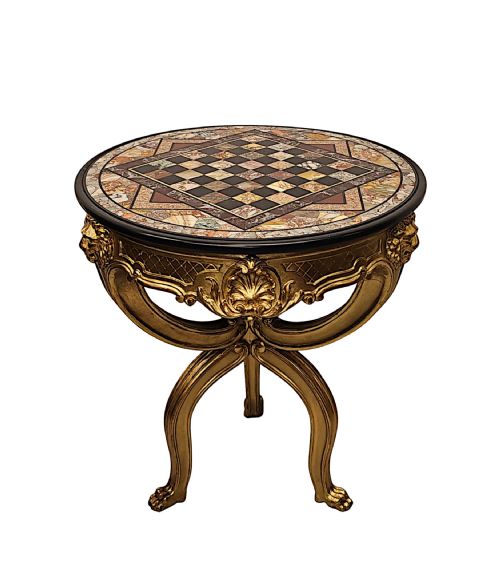
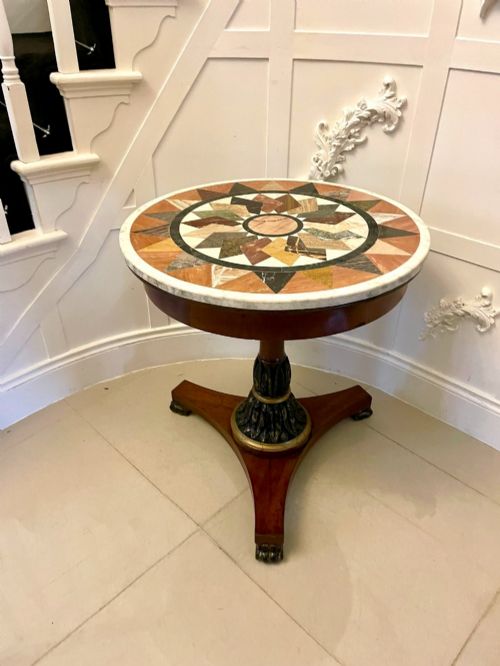
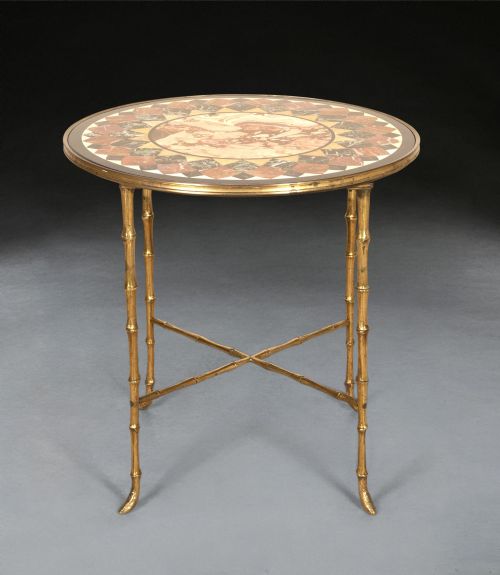
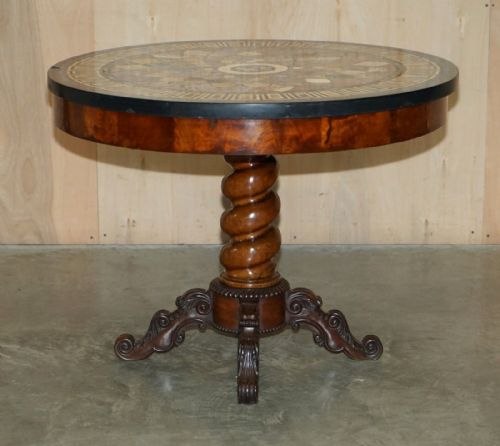
An italian specimen table displays a top composed of numerous pieces of geometric or pictorial stone arranged within a central frame. These surfaces present varied geological samples gathered across Italy, ranging from uniform marbles to dense hardstones.
The aesthetic bridges domestic furnishing and classical sculpture display, reflecting the taste of travellers acquiring souvenirs during the eighteenth and nineteenth centuries. Tables span the Regency, William IV and Victorian periods alongside revival styles.
How they were made
Craftsmen built these tops using marble, hardstone, slate and stone, cutting each individual sample to fit tightly alongside its neighbours in a mosaic technique known as pietra dura. The stone sections rest upon wooden or giltwood carcases made from mahogany, walnut and satin birch.
Surface work involved meticulous grinding and polishing to create a seamless plane where diverse geological specimens meet. Joiners combined these complex tops with pedestals or turned and carved wooden legs appropriate to the neoclassical, baroque or rococo taste of the workshop.
Italian Specimen Table Retail Price Guide 2026
Typical asking prices for italian specimen table among the pieces listed under this phrase on Sellingantiques today, from the lower quarter to the upper quarter. They describe what is for sale here now, not the wider market.
Listings feature 19th Century, Victorian, William IV and 18th Century pieces incorporating marble, hardstone, slate and giltwood.
What varies in quality
Excellence in an italian specimen table depends upon the variety and rarity of the mineral samples chosen for the top. Pockets of simpler monochrome marble sit below intricate compositions involving micro-mosaic roundels, pictorial bird scenes or extensive hardstone geometries.
The precision of the stone cutting dictates the tightness of the joints between individual specimens. Finer examples maintain an absolute flat plane with minimal filler visible between the stones, while the underlying timber frame displays superior carving and cabinetmaking.
The Italian Specimen Table Glossary
- Pietra dura
- An Italian technique of inlaying cut and fitted stones into a background slab to create pictorial or geometric designs. This method produces durable, colourful surfaces resembling paintings.
- Grand Tour
- A traditional journey through Europe, principally Italy, undertaken by upper-class young men and collectors to absorb classical art and culture. Tourists purchased souvenirs including specimen tables and micro-mosaics.
- Micro-mosaic
- A method using extremely tiny coloured glass tesserae fused together to form detailed pictorial roundels or plaques. These panels frequently appear inset into marble table tops.
- Specimen marble
- Marbles and decorative stones collected from various quarries, prized for distinctive natural colours, fossils and veining patterns. Makers arranged these samples to highlight geological diversity.
- Tilt top
- A table construction featuring a mechanism that allows the top to pivot into a vertical position when not in use. This design saved space in nineteenth century domestic interiors.
Italian Specimen Table: Frequently Asked Questions
How do I clean the stone top?
Dust the surface regularly with a soft, dry cloth to prevent abrasive particles from scratching the polished stone. Avoid acidic cleaners, vinegar or water pooling on the inlaid sections.
Apply neutral wax sparingly to the wooden base and frame according to the timber type. Professional conservation is advisable for older stone inlays showing signs of movement.
Were these made as travel souvenirs?
Many tables and removable table tops originated as bespoke purchases for wealthy travellers touring Italy during the eighteenth and nineteenth centuries. Workshops in Florence and Rome catered specifically to foreign visitors.
Clients selected specific stone samples and motifs to be incorporated into the final mosaic composition. The finished pieces returned home as proof of cultural education and refined taste.
How do I date a specimen table?
Examine the secondary timbers beneath the top and inside the frame to identify period construction methods. Mahogany and walnut indicate earlier Regency or Georgian origins, while later nineteenth century examples often feature distinct Victorian proportions.
Stylistic cues within the stone inlay, such as neoclassical geometric borders or exuberant rococo scrolls, provide further chronological indicators.
Can I use a coffee table for daily living?
Specimen tables function well in contemporary settings provided the stone top receives sensible protection against heavy impacts. Using coasters and avoiding direct thermal shock preserves the historical surface.
Positioning the piece away from direct sunlight protects both the polished stone and the underlying timber finish from fading.