








Italian Specimen Marble
Italian specimen marble brings the mineral wealth of the Grand Tour directly into a room through precise, colourful stone inlay.
Italian Specimen Marble
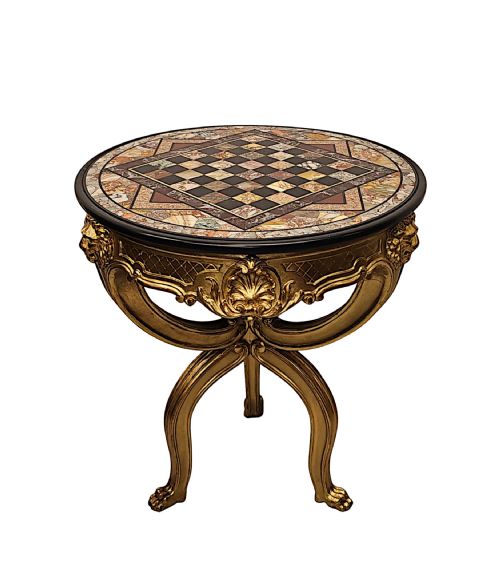
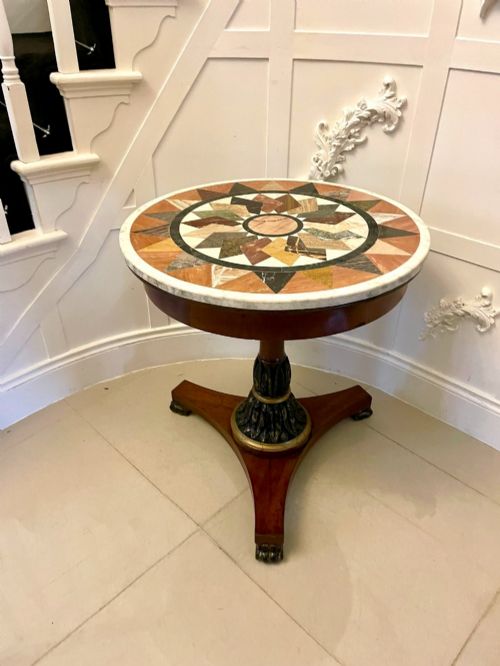
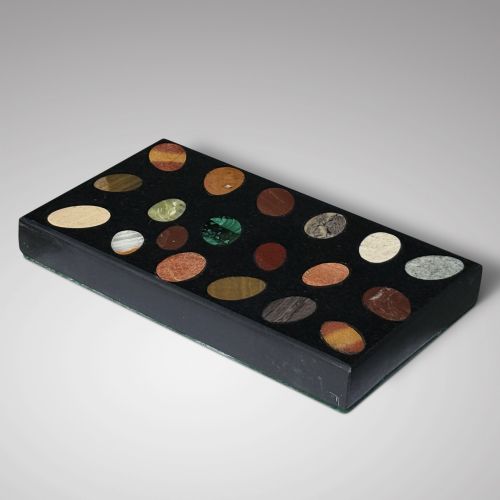
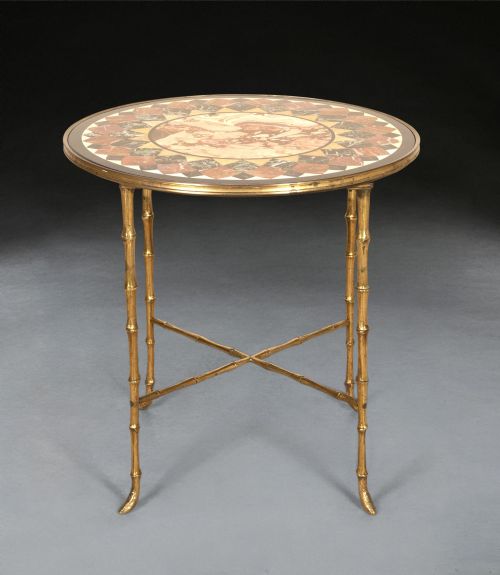
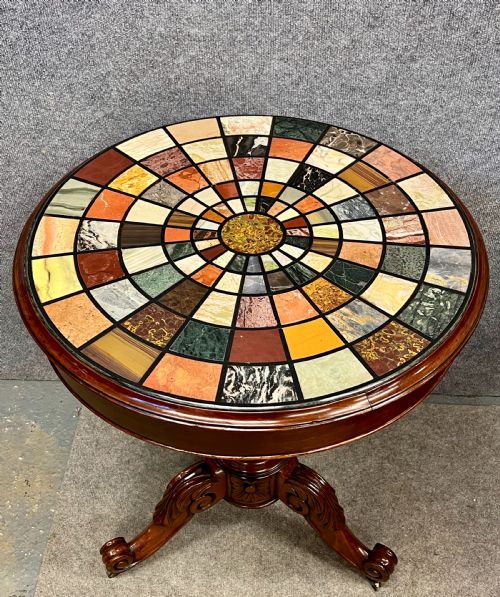
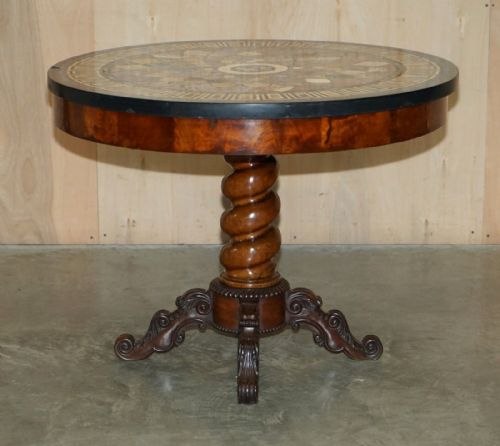
Italian specimen marble encompasses decorative objects and furniture surfaces composed of numerous distinct mineral shards assembled into geometric patterns or pictorial compositions. When you search for italian specimen marble, you encounter everything from small desktop paperweights and obelisks to grand centre tables supported by giltwood or mahogany bases.
The objects span multiple centuries, with nineteenth-century Grand Tour souvenirs and Victorian pieces dominating the selection alongside eighteenth-century works and later Art Deco interpretations. Tables take various forms including occasional, coffee, console, and games tables, whilst smaller decorative pieces include carved equestrian studies and inlaid plaques.
Most pieces date from the nineteenth century, reflecting the peak of British travellers acquiring souvenirs during continental journeys. The craftsmanship bridges functional furniture and pure mineral display, transforming raw geological samples into structured works of art.
Judging quality in stone inlay
Quality rests upon the precision of the stone joints and the variety of mineral specimens selected for the composition. Tightly fitted tesserae with minimal visible cement lines distinguish superior table tops and paperweights from simpler designs.
The artistic ambition of the subject matter, from complex avian pietra dura panels to straightforward geometric chess board tops, dictates the level of craftsmanship involved. Supporting frames also vary from plain wooden pedestals to elaborately carved giltwood bases with lion head and paw detailing.
Italian Specimen Marble Retail Price Guide 2026
Typical asking prices for italian specimen marble among the pieces listed under this phrase on Sellingantiques today, from the lower quarter to the upper quarter. They describe what is for sale here now, not the wider market.
Listings feature items dated from the eighteenth century through to the Art Deco period of 1920.
The Italian Specimen Marble Glossary
- Pietra dura
- An Italian term describing the artistic technique of using cut and fitted polished coloured stones to create images. This method appears frequently in nineteenth-century table tops and decorative paperweights.
- Grand Tour
- A traditional trip of Europe undertaken by upper-class European young men of means during the eighteenth and nineteenth centuries. Souvenirs from these journeys heavily shaped British collections of Italian stone work.
- Giltwood
- Wood that has been covered with a thin layer of gold leaf or gesso. It frequently forms the ornate bases and legs of nineteenth-century console and centre tables.
- Specimen marble
- A collection of different marble and stone varieties displayed together within a single surface or object. The pieces highlight geological diversity through contrasting colours and veining.
Italian Specimen Marble: Frequently Asked Questions
What is Italian specimen marble?
It refers to decorative works and table tops created by inlaying multiple varieties of coloured marble and hardstones into a unified surface.
These pieces often originated as souvenirs for travellers undertaking the Grand Tour across Europe during the eighteenth and nineteenth centuries.
How do I care for a marble table top?
Keep the polished stone surface clean using a soft, dry cloth and avoid exposing the stone to acidic liquids that can etch the polish.
Ensure that wooden bases and giltwood frames are dusted gently without harsh chemical polishes.
Where were these pieces made?
Workshops in Italy produced these items, particularly during the nineteenth century, catering to foreign visitors seeking portable reminders of classical antiquity.
Florentine workshops specialised in the detailed pietra dura pictorial panels often mounted onto tables and paperweights.
What is the difference between marble and pietra dura?
Marble generally describes the broader limestone material used for the main structure or background of a piece. Pietra dura specifically denotes the precise mosaic technique utilising hardstones like jasper, chalcedony, and agate to form pictorial scenes.