



Italian Mirror Sconces
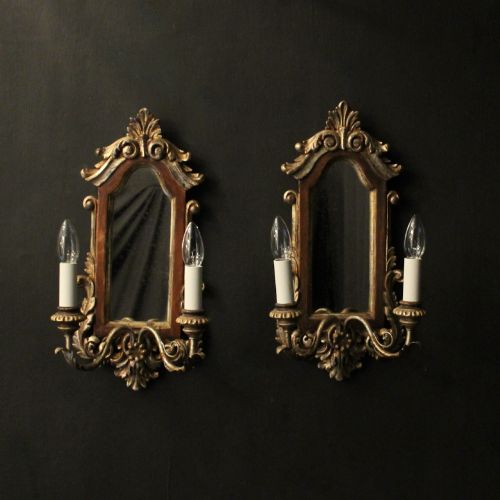
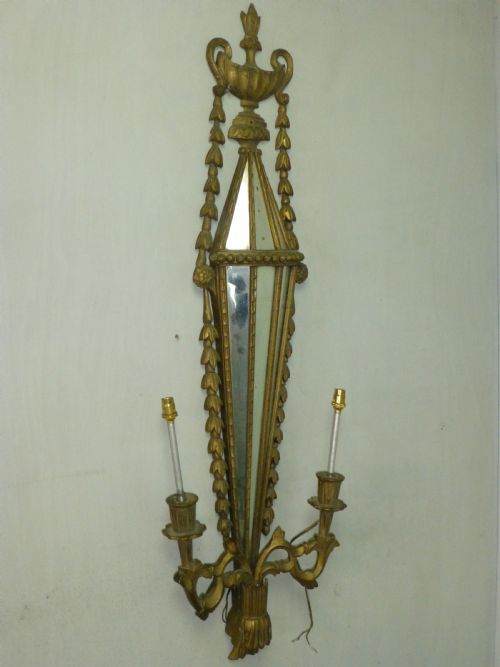
These Italian mirror sconces bring golden warmth and reflected light to a room, combining carved woodwork with functional candle arms.
Italian Mirror Sconces
Italian mirror sconces combine the reflective qualities of wall mirrors with the illumination of integrated candle arms, forming decorative wall fixtures designed to brighten period interiors. When searching for Italian mirror sconces, buyers encounter various forms including girandoles, cartouche mirrors, and twin-arm wall lights originating from workshops across Italy.
The pieces appearing on this page span several centuries, stretching from the eighteenth century through the nineteenth century and into the early twentieth century. Eighteenth-century examples often display Venetian or Florentine origins, while later pieces showcase revivals of Rococo and Baroque styles.
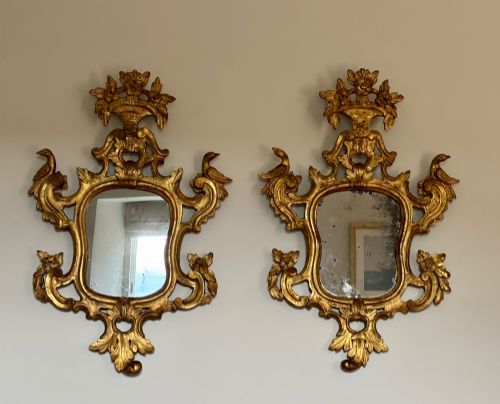
Most entries on this page consist of matched pairs rather than single items, particularly among the girandoles and giltwood wall mirrors. These twin pieces offer symmetry for placement between windows or flanking a fireplace.
Materials and construction methods
Carved wood forms the structural base for the majority of these pieces, providing a sturdy armature for intricate decorative details. Artisans shaped this timber by hand before applying layers of gesso to smooth the surface in preparation for gilding.
Gold leaf and giltwood finishes dominate the appearance of these wall lights, creating a brilliant reflective surface that catches candle or natural light. Polychrome treatments also appear on selected items, adding colour alongside the traditional metallic leaf.
Mirrored glass plates, including original and foxed examples, sit within the wooden frames to bounce light back into the interior space. Metal components support the twin arms on girandoles, securing the candle sconces firmly to the main body.
Italian Mirror Sconces Retail Price Guide 2026
Typical asking prices for italian mirror sconces among the pieces listed under this phrase on Sellingantiques today, from the lower quarter to the upper quarter. They describe what is for sale here now, not the wider market.
Materials recorded across the inventory include carved wood, gesso, giltwood, and mirrored glass.
Assessing craftsmanship and condition
The depth and fluidity of the wood carving dictate the visual refinement of an individual piece, separating masterwork ornamentation from stiffer, mechanical execution. Artisans working in the Florentine and Venetian traditions achieved high levels of relief in their scrollwork and floral motifs.
The integrity of the original gilding and the character of the glass plate influence the desirability of these items. Foxed mirror plates and undisturbed gold leaf retain the authentic patina of age, whereas heavy modern interventions alter the historic surface.
The Italian Mirror Sconces Glossary
- Girandole
- A branched wall-bracket or sconce featuring candles and a mirror to multiply the reflected light. These decorative fixtures often display elaborate carved frames.
- Giltwood
- Timber that has been covered with a thin layer of gold leaf. This finish protects the wood beneath while providing a bright metallic sheen.
- Gesso
- A plaster mixture applied to carved wood to create a smooth surface for gilding. It allows craftsmen to crisp up fine details before applying gold leaf.
- Foxed plate
- A mirror glass showing spots, dark patches, or discolouration resulting from age and the breakdown of the backing. Collectors often prize this natural weathering.
- Cartouche
- An ornamental frame resembling a rolled-up piece of parchment or a shield, frequently seen on eighteenth-century mirrors. This decorative surround houses the central glass plate.
Italian Mirror Sconces: Frequently Asked Questions
What is a girandole mirror?
A girandole mirror combines a reflective glass plate with one or more candle arms attached directly to the frame. These pieces were designed to hang on walls and amplify the illumination of rooms before the advent of electricity.
Craftsmen often carved these frames from wood and gilded them with gold leaf to catch and scatter the flickering candle flames.
How do I date an antique mirror?
Dating relies on examining the construction techniques, the materials used for the frame, and the characteristics of the glass plate. Eighteenth-century examples often feature hand-carved giltwood and older mirror plates with natural foxing.
Stylistic cues such as Rococo asymmetry or Baroque weight also help assign a piece to a specific period like the nineteenth century or early twentieth century.
What does foxed glass mean?
Foxed glass refers to mirror plates that have developed dark spots, mottling, or cloudy patches due to the age-related degradation of the reflective backing. This characteristic develops naturally over decades as moisture and air interact with the silvering.
Many collectors value foxed plates because they confirm the age and authenticity of the mirror.