



Italian Marine Painting
These Italian marine painting works capture Mediterranean ports and coastal light through oil and watercolour, bringing historic maritime scenes straight to your walls.
Italian Marine Painting
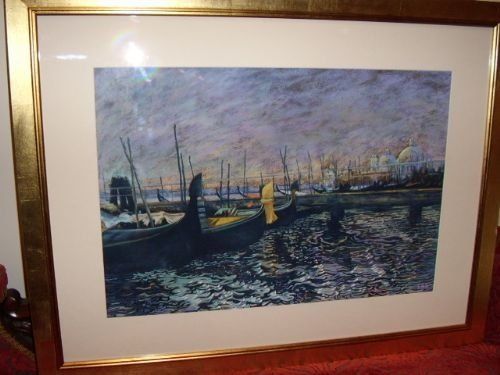
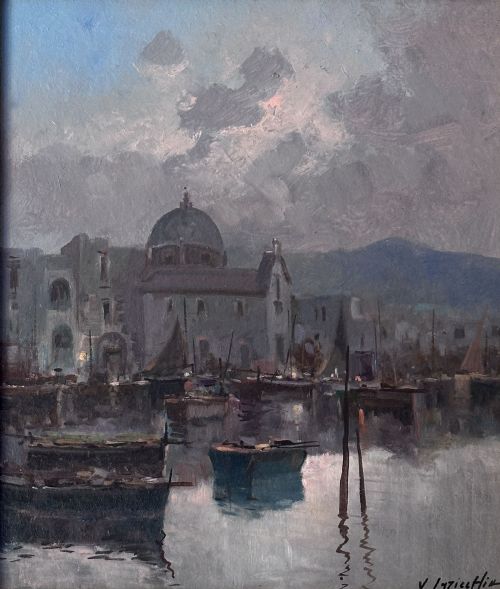
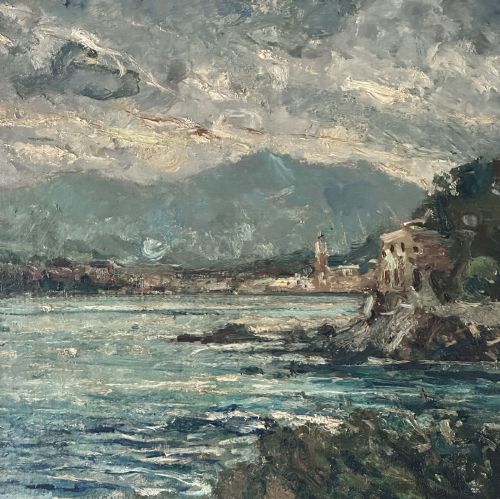
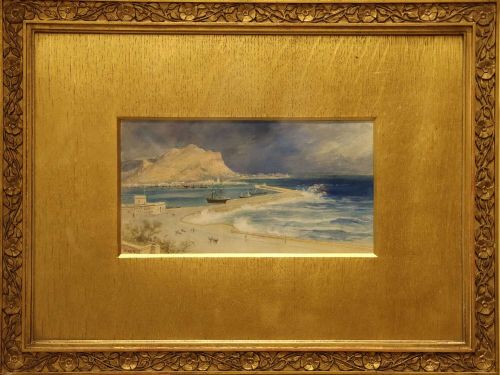
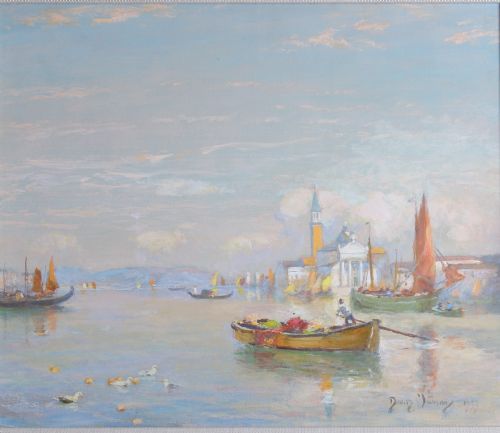
An Italian marine painting brings the historic waters of Venice, Naples, Capri, and Palermo into view through traditional oil on canvas and delicate watercolours. These works range from seventeenth-century classical harbour compositions to nineteenth-century Victorian coastal studies and mid-century impressions.
The subjects focus heavily on Venetian lagoons, the Doge's Palace, Neapolitan piers, and bustling Mediterranean ports featuring local fishermen and sailing vessels. Painters of these coastal scenes often worked in specific regional groups such as the School of Posillipo.
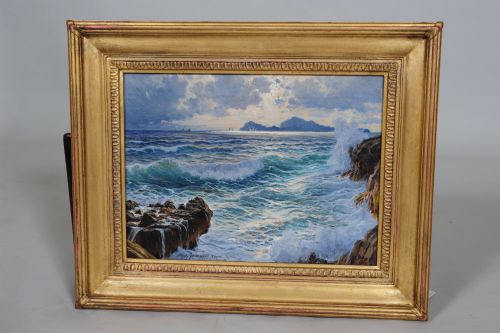
Buyers will find framed artworks depicting moonlight on canals, heavy seas off port piers, and sunlit shorelines. The period span stretches from seventeenth-century circle works up to mid-twentieth-century miniatures on wood panels.
Materials and Technique
Artists painted primarily with oil on canvas or wood panel, applying pigment to capture the distinct light of the Mediterranean. Watercolours and gouache on paper also appear frequently, often combined with ink pen work for architectural detail in Venetian scenes.
Frames play a crucial role in presentation, utilising giltwood and gilded wood to complement the maritime subjects. Glass protection guards works on paper and delicate watercolours against environmental moisture.
Italian Marine Painting Retail Price Guide 2026
Typical asking prices for italian marine painting among the pieces listed under this phrase on Sellingantiques today, from the lower quarter to the upper quarter. They describe what is for sale here now, not the wider market.
Several artists clearly enjoyed painting boats so much they snuck tiny gondolas into almost every single Venetian lagoon.
Quality and Execution
Quality rests heavily on the strength of the brushwork and the artist's ability to render atmospheric light upon water. Works by named nineteenth-century painters and recognised followers demonstrate superior draughtsmanship compared to anonymous student pieces.
The preservation of the original canvas, paper, and giltwood frame dictates the overall integrity of the piece. Superior examples maintain vibrant pigment layers without excessive retouching or structural degradation.
Michele Federico·Sir David Murray RA·Fernando Del Basso·Jane Vivian·Alfred Pollentine·Arthur Joseph Meadows
The Italian Marine Painting Glossary
- Pierhead painting
- A specific genre of marine art depicting a named vessel arriving at or departing from a specific port. These works were often commissioned by ship captains or owners.
- School of Posillipo
- A nineteenth-century group of landscape and marine painters based near Naples who focused on direct observation of nature and coastal light. Their work heavily influenced Neapolitan seascape art.
- Giltwood
- Wood carved and coated with gold leaf or gold paint, frequently used for traditional frames surrounding nineteenth-century oils. It adds warmth and reflects light onto the canvas.
- Gouache
- An opaque water-based paint used alongside watercolours to create solid areas of colour and sharp highlights. It provides rich opacity in architectural townscapes.
- Provenance
- The documented history of ownership attached to an artwork, establishing its authenticity and past exhibition record. Clear provenance enhances the historical value of antique marine pieces.
Italian Marine Painting: Frequently Asked Questions
Where were these maritime scenes usually painted?
Most of these works originate from key Italian maritime hubs, with a strong concentration around Venice, Naples, Capri, Palermo, and Livorno. Artists set up their easels along harbour piers, lagoons, and coastal cliffs to capture local vessel traffic.
Venetian views frequently feature the Grand Canal and the Doge's Palace, whilst Neapolitan compositions often include Vesuvius and local fishermen in the bay.
How do I care for antique watercolours?
Watercolours on paper require protection from direct sunlight to prevent the pigments from fading over time. Keep them away from damp environments to safeguard the paper support and any accompanying ink work.
Display them behind glass with conservation-grade mounts that prevent the paper from touching the glazing directly.
What is the difference between an oil painting and a watercolour?
Oil paintings utilise pigment suspended in drying oils applied to canvas or wood panels, offering a rich, textured surface with deep tonal range. Watercolours use water-soluble pigments applied to paper, yielding a transparent and luminous quality.
Oils are generally more robust and traditionally housed in heavy giltwood frames, whereas watercolours require glass protection.
How can I tell the period of a marine painting?
Dating relies on stylistic clues, clothing styles of figures in the harbour, the types of ships depicted, and framing materials. Seventeenth-century works often reflect classical landscape traditions, whilst nineteenth-century pieces lean towards Victorian realism or early impressionist techniques.
Signatures, artist dates, and inscriptions on the reverse of the canvas or frame also provide concrete chronological markers.