



Italian Gilt Chair
An italian gilt chair brings theatrical Italian grandeur into a room, offering striking carved timber and opulent gilded surfaces that catch the light.
Italian Gilt Chair
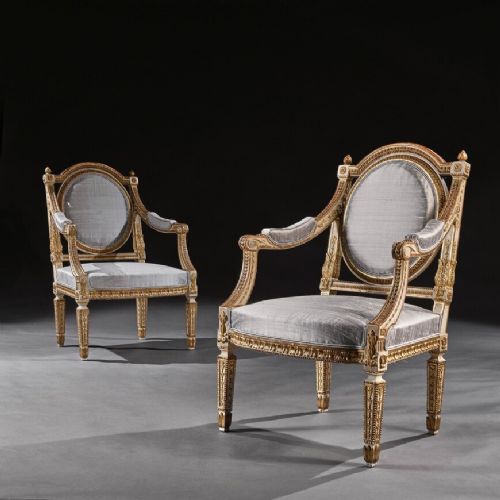
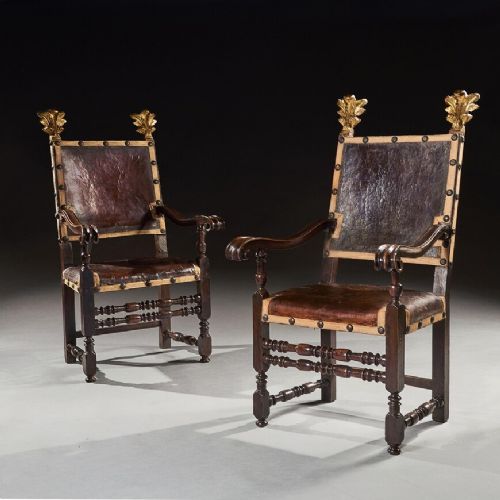
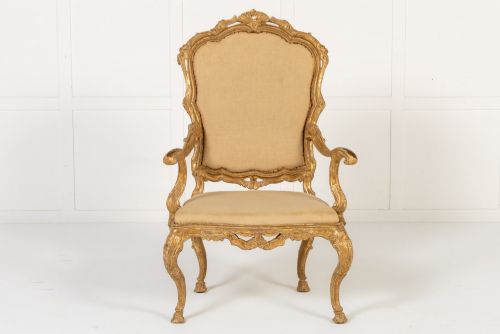
The most common form met here is the armchair, often presented in pairs, featuring elaborate carved timber frames and luxurious upholstery. Buyers also encounter painted and parcel-gilt dining chairs, as well as distinct regional variations spanning multiple historic design movements.
Stylistically, these chairs range from the exuberant curves of Italian Rococo and Baroque to the restrained symmetry of Neoclassical design and Renaissance Revival. Each period imparts a distinct architectural weight and decorative vocabulary to the seating frame.
Construction and materials
Maker's workshops built these chairs using solid timber such as walnut and carved wood, preparing the structural frames before applying surface ornament. Artisans laid down layers of gesso to create a smooth, receptive base for subsequent gilding.
Finishing involved the meticulous application of gold leaf or silver leaf to the prepared wooden surfaces, complemented by painted wood details where appropriate. Upholstery materials like fabric, leather, and hessian completed the seating, fastened traditionally to the wooden frames.
Italian Gilt Chair Retail Price Guide 2026
Typical asking prices for italian gilt chair among the pieces listed under this phrase on Sellingantiques today, from the lower quarter to the upper quarter. They describe what is for sale here now, not the wider market.
One listed item is an entire enclosed sedan chair, built for moving elite passengers through narrow streets before the age of motors.
Judging quality in gilded seating
The distinction between tiers rests upon the crispness of the wood carving and the depth of the underlying gesso work. Superior examples exhibit hand-carved relief that retains sharp contours beneath the metallic leaf, whereas lesser pieces show softened details and hurried preparation.
The integrity of the gilded surface and the authenticity of the timber framework dictate overall distinction. Original gold leaf surfaces that have aged naturally carry a depth of tone that distinguishes them from later, heavy-handed interventions.
The Italian Gilt Chair Glossary
- Giltwood
- Timber covered with a thin layer of gold leaf applied over a prepared ground. This material defines the luxurious reflective surfaces found on high-end antique seating.
- Gesso
- A plaster-like mixture applied to wood to create a smooth surface for gilding. It provides the foundation that allows fine carved details to remain sharp under metal leaf.
- Parcel-gilt
- A decorative treatment where only specific portions of an object are gilded while the rest is painted or left as exposed wood. This technique highlights particular architectural carvings on the chair frame.
- Savonarola chair
- A folding wooden armchair formed of multiple intersecting curved slats. This specific historic form draws on Renaissance design traditions.
Italian Gilt Chair: Frequently Asked Questions
How do I clean an antique gilt chair?
Dust the gilded surfaces gently with a soft, dry brush to prevent accumulation. Avoid all liquid cleaners and commercial polishes, which can strip fragile gold leaf.
Inspect the upholstery separately, using gentle textile care suited to the specific fabric or leather present. Professional conservation is advised for any structural or surface instability.
Are these chairs comfortable for daily use?
Many of these seating forms were built for formal display or dining rather than modern lounging. Their upright backs and historic proportions offer firm support.
If you plan to use them regularly, ensure the internal webbing and upholstery layers are sound. Lighter usage helps preserve delicate eighteenth-century frames.
Can I mix these chairs with modern interiors?
Gilded seating acts as a powerful focal point in contemporary spaces, contrasting well with neutral walls and clean lines. Pairing antique armchairs with minimalist furniture creates a deliberate visual tension.
Ensure the scale of the chair matches the surrounding room proportions. A single statement piece prevents the metallic finish from overwhelming a modern setting.