
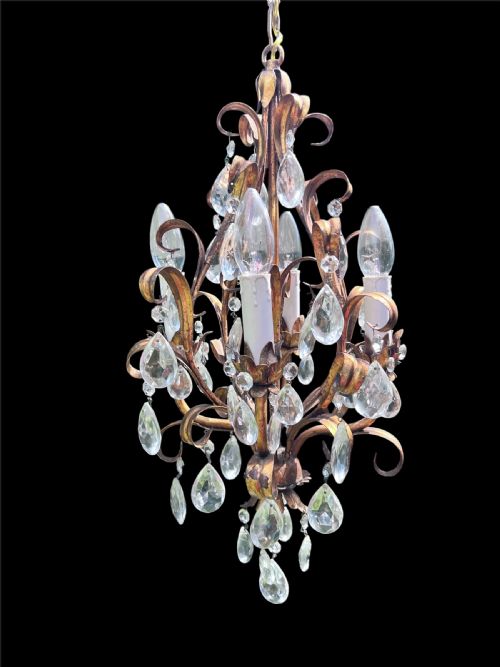


Italian Gilt Brass Fixture
An italian gilt brass fixture brings dramatic light and warmth to a room through gilded surfaces and glass crystals.
Italian Gilt Brass Fixture
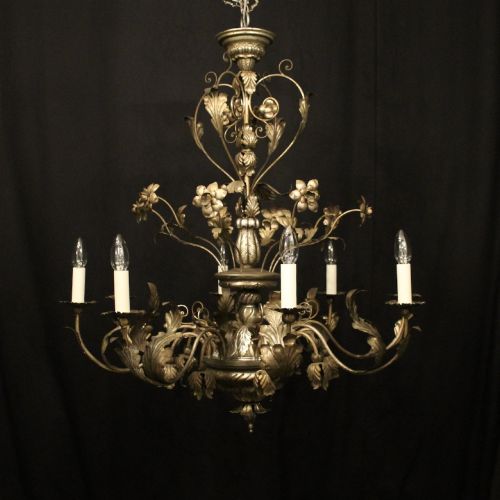
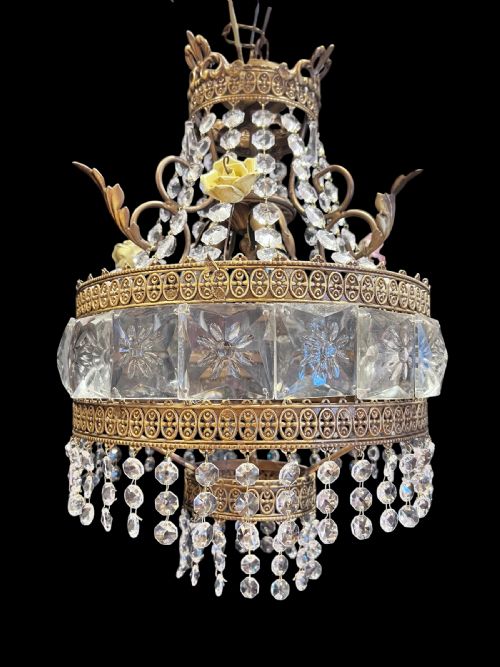
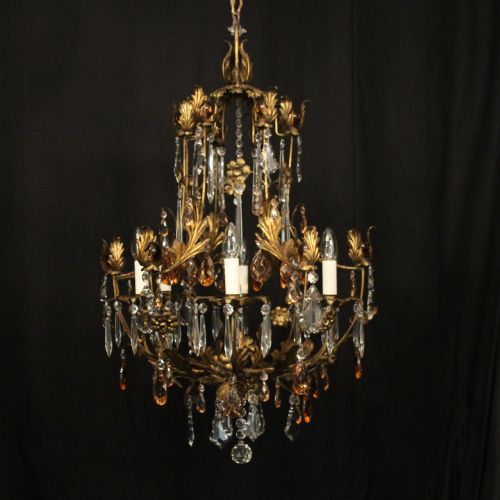
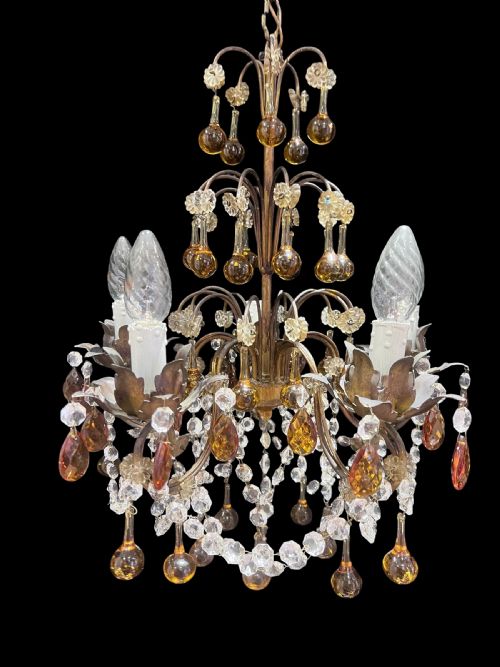
Makers and artisans constructed these light fittings in various distinctive styles, prominently including Italian Florentine, Rococo Revival, and Neoclassical designs. Buyers frequently encounter ornate frames adorned with leafy motifs, porcelain flowers, or coloured glass fruits.
The objects serve primarily as overhead ceiling lights or paired wall lights, offering substantial illumination through configurations ranging from three to eighteen lights. Their distinct regional character reflects classic Italian craftsmanship applied to domestic lighting.
How they were made
Craftsmen shaped structural components from brass and gilt metal, applying surface gilding to achieve rich metallic finishes. Frames often incorporate gilt iron or gilded bronze to support the overall weight of the fixtures.
Makers suspended various forms of glass, crystal, and coloured crystals from the metal armatures to refract light across the room. Selected pieces integrate delicate porcelain elements such as handcrafted flowers and glass fruits directly into the frame.
The selection includes Italian Florentine and Rococo Revival styles originating primarily from the early twentieth century and the Victorian era.
What varies in quality
Quality differentiates through the complexity of the metalwork and the richness of the gilding applied to the brass frame. Finer examples display intricate leafy carvings and substantial bronze or brass structures rather than simple pressed metal.
The abundance and clarity of the crystal components also set pieces apart, with superior items featuring heavy cut glass drops and integrated coloured fruits or porcelain flowers. The scale of the fixture, ranging from intimate three-light sconces to large eighteen-light double-tiered chandeliers, dictates the presence of grander architectural detailing.
The Italian Gilt Brass Fixture Glossary
- Gilt brass
- Brass metal treated with a thin layer of gold leaf or gilt finish to create a bright, reflective surface. This treatment provides both corrosion resistance and aesthetic warmth.
- Florentine style
- An artistic tradition originating in Florence characterised by ornate, naturalistic motifs such as carved leaves, scrolls, and floral arrangements. It heavily influences the frames of many twentieth-century Italian chandeliers.
- Sconce
- A wall-mounted light fixture designed to hold candles or electric lamps. Historical examples often use mirrored backs or polished metal to amplify the illumination.
- Crystal drop
- A cut piece of glass or crystal suspended from a chandelier to refract light into distinct spectral colours. These elements hang in various configurations across the arms and tiers of larger lights.
- Tiered chandelier
- A multi-level hanging light fixture where arms arrange across distinct vertical levels to increase illumination capacity. Such configurations create a commanding vertical presence in large rooms.
Italian Gilt Brass Fixture: Frequently Asked Questions
How do I clean an italian gilt brass fixture?
Dust the metal framework gently with a soft, dry cloth to protect the delicate gilt surface from abrasion. Avoid harsh chemical cleaners that can strip away the original gold leaf finish.
Remove glass crystals individually for washing in warm soapy water if heavy grime accumulates. Ensure every component dries completely before reattaching it to the frame.
Can these antique chandeliers use modern bulbs?
Most antique light fittings accommodate modern low-wattage LED candle bulbs once properly wired by a qualified electrician. It is important to match the electrical load capacities of the original sockets.
Consult a professional restorer to update internal wiring while preserving the external historical aesthetic. This ensures safe operation within contemporary domestic environments.
What rooms suit a grand multi-tiered chandelier?
Large two-tier chandeliers work best in spaces with high ceilings, such as formal dining rooms or entrance halls. Their substantial scale requires adequate clearance below to maintain proper spatial balance.
Smaller three or five-light variations fit comfortably in bedrooms or cosy sitting rooms where intense illumination is unnecessary. Positioning depends heavily on the physical dimensions of the fixture and the room proportions.
How do I identify a Florentine lighting style?
Florentine pieces display prominent organic ornamentation, including carved gilt leaves, cascading floral motifs, and scrolling metal arms. These designs emphasise natural movement over strict geometric symmetry.
The presence of painted porcelain flowers or suspended coloured fruits further signals this regional aesthetic. Artisans used these decorative flourishes to mimic natural garden elements in interior settings.