



Italian Blackamoor Figure
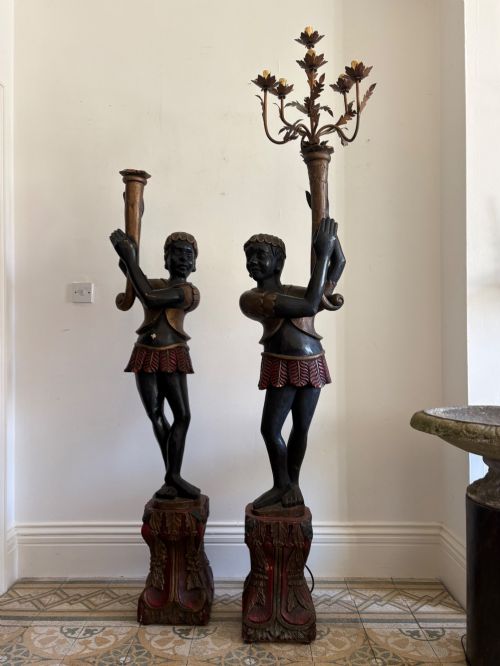
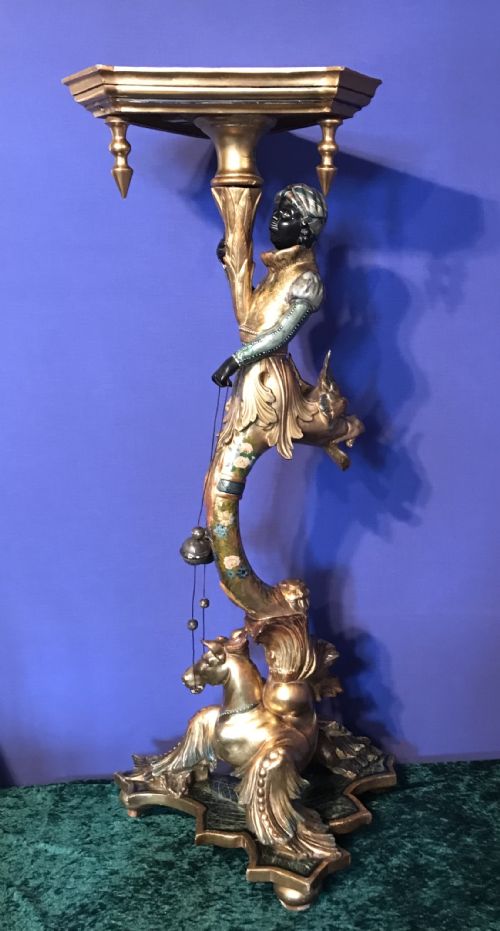
These italian blackamoor figure examples bring dramatic Venetian craft and rich polychrome surface decoration straight into a room.
Italian Blackamoor Figure
An italian blackamoor figure represents a tradition of sculptural furnishings originating primarily from Venetian workshops during the nineteenth century. These pieces serve functional roles as floor lamps, torcheres, candlesticks, and side tables while maintaining a striking sculptural presence. You will frequently encounter life-size statues holding lights, as well as smaller waiter figures and pedestal stands.
The aesthetic draws heavily on Venetian Baroque and Rococo styles, combining theatrical poses with elaborate attire and decorative accessories. Most examples date from the nineteenth century up to the 1920s, showing consistent regional origins in Italy. Forms range from simple torchere stands to complex sculptural groups with integrated candelabras and planters.
Materials and construction methods
Makers shaped these figures predominantly from carved wood, utilising gesso to prepare intricate surface details before applying paint and leaf. Artisans employed polychrome paint alongside gold leaf, parcel-gilt, and ebonised wood finishes to achieve rich visual textures. Certain variations incorporate cast brass for functional lighting elements like candlesticks.
Italian Blackamoor Figure Retail Price Guide 2026
Typical asking prices for italian blackamoor figure among the pieces listed under this phrase on Sellingantiques today, from the lower quarter to the upper quarter. They describe what is for sale here now, not the wider market.
The available pieces span the nineteenth century up to the 1920s, predominantly originating from Venetian workshops.
Distinctions in execution and finish
The preservation and quality of the original surface decoration heavily dictate the character of each piece. Superior items retain rich, complex polychrome paint and intact gold leaf or gilding without heavy modern overpainting. The complexity of the functional form, whether a simple candlestick or a life-size floor lamp with multiple candle arms, also influences the piece.
The Italian Blackamoor Figure Glossary
- Polychrome
- Painted in several colours. This surface treatment brings vibrant hues to the garments and decorative details of the figures.
- Torchere
- A tall stand or pedestal designed to carry a light. These tall supports often take the form of figures holding torches or candelabras.
- Gesso
- A plaster mix applied to wood surfaces as a base for paint and gold leaf. Artisans carve fine ornamental details directly into this prepared layer.
- Parcel-gilt
- Partially gilded with gold leaf. This technique highlights specific areas of the carving while leaving other parts painted.
- Ebonised
- Wood finished to resemble ebony. This dark stain provides a sharp contrast against gilt highlights and colourful garments.
Italian Blackamoor Figure: Frequently Asked Questions
What functions do these figures serve?
These pieces combine decorative sculpture with practical utility as floor lamps, torcheres, candlesticks, and small side tables. Many incorporate arms for holding candles or electrical fittings adapted later.
Their substantial height and theatrical designs allow them to function as striking focal points in a hallway or principal reception room.
Where were these pieces made?
The recorded examples originate primarily from Venetian workshops in Italy during the nineteenth century and early twentieth century. Makers drew inspiration from Venetian Baroque and Rococo traditions.
Regional Italian craft guilds and specialised studios produced these sculptural furnishings for domestic interiors.
How do I care for the polychrome surfaces?
Maintenance requires gentle dusting with a soft, dry cloth to protect the delicate layers of gesso, paint, and gold leaf. Avoid liquid cleaners and harsh chemicals that can strip or discolour the historic finishes.
Keep the pieces away from direct sunlight and excessive humidity to prevent the carved wood and surface layers from cracking.
How do I identify the age of a piece?
Dating relies on examining the timber substrate, the formulation of the gesso, and the ageing patterns within the polychrome paint and gilding. Nineteenth-century examples typically show distinct tool marks and natural craquelure in the painted finishes.
Stylistic cues such as the specific interpretation of Baroque revival forms also help narrow down the period of production.