

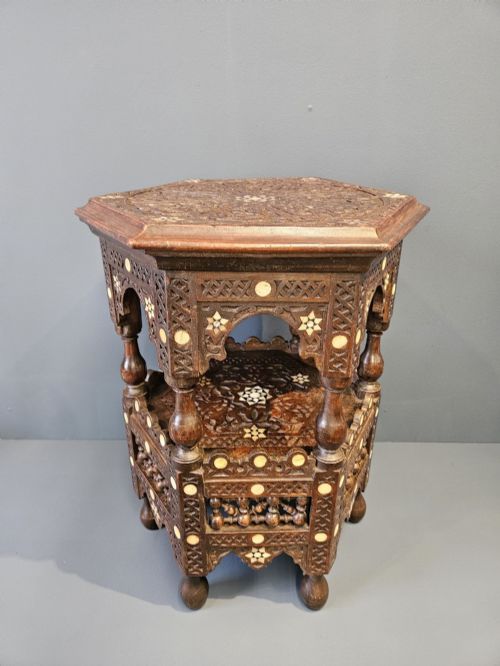


Islamic Wood Table
An islamic wood table brings intricate geometry and warm tones to a room, offering a functional surface rooted in centuries of craftsmanship.
Islamic Wood Table
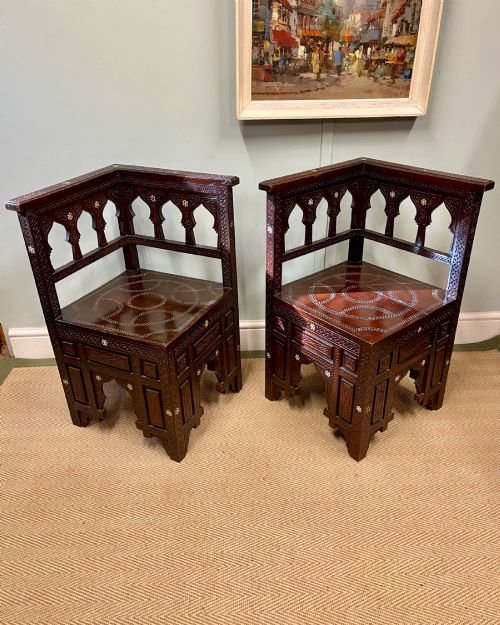
When you search for an islamic wood table, you encounter portable and static furniture primarily created across the nineteenth and early twentieth centuries in regional centres like Damascus, alongside pieces designed in the Moorish Revival and Ottoman traditions.
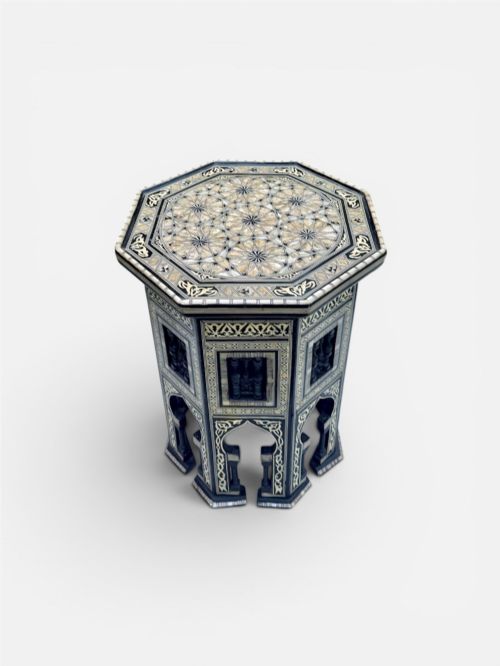
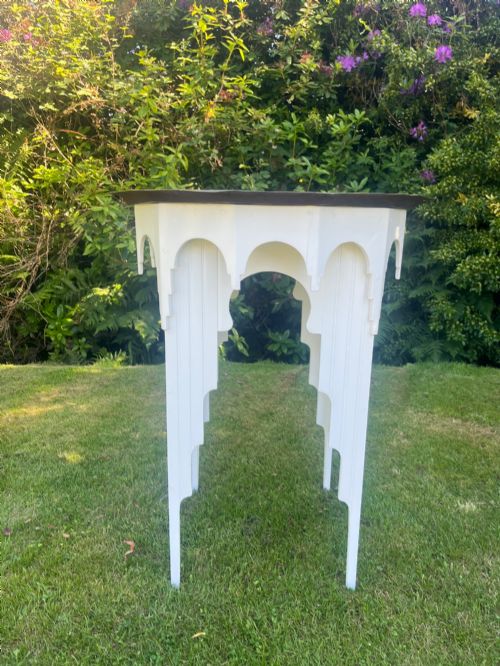
The most common formats on this page are octagonal and hexagonal side tables, occasional pieces, and games tables, often featuring complex geometric footprints that make them versatile for modern interiors.
Makers utilised various regional aesthetics, encompassing Syrian, North African, Persian, and wider Middle Eastern vocabularies, frequently blending local woodwork traditions with European department store patronage such as Liberty & Co.
Materials and construction
Makers constructed these tables from dense timbers including walnut, fruitwood, and general hardwood, carving the structural framework by hand before applying decorative surfaces.
Intricate surface decoration relies on the precise inlay of mother-of-pearl, bone, and contrasting bone inlay, alongside metalwork elements like brass tray tops and applied brass detailing.
Islamic Wood Table Retail Price Guide 2026
Typical asking prices for islamic wood table among the pieces listed under this phrase on Sellingantiques today, from the lower quarter to the upper quarter. They describe what is for sale here now, not the wider market.
The listings on this page span from the Victorian era through the 1930s, featuring walnut, fruitwood, brass, and bone inlay.
Assessing quality
Quality rests upon the density and precision of the geometric woodwork, where tight joints and crisp hand-carving distinguish superior examples from simpler production.
The richness of the piece often depends on the extent and retention of the mother-of-pearl and bone inlay, with denser geometric tessellation denoting higher craftsmanship.
Liberty & Co
The Islamic Wood Table Glossary
- Moorish Revival
- A nineteenth-century architectural and decorative style that drew upon Islamic design elements from Spain, North Africa, and the Middle East. It gained immense popularity in British and European interiors.
- Octagonal
- A geometric shape possessing eight sides, which forms the primary footprint for many traditional Middle Eastern and Islamic tables. This configuration allows for complex repeating patterns across the top.
- Mother-of-Pearl
- The iridescent inner layer of mollusc shells, harvested to create luminous geometric tesserae. Craftsmen embedded these pieces into wood surfaces to catch the light.
- Envelope Games Table
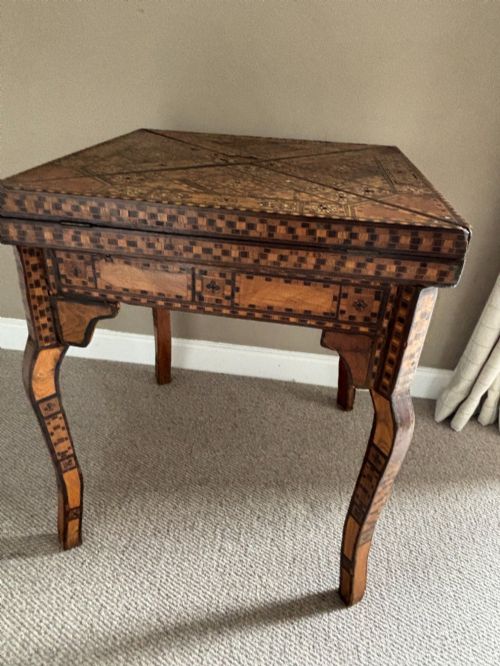
- A specialised table featuring fold-out flaps that reveal a specialised surface for gaming or writing. These examples often incorporate elaborate marquetry and inlay.
- Hexagonal
- A six-sided geometric form frequently utilised in the tabletops and bases of Near Eastern furniture. It provides structural stability while permitting intricate surface ornamentation.
Islamic Wood Table: Frequently Asked Questions
What is an islamic wood table?
These pieces are decorative and functional items of furniture created in the nineteenth and early twentieth centuries, drawing upon regional Middle Eastern and North African design traditions.
They serve as side tables, lamp tables, and occasional surfaces in contemporary rooms, valued for their distinct geometric woodwork and contrasting inlay.
How were these tables used originally?
In their regions of origin, similar low tables functioned for dining, social gatherings, or holding decorative objects within domestic interiors.
When imported to Britain during the Victorian and Edwardian eras, they were repurposed as smoking room accents, drawing room occasional tables, or display surfaces for ornaments.
How do I live with an inlaid table?
These tables integrate easily beside sofas or chairs, functioning well as lamp stands or places to rest books and drinks.
Because they feature delicate organic materials like bone and mother-of-pearl, placing them away from direct heat sources and using coasters protects the historic surfaces.
How can I tell the periods apart?
Victorian and nineteenth-century examples often display denser hand-carved decoration and extensive bone or mother-of-pearl mosaic work.
Pieces from the early twentieth century, such as those from the 1920s and 1930s, sometimes show simplified construction or incorporate brass trays alongside traditional wooden folding stands.