




Islamic Accent Table
An islamic accent table brings intricate geometry and rich material contrast into a room, offering a functional surface rooted in eastern and revivalist craft.
Islamic Accent Table
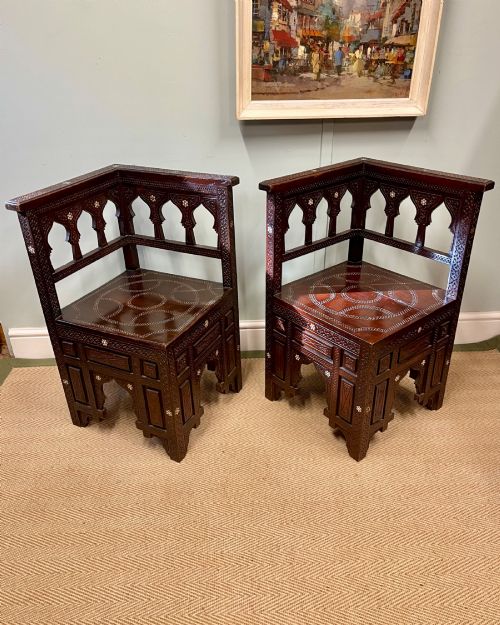
When you search for an islamic accent table, you encounter decorative occasional and side tables originating primarily from late nineteenth and early twentieth century production. These furnishings span Moorish Revival, Mamluk Revival, and Persian aesthetic traditions, reflecting intense European and Middle Eastern design exchange during the Victorian and Edwardian eras.
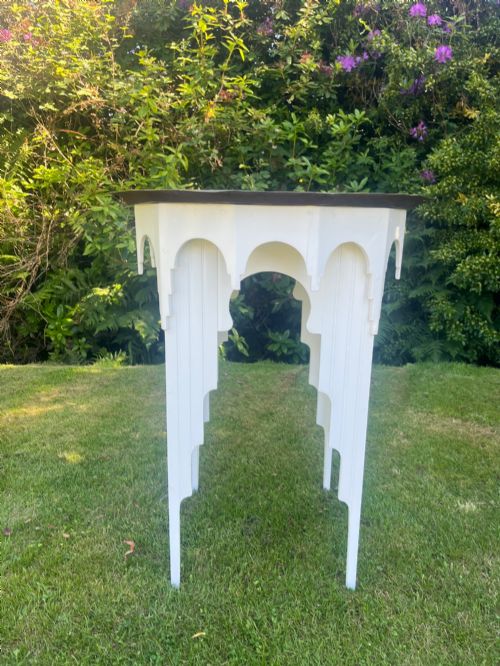
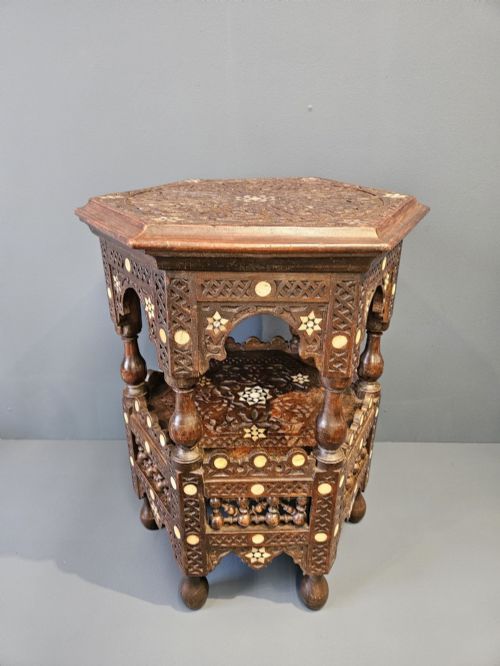
You are most likely to meet hexagonal and octagonal forms on this page, often featuring low profiles suited for use beside seating. Such pieces typically utilise dense timber frames completely transformed by intricate surface decoration.
The regional origins of these pieces extend across Cairo, Syria, and broader Ottoman territories, sometimes bearing retail attribution to firms like Liberty & Co. Side tables and corner tables dominate the selection, functioning as compact display surfaces.
How they were made
Makers constructed the timber frames using walnut and various hardwoods, frequently shaping them into multi-sided geometries like hexagons and octagons. Carpenters employed deep hand carving to create openwork patterns and structural reliefs across the wood.
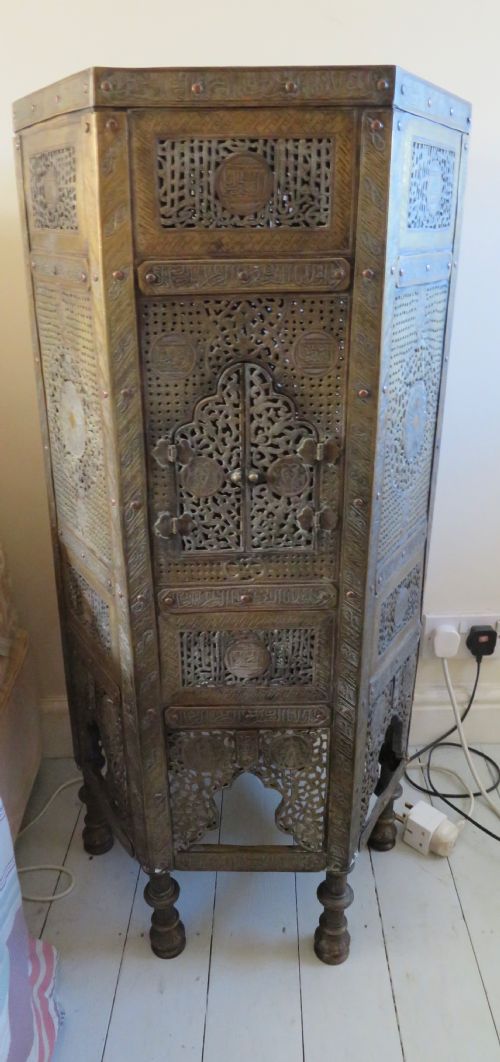
Surface embellishment relied heavily on meticulous inlay work, setting tiny fragments of mother-of-pearl and bone directly into the timber matrix. Metal elements also appeared, combining brass, copper, and white-metal through techniques such as cairoware engraving and inlay.
Several tables feature hidden cupboards inside their geometric frames, offering tiny compartments for storing very small secrets.
What varies in quality
The standard of a piece rests largely on the precision of the geometric inlay and the crispness of the wood carving. Finer examples display tightly fitted mother-of-pearl and bone fragments with minimal filler, whereas simpler items show wider gaps between mosaic tesserae.
Structural integrity and the complexity of the timberwork also divide standard production from exceptional examples. Tables featuring fully enclosed cupboards, intricate pierced lattice panels, or mixed metal and shell decoration represent the more ambitious tier of manufacturing.
Liberty & Co
The Islamic Accent Table Glossary
- Moorish Revival
- A nineteenth-century architectural and decorative style that reinterpreted traditional Islamic design elements for Western interiors. It heavily influenced European furniture production of the period.
- Cairoware
- Metalwork originating from Cairo, typically brass inlaid with silver, copper, or black paste in calligraphic and geometric patterns. This technique appears on occasional tables adapted for European markets.
- Mother-of-Pearl
- The iridescent inner layer of mollusc shells, cut into small geometric shapes for inlay work. It provides striking contrast against dark walnut and hardwood surfaces.
- Hexagonal
- Having six sides and six angles, forming a common geometric plan for these tables. This shape facilitates complex interlocking patterns in both woodwork and inlay.
- Occasional table
- A small, movable table designed for periodic use rather than primary dining or writing. These pieces function well as display surfaces for lamps and decorative objects.
Islamic Accent Table: Frequently Asked Questions
What is an islamic accent table?
An islamic accent table is a low occasional or side table decorated with geometric carving, mother-of-pearl, bone, or metal inlay. These furnishings reflect revivalist styles popular in Europe and the Middle East during the nineteenth and early twentieth centuries.
They generally take hexagonal or octagonal forms, functioning as compact decorative surfaces within a room.
How were these tables used?
Historically, these tables served as functional display surfaces for lamps, decorative vessels, and everyday items in Victorian and Edwardian drawing rooms. Their low profiles made them suitable for placement beside low seating arrangements.
Today, they continue to function as versatile accent pieces that introduce texture and pattern into contemporary living spaces.
How do I care for inlaid wood?
Inlaid wooden tables require stable indoor humidity to prevent the timber from warping and to keep tiny pieces of bone and shell secure. Dusting gently with a dry, soft cloth preserves the delicate surface without introducing moisture into the crevices.
Avoid placing these items near direct heat sources or in strong sunlight, which can dry out the wood and discolour the inlay materials.
How can I tell the period?
Dating relies on examining the timber construction, the style of the carving, and the specific combination of inlay materials. Pieces from the late nineteenth century often display dense hand-carved openwork and complex mother-of-pearl mosaics.
Later pieces into the 1920s and 1930s sometimes show simpler construction methods or alternative metal elements like cairoware brass tops.