






Iron Urn on Pedestal
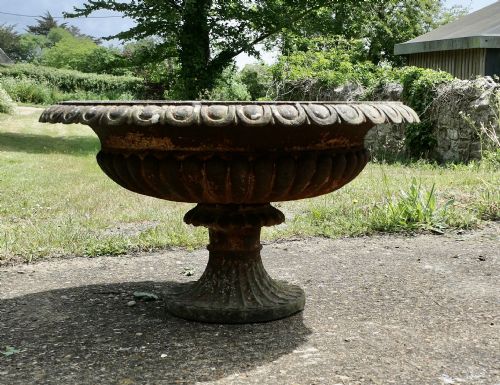
An iron urn on pedestal brings classical proportion to the garden, offering a substantial focal point built to weather the elements.
Iron Urn on Pedestal
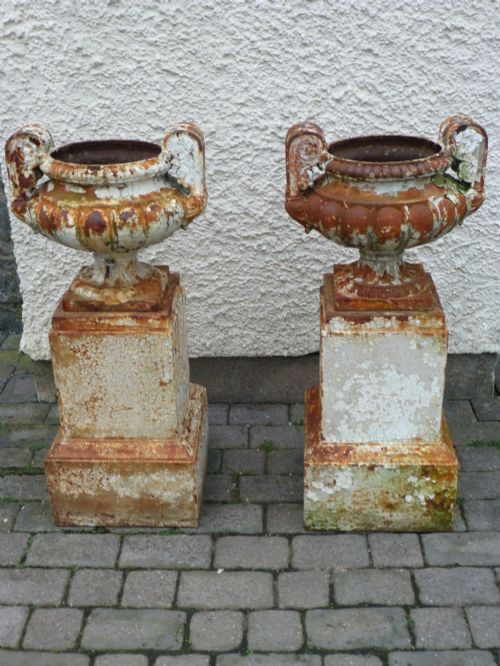
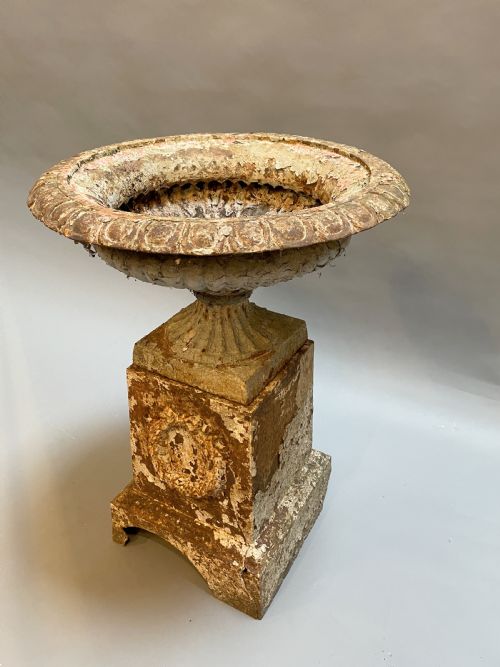
An iron urn on pedestal combines heavy metal casting with a dedicated plinth base to elevate garden planting. Buyers seeking an iron urn on pedestal typically encounter Victorian or nineteenth-century examples alongside Regency, Georgian, Edwardian, and later iterations.
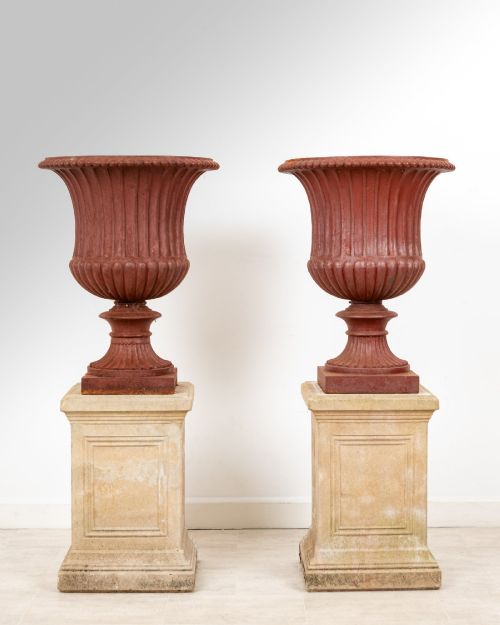
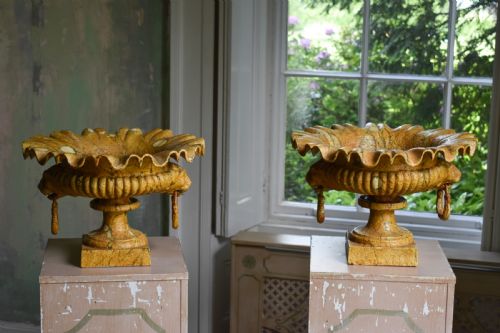
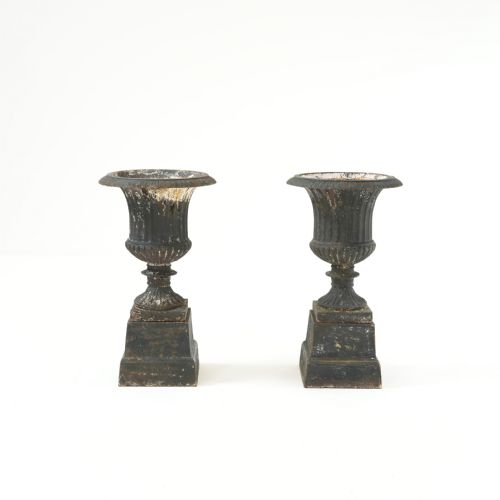
The primary forms take shape as garden urns, campana urns, and decorative planters. These pieces frequently appear in pairs designed for outdoor display and grand garden architecture.
Origins stretch across English foundries and continental workshops, encompassing styles from classical revival to nearness of neoclassical design. The scale ranges from modest garden pots to large architectural jardiniere arrangements.
Methods of manufacture
Foundries utilised cast iron poured into moulds to achieve durable garden vessels with crisp decorative detail. Many surfaces show layers of historic paint applied over the raw cast metal to protect against outdoor corrosion.
Some examples pair the heavy cast iron body with integrated or separate stone pedestals and plinth bases. This dual material construction provides structural stability for large urns resting upon lawns or terraces.
Iron Urn on Pedestal Retail Price Guide 2026
Typical asking prices for iron urn on pedestal among the pieces listed under this phrase on Sellingantiques today, from the lower quarter to the upper quarter. They describe what is for sale here now, not the wider market.
Many a Victorian gardener rested weary knees beside these heavy iron vessels, plotting grand floral displays that outlived the designer.
Distinctions in quality
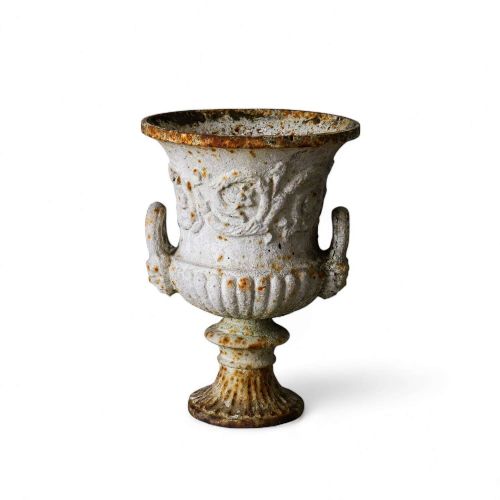
Quality rests in the crispness of the cast ornament, such as gadrooning or acanthus leaf motifs, which can soften across worn moulds. Superior examples maintain sharp relief and balanced proportions between the vessel and its stand.
The integrity of the original pairing matters greatly, as matching original plinths elevate the coherence of the piece. Surface weathering also plays a role, where honest patination enhances the heavy cast metal rather than obscuring form.
Falkirk Carron foundry·Coalbrookdale·Andrew Handyside
The Iron Urn on Pedestal Glossary
- Campana urn
- A bell-shaped garden vessel with an everted rim, widely produced during the nineteenth century for classical landscape schemes.
- Gadrooned
- Decorated with a series of convex vertical curves or flutes, commonly seen encircling the bowl of classical garden urns.
- Plinth base
- A heavy supporting block or pedestal that elevates the urn and grounds its proportion in a garden setting.
- Neoclassical
- A style drawing upon classical antiquity, influencing the clean lines and formal ornamentation of nineteenth-century ironwork.
Iron Urn on Pedestal: Frequently Asked Questions
How do I date an iron urn?
Dating relies on stylistic clues, foundry marks, and the character of the cast iron surface. Nineteenth-century examples often display heavier casting methods and distinct neoclassical or Victorian motifs.
Later twentieth-century iterations tend to feature simpler lines or different foundry techniques. Comparing the bolt fixings and weathering patterns helps confirm the period of manufacture.
Are these urns frost proof?
Cast iron handles outdoor conditions well, enduring seasonal changes when properly maintained. The metal itself withstands cold temperatures, though standing water inside the bowl should be managed during deep freezes.
Ensuring proper drainage holes prevents ice expansion from cracking the historic metal. Regular inspection of the painted or weathered surface protects the iron beneath.
Do pedestals always match the urn?
Many pieces survive with their original plinths, while others have been paired with complementary stone or iron stands over time. Original pairings show consistent weathering and matching mounting points.
Examining the interface between the urn and the pedestal reveals whether they were cast or designed as a single suite.
How do I care for cast iron?
Maintaining cast iron involves monitoring the surface coating to prevent rust from taking hold. Periodic application of exterior paint or protective wax preserves the metal against moisture.
Keeping the interior clear of damp soil buildup during winter months prolongs the lifespan of the vessel.