

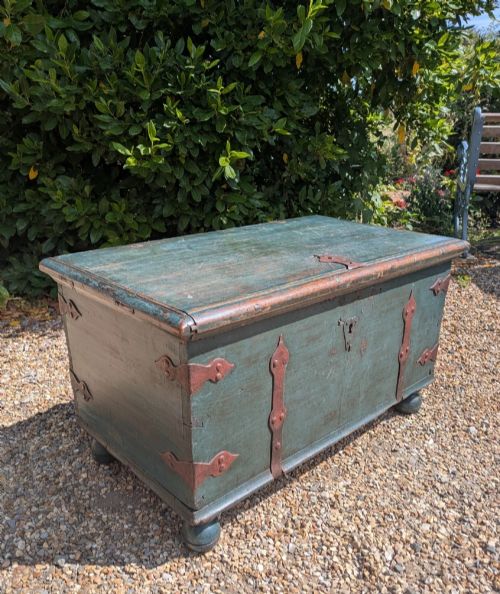
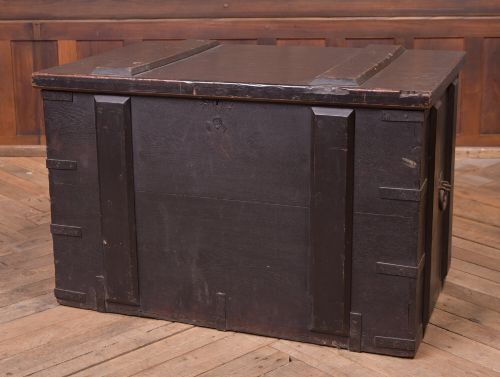


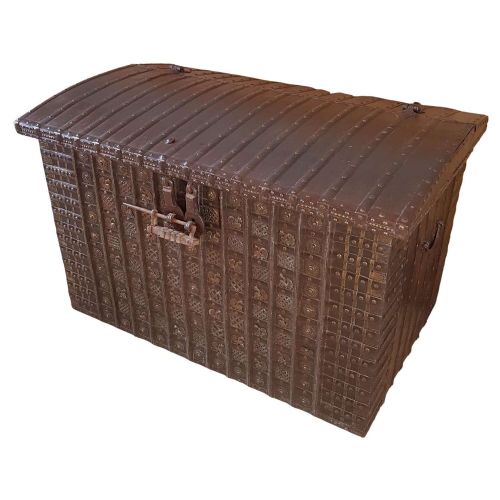

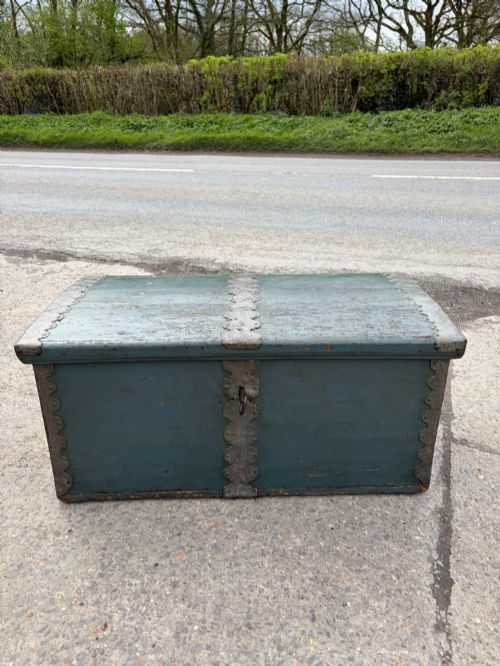


Iron Strap Coffer
An iron strap coffer provides secure storage through heavy metalwork over timber, bringing centuries of robust craft into modern interiors.
Iron Strap Coffer
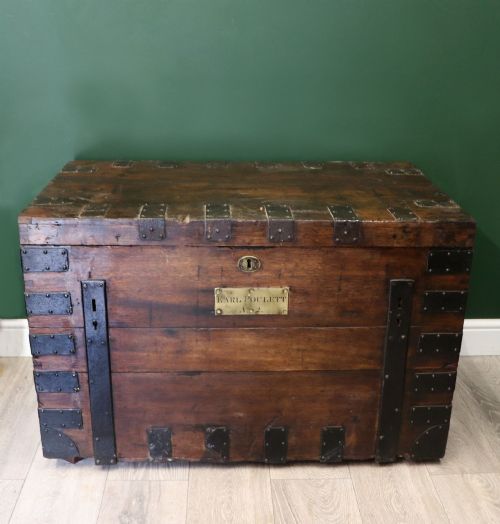
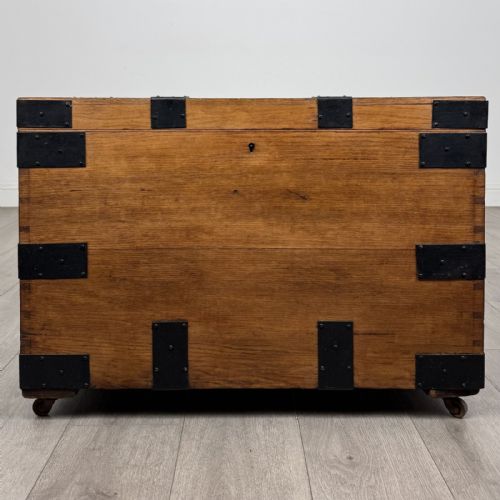
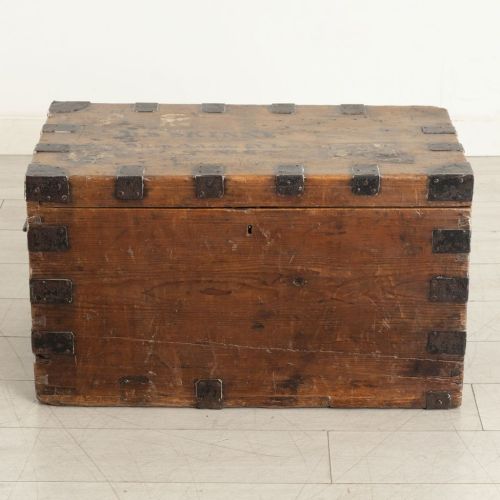
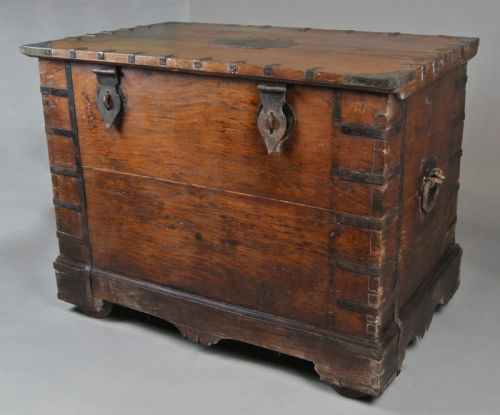
An iron strap coffer is a heavy storage piece defined by structural metal banding over a timber carcase. When you search for this phrase, you encounter trunks, chests, strong boxes, and dowry chests originating from British, European, Scandinavian, and Asian workshops.
The pieces appearing on this page span several centuries, reaching from the sixteenth century through the Georgian and Victorian periods into the early twentieth century. You find domestic blanket boxes alongside specialised silver chests, travel trunks, and painted marriage boxes.
Forms vary from flat-topped travel trunks to dramatic dome-topped coffers and low dowry chests. Timber choices include oak, pine, teak, elm, and mahogany, reinforced with hand-forged or wrought iron straps, hasps, and corner brackets.
Materials and construction methods
Constructed primarily from durable timbers such as oak, pine, and teak, these pieces rely on solid boards joined to withstand heavy use and transport. Exterior surfaces are left natural, painted in folk art traditions, or finished with protective coatings.
Iron strapwork is secured across the wood using rivets, studs, or hand-forged nails, reinforcing the corners, lids, and seams against stress. Wrought iron handles, working locks, and brass details complete the construction, combining utility with mechanical security.
Iron Strap Coffer Retail Price Guide 2026
Typical asking prices for iron strap coffer among the pieces listed under this phrase on Sellingantiques today, from the lower quarter to the upper quarter. They describe what is for sale here now, not the wider market.
Some nineteenth-century silver chests retain fitted velvet interiors and paper trade labels from Bond Street retailers.
Distinguishing quality in storage pieces
Quality rests in the integrity of the timber carcase and the precision of the blacksmith's ironwork. Hand-forged strapwork that follows the contours of the wood indicates careful domestic or regional production.
Original surface treatments, such as early paint or untouched patinated oak, elevate a piece above later refinishing. Intact working locks, original side lifting handles, and fitted interior compartments further distinguish superior examples.
The Iron Strap Coffer Glossary
- Strapwork
- Iron bands applied to the exterior of a chest to reinforce the wooden structure. These metal strips protect corners and joints from heavy impact.
- Dome top
- A rounded lid profile designed to shed water during travel and increase interior storage volume. This shape appears frequently on nineteenth-century Scandinavian and American trunks.
- Dowry chest
- A large storage box commissioned or given upon marriage to hold household linens and valuables. Examples originate from various cultural traditions including Anglo-Indian and regional European workshops.
- Strong box
- A compact, heavily reinforced metal-bound box built to secure money, documents, or plate. These smaller receptacles often feature complex internal locking mechanisms.
- Silver chest
- A heavy timber trunk fitted internally for the transport and storage of silverware. These items frequently display retailer plaques or brass carrying handles.
Iron Strap Coffer: Frequently Asked Questions
What is an iron strap coffer?
An iron strap coffer is a storage chest strengthened with exterior metal bands to protect its wooden structure. These pieces were built for travel, security, and domestic storage across multiple centuries.
They range from large dowry chests to smaller travel trunks and strong boxes, utilising timbers like oak, pine, and teak.
How were these chests used historically?
Historically, these chests secured valuable household possessions, textiles, silver, and personal belongings during transport or at home. Strong boxes and silver chests protected high-status items from theft and damage.
Dowry chests held a bride's linens and possessions, serving as central items in domestic life and marriage traditions.
How do I date an iron strap coffer?
Dating relies on observing construction techniques, timber species, hardware styles, and any original paint or labels. Earlier examples from the sixteenth and seventeenth centuries feature heavy hand-forged ironwork and pegged oak joints.
Nineteenth-century and Victorian pieces often show machine-rolled iron straps, dovetail joinery, and specific interior linings or retailer marks.
How can I incorporate one into my home?
These chests function well as living room coffee tables, blanket boxes at the end of a bed, or hallway storage for shoes and linens. Their durable construction makes them practical surfaces as well as storage vessels.
Positioning a trunk allows the historic wood grain, painted surfaces, and iron strapwork to serve as a focal point in a room.