
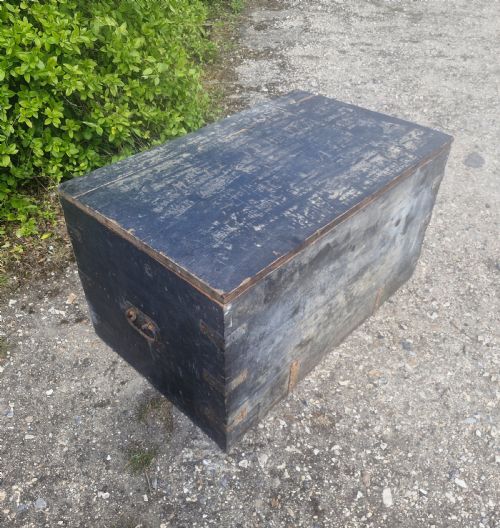


Iron Bound Campaign Chest
An iron bound campaign chest is a rugged travelling box designed for military officers and travellers, built to endure rough transit.
Iron Bound Campaign Chest
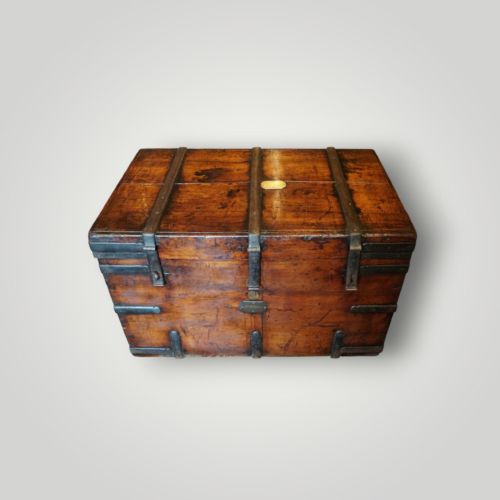
An iron bound campaign chest is a heavy-duty storage trunk built for transport during the Georgian and Victorian eras, often constructed from robust timbers like oak, mahogany, or pine. These boxes served officers on campaign, sailors at sea, and households moving valuables across long distances.
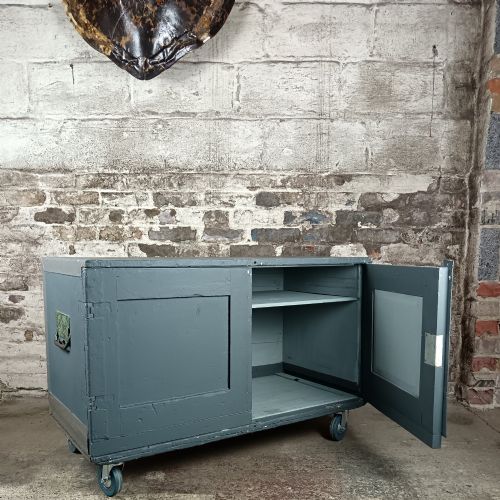
The versions most common on this page date from the nineteenth century, including pieces associated with military campaigns from Waterloo to the Boer War. Alongside military trunks, buyers encounter heavy oak silver chests and painted travelling boxes reinforced with metal strapping.
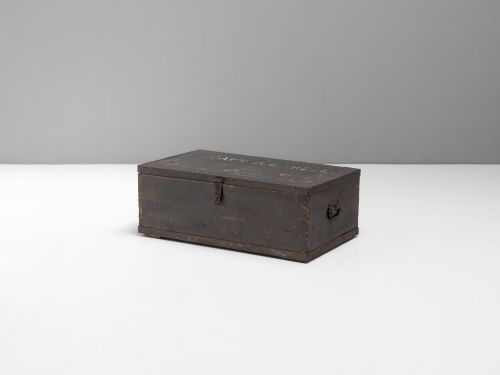
Many examples retain specific details of their past, such as interior linings, handles, and painted names or initials of their original owners. Their durable construction makes them practical for modern storage while carrying tangible history.
How they were made
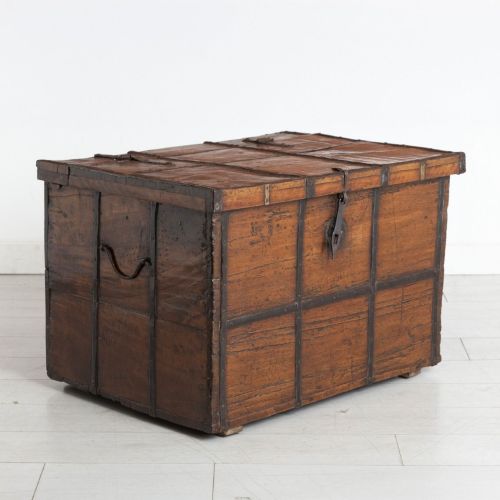
Carpenters built these chests using dense hardwoods such as oak and mahogany, or utilitarian softwoods like pine, chosen for strength during travel. Iron, steel, and brass straps, bands, and corner plates were screwed or riveted to the exterior to prevent the wood from splitting under heavy loads.
Heavy cast iron or brass carrying handles were fitted to the sides to allow multiple people to lift the loaded trunk during transport. Many examples incorporated internal fittings, zinc linings to protect contents from moisture, or fitted compartments for specific items like silver or documents.
Listings feature woods like oak, mahogany, and pine combined with iron and brass hardware across the nineteenth century.
What varies in quality
Quality in an iron bound campaign chest rests on the integrity of the original construction and the weight of the timber and metal used. Pieces made from solid oak with heavy hand-forged iron bands and original fittings sit at the higher end of the scale compared to simpler pine boxes.
The presence of documented provenance, maker stamps, or historical associations elevates a piece from a standard utility trunk to a collectible historical artefact. Retained interior linings and untouched surface patinas also separate exceptional examples from heavily altered ones.
Seabrook of St Pauls·Allen of London·H D Dean
The Iron Bound Campaign Chest Glossary
- Campaign chest
- A portable set of drawers or a trunk designed to dismantle or travel easily with military officers. These pieces often feature recessed handles and reinforced corners.
- Provenance
- The documented history of ownership of an antique, which often traces a trunk to a specific regiment, officer, or estate.
- Steamer trunk
- A lower-profile travelling trunk designed to fit into the cabins of steamships during the late nineteenth and early twentieth centuries.
Iron Bound Campaign Chest: Frequently Asked Questions
What were iron bound campaign chests used for?
These chests transported uniforms, equipment, papers, and personal valuables for officers on military campaigns or travellers on long journeys. Their sturdy construction protected contents from rough handling during transit by ship, rail, or wagon.
Over time, many served as permanent storage in domestic homes or country estates, particularly the heavy oak silver chests designed to safeguard valuable tableware.
How do I date a campaign chest?
Dating relies on construction methods, timber choices, and hardware styles across the Georgian and Victorian periods. Earlier pieces from the late eighteenth or early Georgian eras often feature hand-wrought ironwork and pegged oak joints.
Later nineteenth-century examples incorporate machine-rolled iron bands, zinc linings, and standardised brass fittings. Maker marks and painted provenance letters also help narrow down the period of manufacture.
Are these chests heavy to move?
Yes, authentic campaign and silver chests are exceptionally heavy, especially those constructed from solid oak with thick iron strapping. They were built to withstand severe impacts rather than to be light.
Side carrying handles indicate they were designed for two people to lift during transport. Today, they function best as stationary coffee tables, blanket boxes, or statement storage pieces.
How should I clean an iron bound chest?
Maintenance requires preserving the aged patina of the wood and the oxidized surface of the iron bands. Gentle dusting and occasional application of traditional wax help nourish dry timbers without removing historical wear.
Harsh metal cleaners should be avoided on the iron straps, as the dark, aged finish is part of the piece's character. Keeping the trunk away from direct heat sources prevents the wood from warping and splitting.