

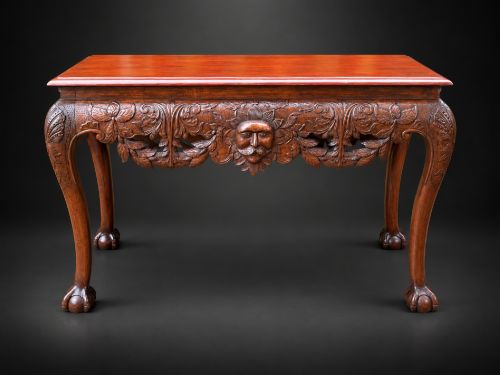


Irish George II Table
An irish george ii table brings robust 18th-century cabinet-making into a room with deep timber and confident carved detail.
Irish George II Table
When you search for an irish george ii table, you encounter diverse forms created for dining, games and display during the 18th century and later revived.
The evidence shows card tables, console tables, tilt-top tables, side tables, dining tables and serving tables originating from workshops across Ireland.
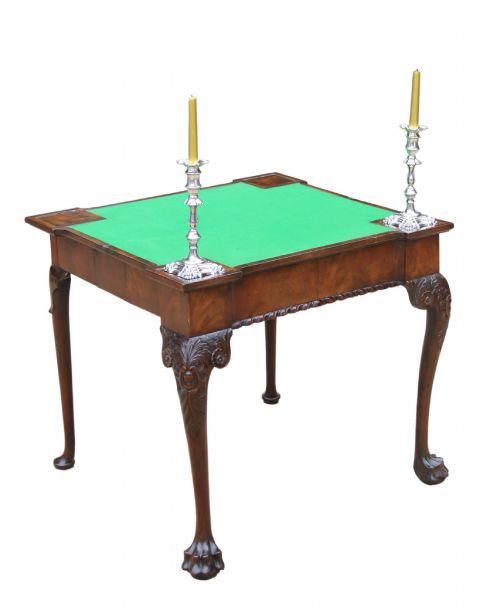
Mahogany and walnut predominate, frequently accompanied by brass hardware and baize linings within folding game surfaces.
Timber and Technique
Cabinet-makers relied heavily on dense mahogany and walnut, shaping solid timbers and applying veneers over secondary woods.
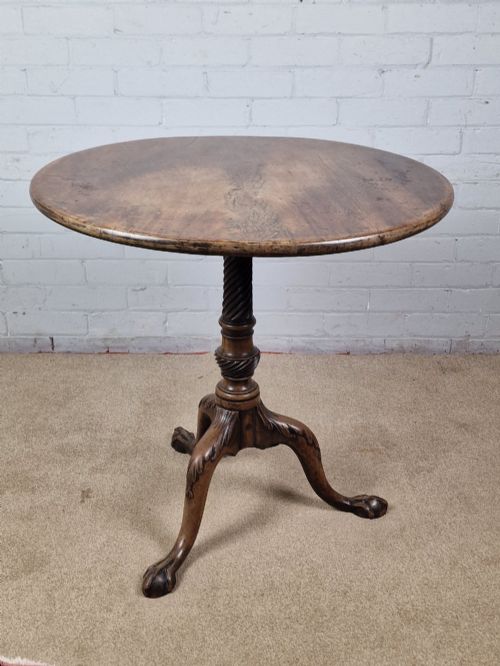
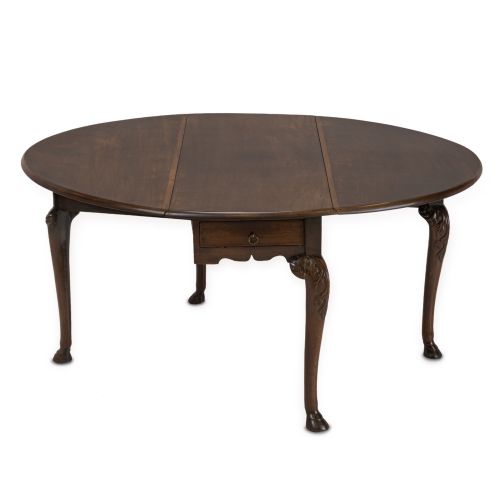
Construction techniques include concertina actions for expanding card tables, drop-leaf hinges and tripod mechanisms for tilt-top supper tables.
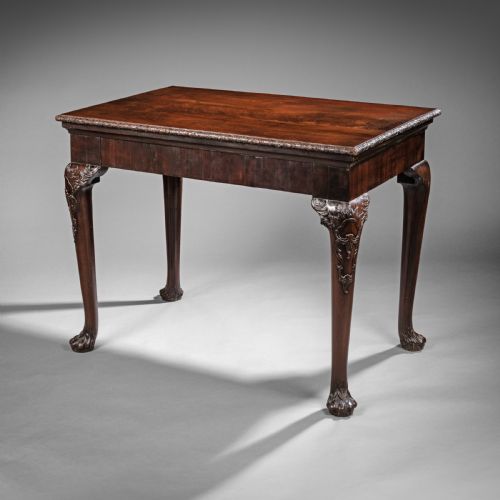
Carved details such as cabriole legs and hoof feet demonstrate the sculptural ambition typical of Irish furniture production.
Listings demonstrate that Irish George II tables appear in mahogany, walnut and fruitwood, spanning formal serving pieces to utilitarian wake tables.
Evaluating Construction
The distinction between ordinary and superior pieces rests on the crispness of carved foliage and the weight of the timber selected.
Complex mechanisms like concertina actions or concertina-expanding frames reveal the technical mastery of the original maker.
Surface patination and the integrity of structural joints determine whether a piece retains its original character.
Howard And Sons
The Irish George II Table Glossary
- Cabriole leg
- A furniture leg that bends outward and tapers inward, mimicking an animal's limb. This form appears frequently on mid-18th-century Irish tables.
- Concertina action
- An expanding table frame that opens like an accordion to support a fold-over top. It allows card tables to remain stable when fully extended.
- Silver table
- A dished or tray-top table utilised for serving tea or displaying silver. These forms often feature pronounced carved edges.
- Tilt-top table
- A table with a hinged top that pivots vertically for storage. Tripod bases commonly support this clever space-saving design.
- Hoof foot
- A carved terminal shaped like an animal's hoof. It grounds the cabriole leg with a robust sculptural accent.
Irish George II Table: Frequently Asked Questions
How do I identify an Irish table?
Irish tables often display heavier proportions, deeper carving and distinct timber selections compared to their English counterparts. Look for robust cabriole legs and energetic surface relief.
Examination of secondary woods and construction methods further clarifies the regional origin of these 18th-century forms.
What was a silver table used for?
Silver tables served as display surfaces for expensive tea services and polished silver objects in fashionable 18th-century interiors.
The raised edges prevented precious items from sliding off during use in bustling social settings.
How do concertina card tables function?
A concertina action extends the frame evenly on all four sides when the fold-over top is opened for play.
This sophisticated engineering provides solid support under the corners without relying on swinging rear legs.
Where should I place a console table?
Console tables sit flat against a wall, traditionally placed beneath mirrors or windows in hallways and principal reception rooms.
Their shallow depth makes them practical for circulation spaces while offering a surface for lamps or decorative objects.
Are tilt-top tables stable?
Tilt-top tables utilise a central pillar supported by three tripod legs, providing a balanced footprint on level floors.
The catch mechanism locks the top securely horizontal when the table is in daily use.