







Inlay Oak Corner Cupboard
These pieces of inlay oak corner cupboard are sturdy timber storage units shaped to fit snugly into a room, offering both practical shelving and period charm.
Inlay Oak Corner Cupboard
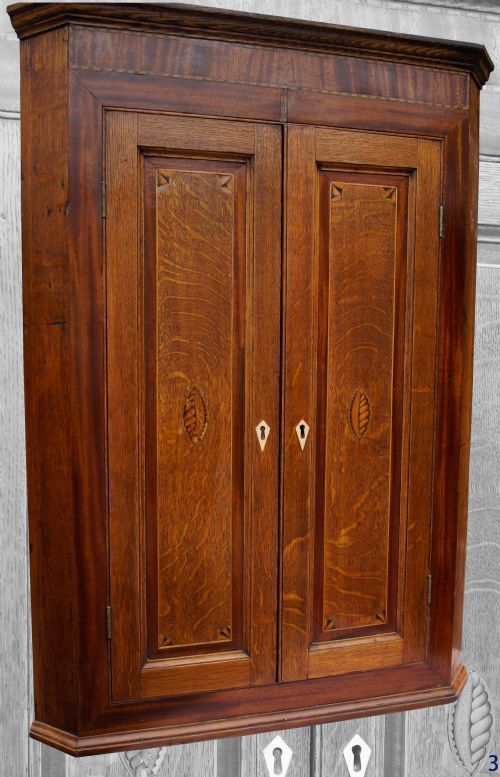
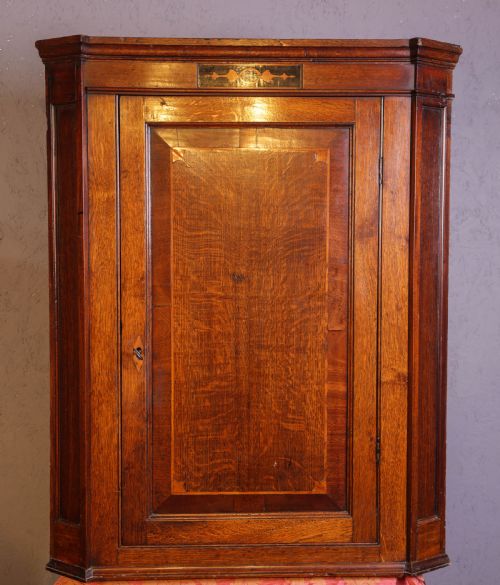
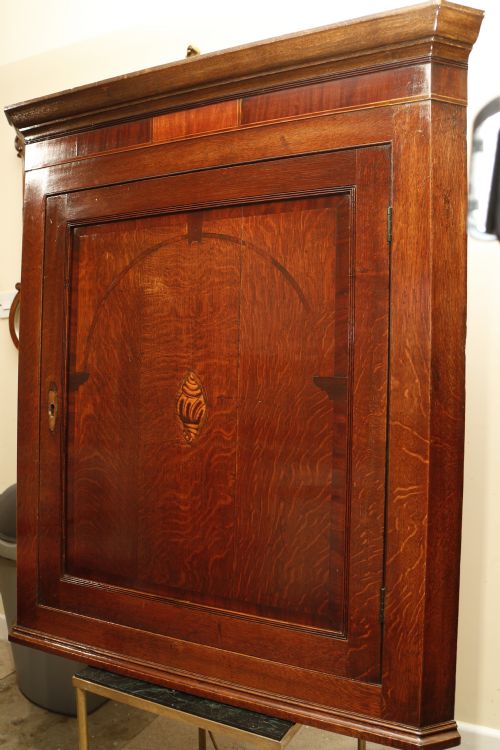
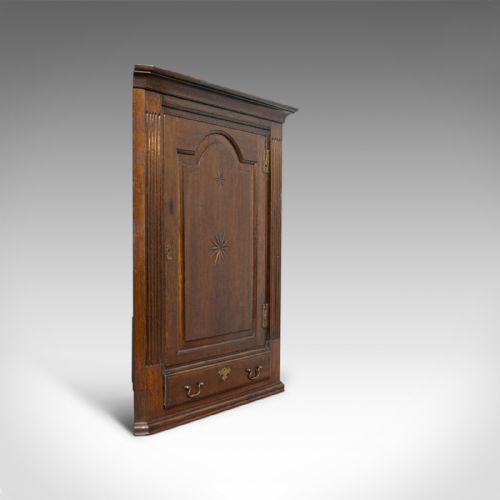
An inlay oak corner cupboard is a compact wall-hanging or floor cabinet designed specifically to utilise dead space in a room junction. You will most frequently encounter Georgian and George III examples, many dating across the eighteenth century and around eighteen hundred.
The dominant form on this page is the hanging corner cabinet, usually constructed from solid oak timber and enhanced with contrasting wood inlays or crossbanding. These pieces combine utilitarian storage with the decorative refinement characteristic of country and provincial cabinet making.
Many items feature panelled doors and curved or bow fronts, housing small shelves within for display or storage. They serve as a practical historical fixture that brings seventeenth and eighteenth century craftsmanship into a modern interior.
How they were made
Makers built these cabinets primarily using solid oak for the primary carcase and structural framing. Panels were fitted carefully to allow for seasonal wood movement without splitting the timber.
Decorative surfaces frequently incorporate fruitwood, mahogany, and satinwood inlays, alongside geometric marquetry and shell motifs. Brass hardware such as hinges and escutcheons complete the construction of the hanging doors.
Inlay Oak Corner Cupboard Retail Price Guide 2026
Typical asking prices for inlay oak corner cupboard among the pieces listed under this phrase on Sellingantiques today, from the lower quarter to the upper quarter. They describe what is for sale here now, not the wider market.
Materials recorded across the inventory include oak, mahogany, fruitwood, satinwood, glass, and brass.
What varies in quality
The sophistication of the timber inlay separates standard utility pieces from finer examples. Precise fruitwood and satinwood marquetry, along with thoughtful crossbanding, indicates a more ambitious workshop commission.
Structural integrity and the retention of original brass fittings and inner shelving dictate the overall desirability of the cabinet. Finer specimens display crisp moulding details and well-fitted panel doors that have survived centuries of use.
The Inlay Oak Corner Cupboard Glossary
- Bow front
- A cabinet door or front that curves outward in a convex shape. This curved profile requires skilled woodworking to ensure the grain follows the sweep.
- Crossbanding
- A border technique where thin strips of veneer are laid perpendicular to the surrounding wood grain. It frames the central panel of the door.
- Marquetry
- The art of creating decorative patterns using pieces of tinted or textured wood veneer. Geometric versions appear frequently on provincial pieces.
- Escutcheon
- A protective metal plate surrounding a keyhole. Brass examples on these pieces often reflect the original period of manufacture.
Inlay Oak Corner Cupboard: Frequently Asked Questions
How do I hang a corner cupboard?
These wall-hanging cabinets require sturdy fixings screwed directly into masonry or secure wall studs. Professional installation is recommended due to the weight of solid oak.
Ensure the hanging brackets or internal screw points take the full load before placing items on the internal shelves.
What rooms suit an oak corner cabinet?
Kitchens, dining rooms, and studies benefit most from these space-saving units. They turn neglected wall junctions into functional display areas.
Keep them away from direct heat sources and strong sunlight to protect the oak timber and delicate inlays.
How do I date a Georgian corner cupboard?
Examine the timber species, construction joints, and inlay styles. Eighteenth-century pieces often use hand-cut dovetails and pegged frame construction.
Secondary woods at the back and the complexity of the fruitwood or shell inlays also help narrow down the decade of production.
Are all these cupboards wall hanging?
The majority of pieces listed here are wall-hanging cabinets designed to be fixed at eye level or above a surface. Some variations provide taller proportions intended for specific interior corners.
Check the individual descriptions to confirm whether a piece hangs on the wall or stands on the floor.