
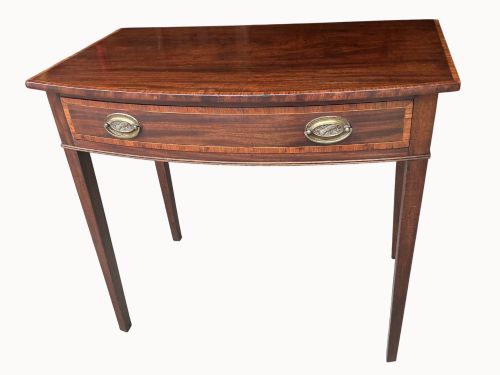
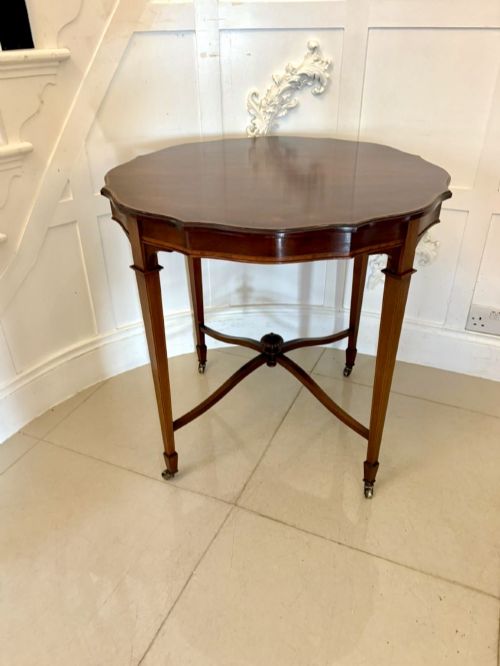
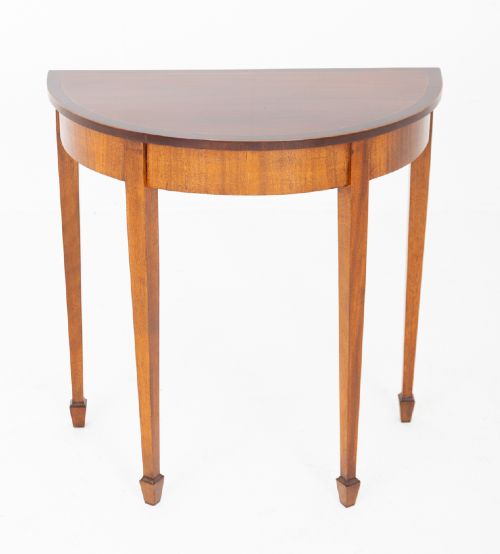
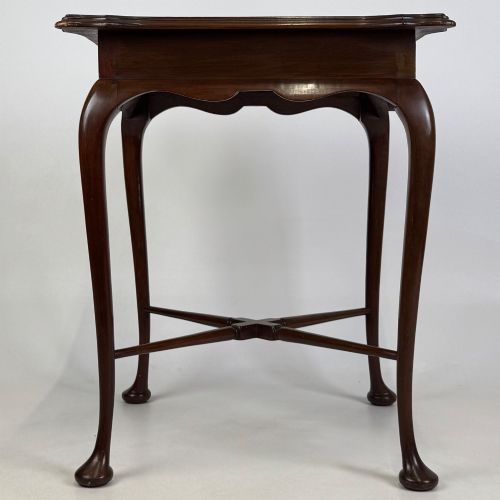
Inlay Mahogany Hall Table
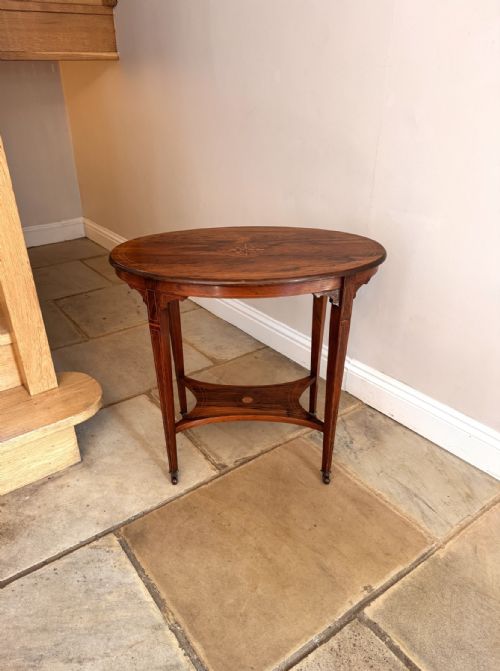
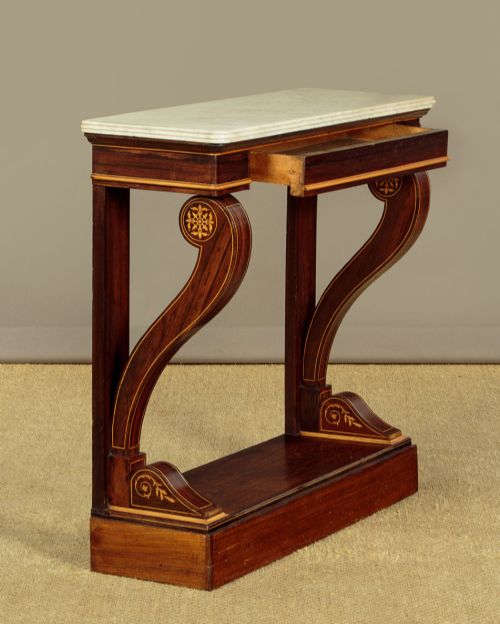
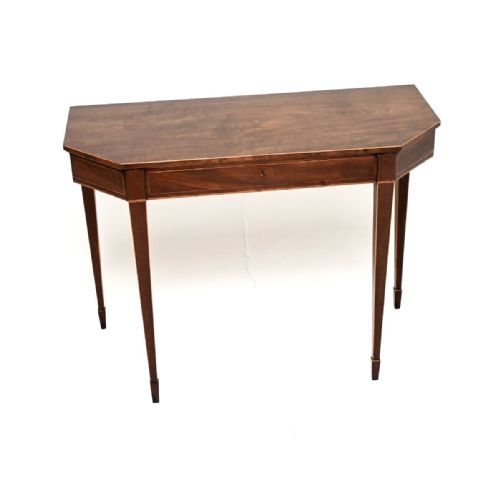
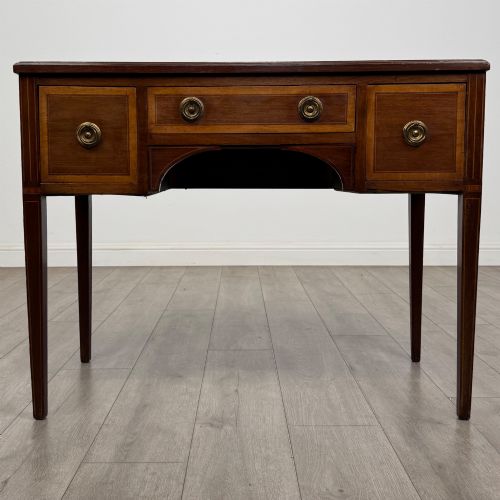
An inlay mahogany hall table brings warmth and refined surface detail to an entrance, with Edwardian and Georgian console and side table forms appearing most often.
Inlay Mahogany Hall Table
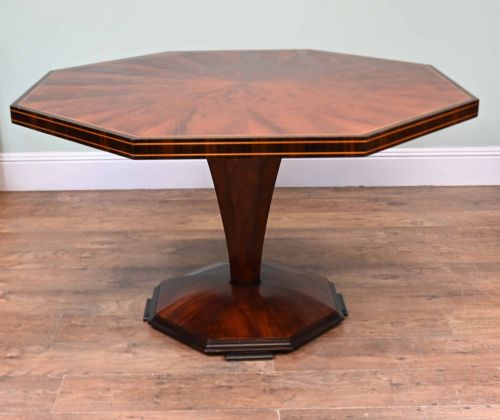
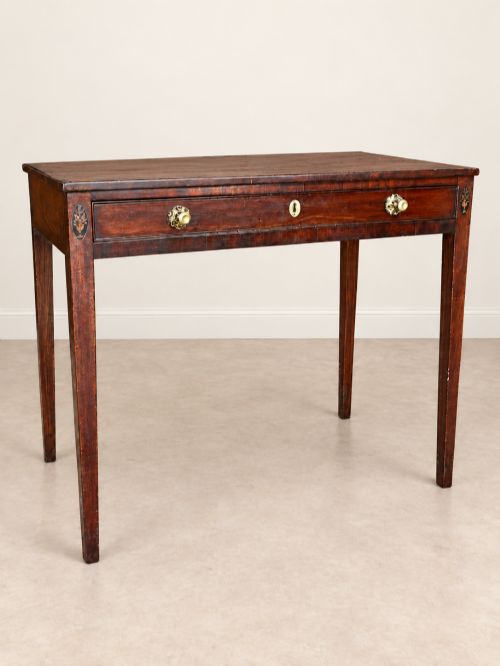
An inlay mahogany hall table search encompasses console tables, side tables, and writing tables spanning the eighteenth, nineteenth, and twentieth centuries. The pieces range from straightforward George III and Regency designs to Edwardian interpretations with delicate stringing.
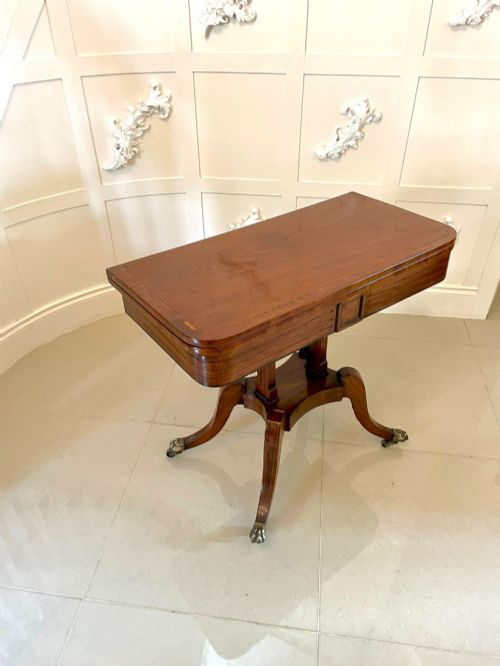
Buyers frequently encounter demi-lune console tables and side tables shaped to sit flat against a wall in narrow spaces. These functional surfaces appear alongside tea tables, card tables, and occasional tables featuring contrasting wood details.
Origins include Georgian, Regency, and Edwardian periods, with styles drawing heavily on Sheraton traditions. The construction adapts domestic furniture to the entranceway, prioritising linear elegance over heavy proportions.
How they were made
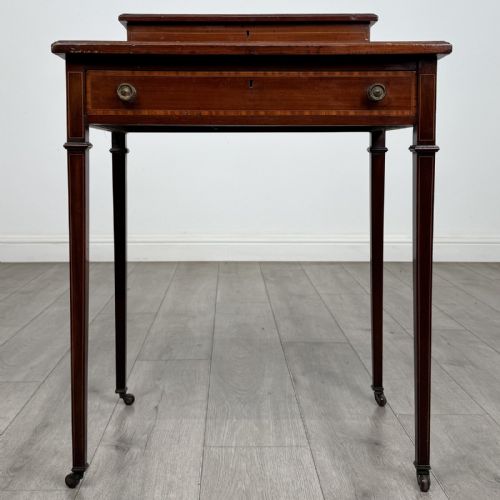
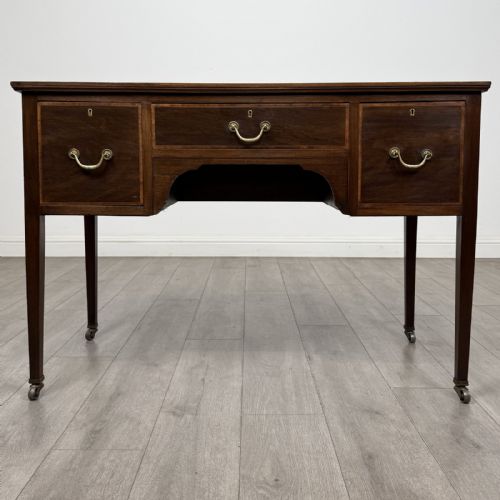
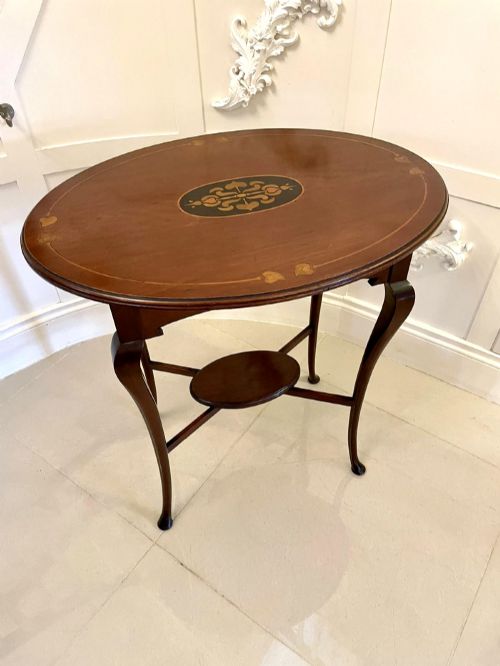
Makers built these tables using solid mahogany and mahogany veneers over secondary timbers, enriched by contrasting lighter elements. Boxwood and satinwood inlay create crisp geometric borders, stringing, and decorative fan motifs across the tops and apron rails.
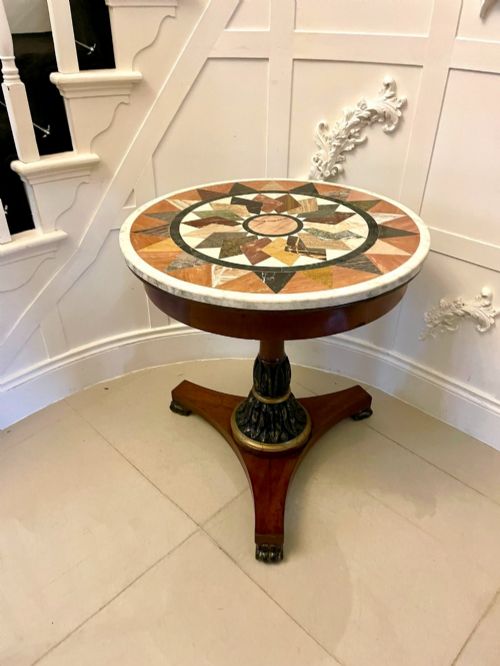
Surface enhancement relies on precision woodworking techniques such as ebony stringing, marquetry, and painted details. Selected pieces incorporate brass hardware, leather writing inserts, or marble tops to finish the design.
Listings feature mahogany paired with boxwood inlay, satinwood, brass, leather, and marble across Georgian, Victorian, and Edwardian periods.
What varies in quality
Quality rests upon the crispness of the inlay work and the selection of the mahogany grain. Finely executed boxwood and satinwood stringing maintains sharp, unbroken lines, whereas lesser examples show wandering or thick borders.
Construction fidelity separates standard production from superior cabinet-making. Balanced proportions, neat drawer tolerances in writing and side tables, and well-chosen timber figures distinguish the finer pieces.
The Inlay Mahogany Hall Table Glossary
- Demi-lune
- A half-moon shape used for console and card tables designed to stand flat against a wall. This form saves floor space while providing a functional surface in entrance halls.
- Stringing
- Thin strips of contrasting wood inlaid into narrow channels to outline table edges and drawer fronts. Boxwood and ebony are typical choices for this linear decoration.
- Marquetry
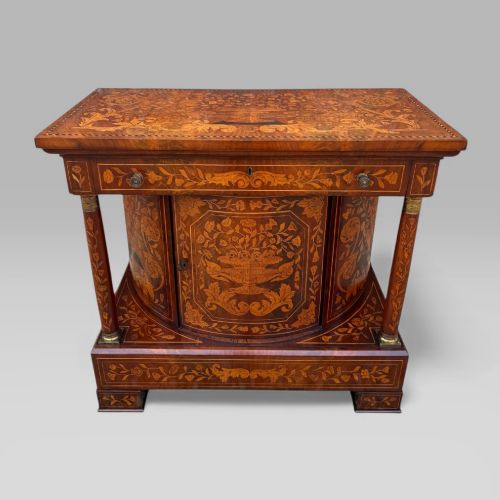
- The art of forming decorative patterns using thin veneers of different woods. Dutch examples demonstrate intricate floral and pictorial designs across the tabletop.
- Console table
- A table supported by wall brackets or front legs, designed for display rather than freestanding use. Georgian and Regency makers favoured these slim profiles for hallways.
- Sofa table
- A rectangular occasional table with drop leaves at either end, originally designed to sit in front of a sofa. These often feature drawers and stretcher supports.
Inlay Mahogany Hall Table: Frequently Asked Questions
Where does an inlay mahogany hall table fit?
These tables suit narrow entranceways, hallways, and landings where floor space is limited. Console and demi-lune shapes sit flat against walls without obstructing movement.
Larger side tables or writing tables function effectively in larger reception rooms or studies. Their shallow depths allow them to serve as decorative display surfaces beneath mirrors or artwork.
How do I identify a Georgian table?
Georgian tables display heavier proportions, robust timber selection, and restrained carving or stringing. Eighteenth-century pieces often feature solid mahogany construction and hand-cut dovetails within drawer boxes.
Later Edwardian or twentieth-century revivals tend to use lighter secondary woods and machine-cut elements beneath the surface veneer. Examining the underside and drawer interiors reveals the age of the construction.
What is the difference between a console and a side table?
A console table is traditionally designed to stand against a wall, sometimes with structural support from wall brackets in earlier periods. Side tables are freestanding four-legged pieces that can be moved around a room more easily.
In modern usage, the terms often overlap, particularly with demi-lune and serpentine forms. Both provide surface space for lamps, bowls, and decorative objects.
How do I care for mahogany and inlay?
Protect mahogany surfaces from direct sunlight and heat sources to prevent the timber from fading and the veneer from lifting. Dust regularly with a dry cloth and avoid silicone-based polishes.
Wax the wood occasionally to nourish the grain and maintain the sheen. Keep moisture away from leather inserts and delicate boxwood stringing.