

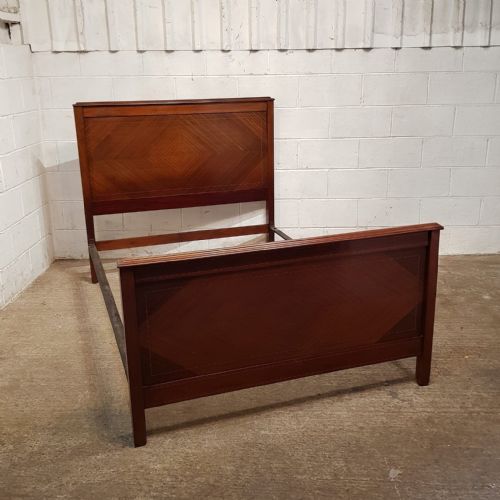
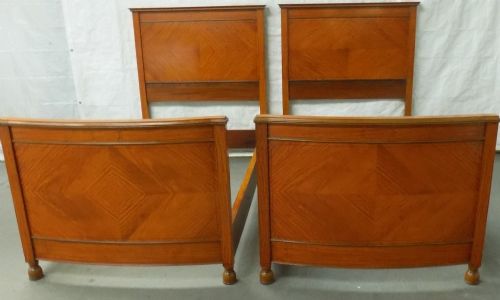


Inlaid Wooden Bedstead
An inlaid wooden bedstead brings warmth and craftsmanship to a bedroom, uniting period character with decorative marquetry.
Inlaid Wooden Bedstead
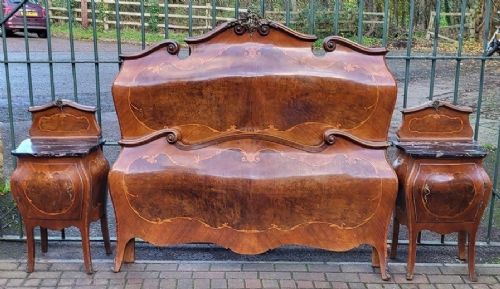
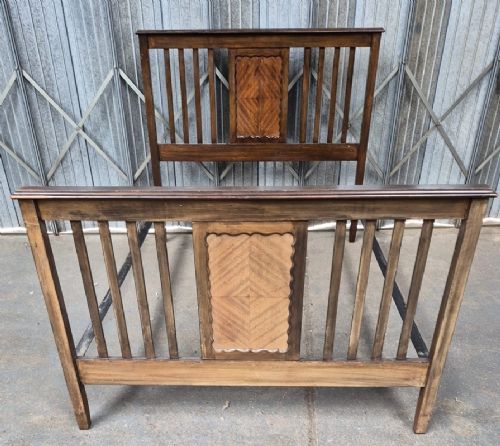
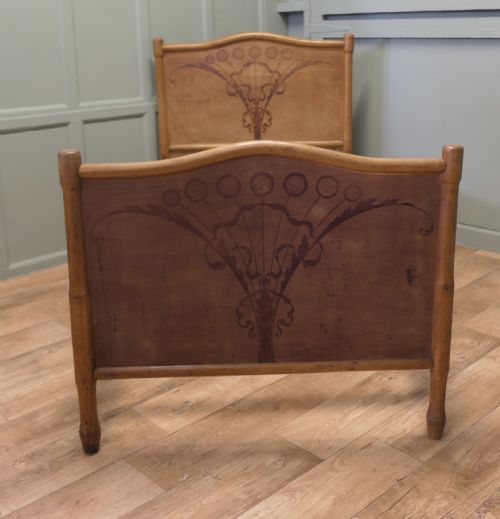
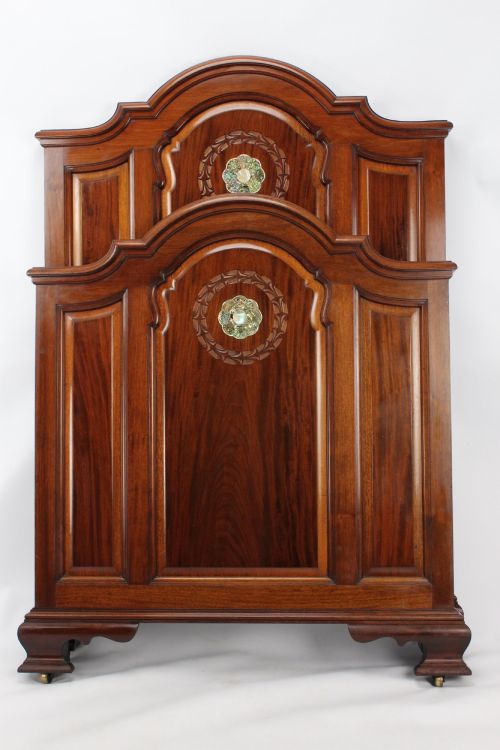
An inlaid wooden bedstead represents a substantial sleeping frame ornamented with contrasting timber details, spanning single, double, and king sizes. When searching for an inlaid wooden bedstead, buyers encounter various historical expressions from the Edwardian era alongside earlier forms.
Makers utilised diverse woods like walnut, fruitwood, and burr mahogany to create panels and rails with decorative marquetry and parquetry. These bed frames often incorporate brass details or marble elements, merging functional support with intricate surface enrichment.
What varies in quality
The standard of an inlaid wooden bedstead depends on the complexity and precision of the marquetry and parquetry work. Finely executed geometric or floral inlay using scarce timbers like satinwood and fruitwood distinguishes superior pieces from simpler designs.
Construction choices also define quality, particularly the selection of solid hardwoods and burr veneers over standard panels. The integration of auxiliary materials such as ormolu, brass, or marble highlights the ambition of the original workshop.
Inlaid Wooden Bedstead Retail Price Guide 2026
Typical asking prices for inlaid wooden bedstead among the pieces listed under this phrase on Sellingantiques today, from the lower quarter to the upper quarter. They describe what is for sale here now, not the wider market.
Some nineteenth-century French makers thoughtfully paired grand king-size marquetry bedsteads with matching marble-top nightstands for a coordinated morning routine.
Louis Majorelle·Heal's
The Inlaid Wooden Bedstead Glossary
- Marquetry
- Decorative veneer work forming pictorial or ornamental patterns using various woods. This technique requires skilled cutting and fitting of thin wood sheets onto a solid carcase.
- Parquetry
- Geometric mosaic woodwork used for flooring or furniture surfaces. Artisans arrange small blocks of timber to create repeating angular patterns.
- Satinwood
- A durable, lustrous yellow timber prized for its reflective grain. It frequently serves as a contrasting inlay material in Edwardian furniture.
- Tester bed
- A bed featuring a wooden canopy supported by posts above the frame. Early examples often utilise solid oak with fruitwood inlay.
- Fruitwood
- Dense timber derived from orchard trees such as pear or apple. Cabinetmakers utilise it for contrasting tones in detailed parquetry.
Inlaid Wooden Bedstead: Frequently Asked Questions
What sizes are available in these bedsteads?
The available formats range from single and large single sizes to double and king size frames. Many Edwardian examples come as matched pairs suitable for twin arrangements.
Larger French and revival formats offer expansive sleeping surfaces while retaining decorative marquetry panels across the headboards and footboards.
How do I identify an Edwardian bedstead?
Edwardian pieces typically employ mahogany or satinwood paired with delicate inlay work and linear panel construction. These frameworks often date from around nineteen hundred to nineteen ten.
They frequently feature simpler proportions than earlier revival styles, balancing domestic practicality with understated decorative detail.
Are modern mattresses compatible with antique frames?
Many antique bedsteads accommodate standard modern mattress sizes, though historical dimensions can vary slightly from contemporary standards. Custom support slats or bases are frequently utilised to ensure proper fit.
Buyers should check internal rail measurements carefully before pairing these frames with contemporary bedding.
What is the difference between marquetry and parquetry?
Marquetry involves arranging thin veneers to create pictorial, floral, or curvilinear designs on a wooden surface. It relies on fluid shapes and contrasting timber shades.
Parquetry builds geometric and angular patterns using uniform blocks of wood, often creating repeating symmetrical arrays across panels.