


Inlaid Wood Tilt Top Table
An inlaid wood tilt top table combines decorative surface work with a practical folding mechanism designed to save space when not in use.
Inlaid Wood Tilt Top Table
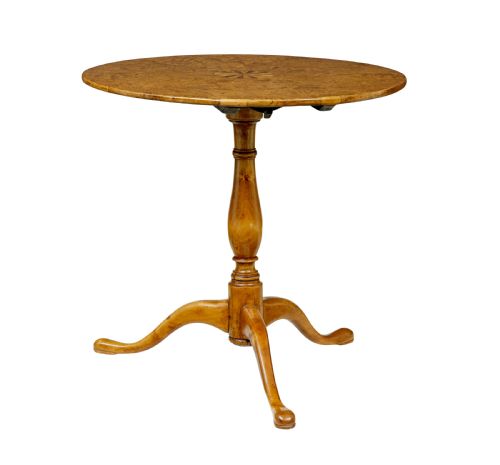
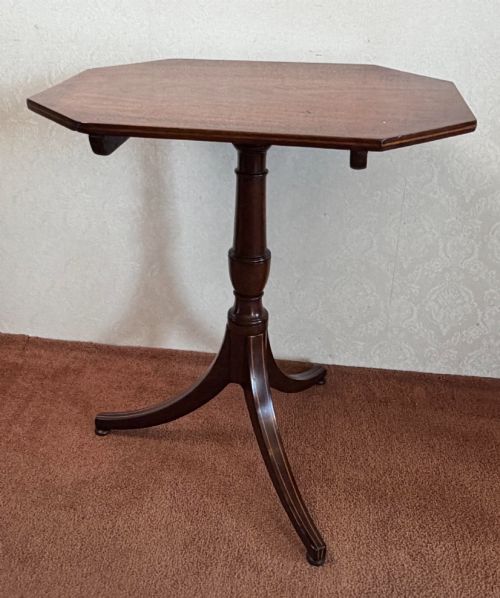
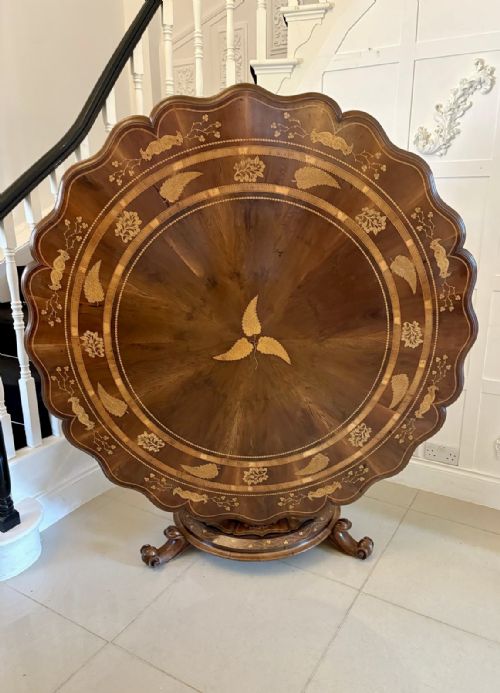
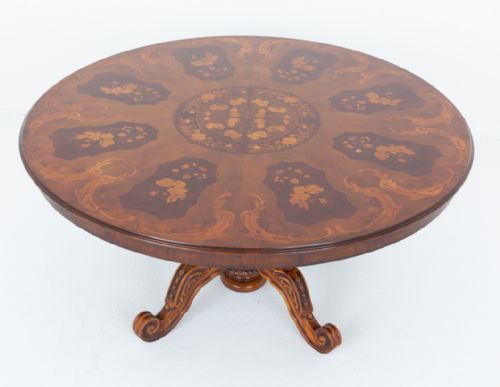
An inlaid wood tilt top table is a piece of furniture featuring a top that pivots vertically on a central pedestal or tripod base. The selection available spans multiple periods including Georgian, Regency, and Victorian eras, alongside various regional styles.
Forms range from compact tripod occasional tables and wine tables to larger breakfast tables, games tables, and centre tables. These pieces often serve as decorative focal points in halls and reception rooms while offering the convenience of a folding top.
How They Were Made
Cabinet makers utilised a diverse palette of primary timbers such as mahogany, walnut, rosewood, satinwood, and oak for the main structure. These timbers provide a sturdy foundation for the pivoting mechanism and pedestal support.
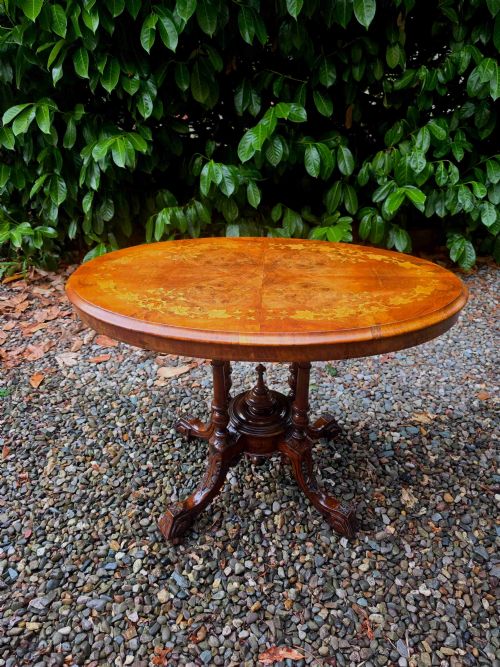
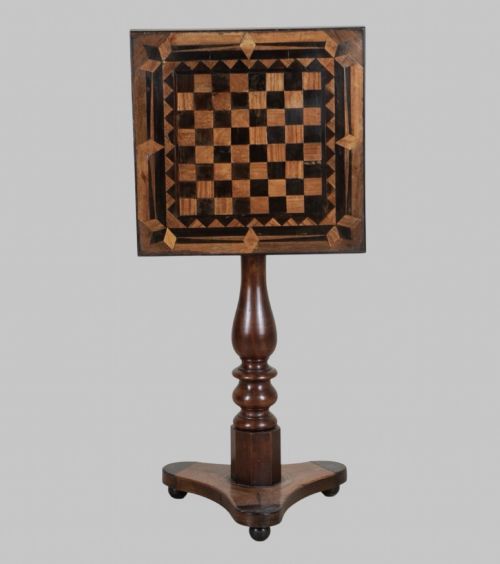
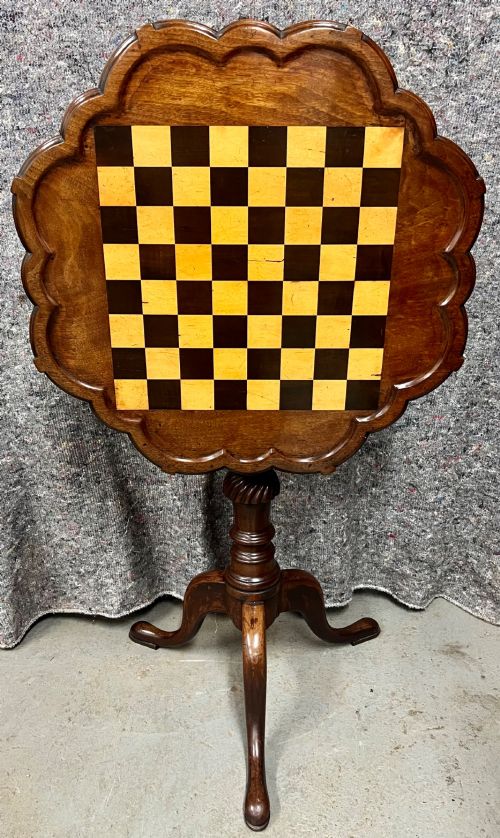
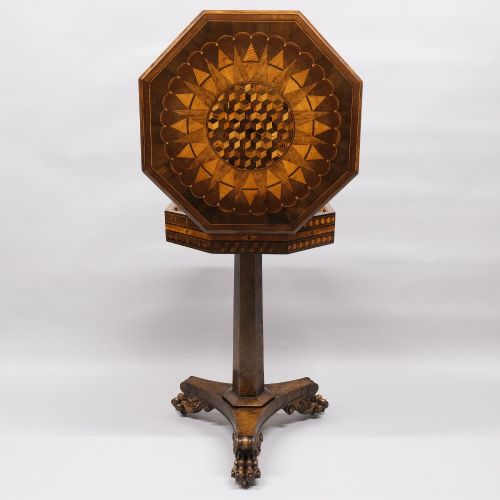
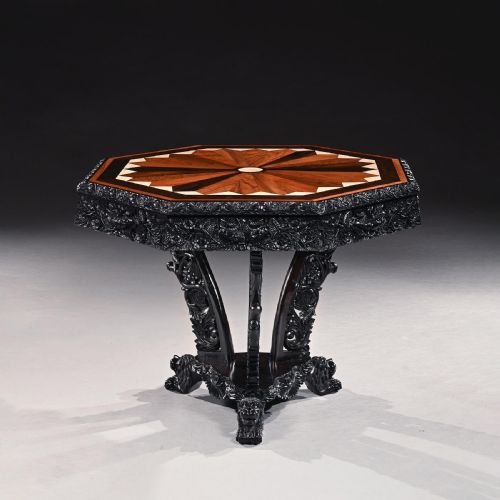
Decorative surfaces display intricate wood inlay, including boxwood, burr birch, and specimen woods arranged in marquetry, parquetry, or chess board patterns. Brass and ivory elements sometimes complement the wooden veneers on Regency and Victorian examples.
Several tables conceal miniature chess boards within their tops, ready for an impromptu parlour match.
What Varies in Quality
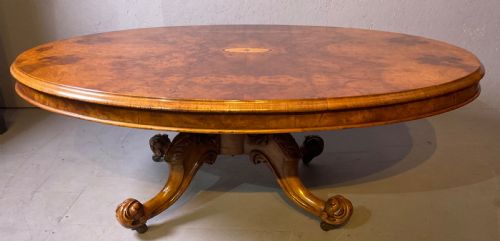
The sophistication of the timber selection and the precision of the inlay set superior examples apart from standard pieces. Richly figured burr walnut, rosewood, and multi-wood specimen tops indicate higher workshops.
The mechanical execution of the tilt mechanism and the stability of the pedestal base determine the overall integrity of the table. Fine craftsmanship ensures the top locks securely in the horizontal position without wobble.
Ralph Turnbull·Egan Workshop·Jackson and Graham
The Inlaid Wood Tilt Top Table Glossary
- Tilt top
- A tabletop mounted on a pivot mechanism that allows the surface to rotate vertically to save space. This mechanism typically includes a brass catch or wooden latch to secure the top in place.
- Marquetry
- An elaborate form of inlay where pieces of different coloured veneers are fitted together to form pictorial or geometric designs. Craftsmen apply these patterns to tabletops to create striking visual effects.
- Parquetry
- A geometric mosaic of wood pieces used for decorative surfaces, particularly tabletops and floors. It creates regular patterns like cubes, stripes, or triangles.
- Specimen wood
- Furniture constructed using many different varieties of timber, often native and exotic, displayed for their contrasting colours and grain patterns. These tables frequently feature sunburst or geometric arrangements.
- Tripod base
- A support structure consisting of three curved legs radiating from a central pillar. This design provides stability on uneven floors and allows clearance for seating.
Inlaid Wood Tilt Top Table: Frequently Asked Questions
How do you tilt the top?
The mechanism usually involves a small brass catch or wooden button underneath the tabletop. Pressing this release allows the surface to pivot on its central axis.
Once upright, the table occupies minimal floor space and can stand flat against a wall as a decorative feature.
Where were these tables used?
Historically, these pieces occupied drawing rooms, libraries, and entrance halls as occasional or breakfast tables. Their folding design made them adaptable for multi-purpose rooms where space was cleared between uses.
Today, they function effectively as lamp tables, corner display surfaces, or accent pieces in living areas.
How do I date a table?
Dating relies on stylistic clues, construction methods, and the choice of primary timbers and veneers. Georgian and Regency pieces often feature mahogany or rosewood with restrained brass or wood inlay, while Victorian examples frequently employ burr walnut and heavier marquetry.
Secondary woods on the underside and the joinery of the pedestal base also offer clear indications of the period.
Are the inlays original?
Most surviving examples retain their original surface decoration, executed in boxwood, satinwood, or various specimen timbers. Close inspection under natural light reveals consistent ageing across both the main timber and the inlaid sections.
Workshops matched the grain direction and veneer thickness carefully during original production.