



Inlaid Wood Dressing Mirror
An inlaid wood dressing mirror sits on a chest or table, bringing reflected light and neat compartments to a bedroom.
Inlaid Wood Dressing Mirror
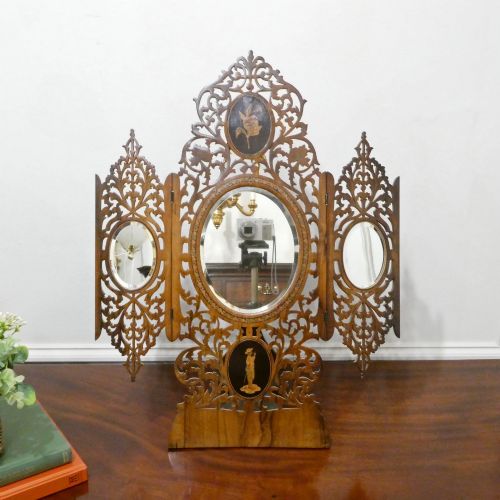
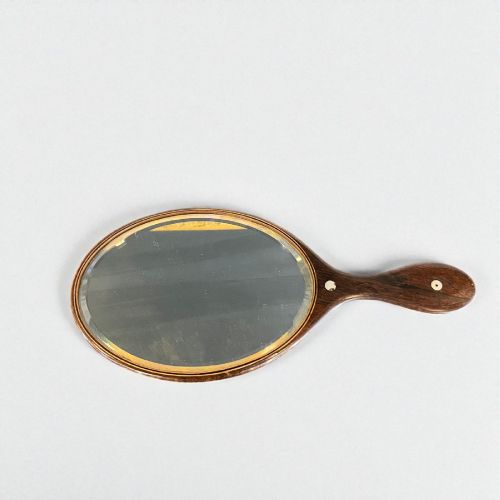
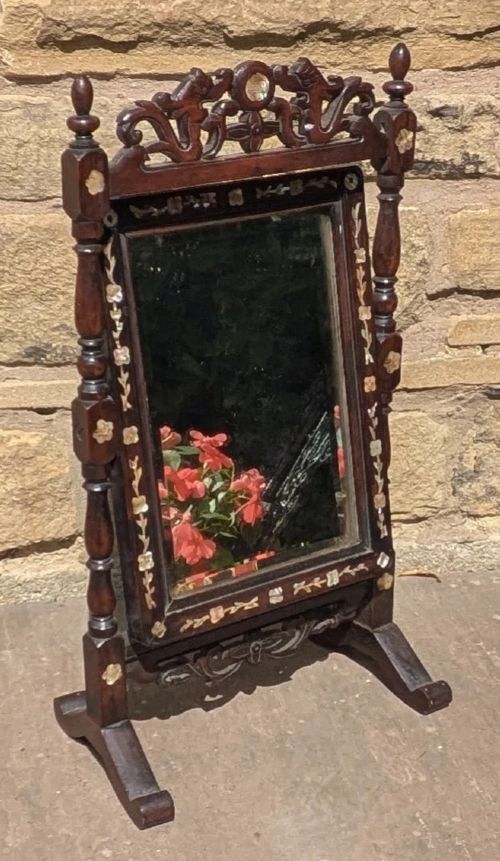
An inlaid wood dressing mirror is a tabletop or freestanding glass plate framed by timber and decorated with contrasting veneers, most frequently seen here from the Georgian, Victorian, and Edwardian periods. These pieces range from simple swing mirrors on box bases with small drawers to larger cheval mirrors and complex shaving stands.
The most common examples encountered on this page date from the nineteenth century and the early twentieth century, constructed in mahogany, walnut, or satinwood. They serve both a practical grooming function and act as decorative items that showcase period cabinet-making.
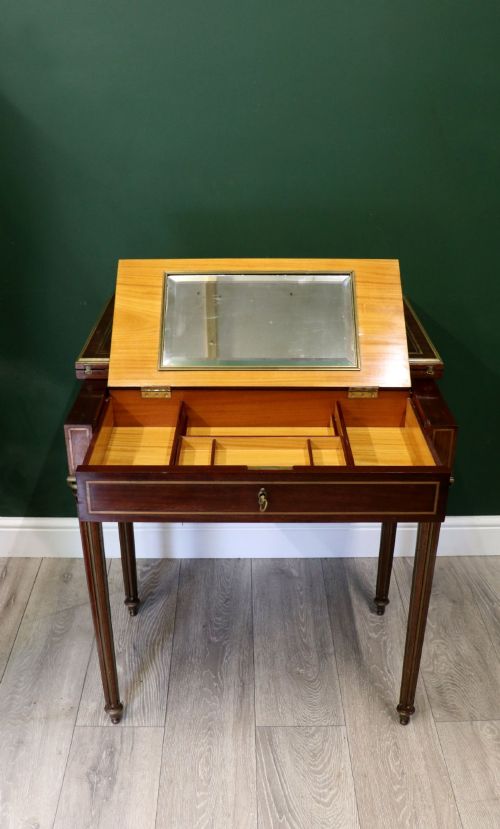
Origins span British workshops alongside continental European pieces, including Dutch marquetry examples and Italian travel mirrors in olive wood. Forms vary from simple toilet mirrors to elaborate dressing tables fitted with inlaid surfaces.
Materials and construction
Makers built the primary frames using solid hardwoods like mahogany and walnut, often applying veneers of satinwood or rosewood to create patterned surfaces. Wood inlay and marquetry techniques formed floral or geometric motifs across the drawer fronts and mirror frames.
Brass fittings such as swing pivots, knobs, and small handles complemented the timber. Original mirror glass was silvered and fitted into rebated wooden frames, sometimes accompanied by secondary woods like pine or oak for interior drawer construction.
Inlaid Wood Dressing Mirror Retail Price Guide 2026
Typical asking prices for inlaid wood dressing mirror among the pieces listed under this phrase on Sellingantiques today, from the lower quarter to the upper quarter. They describe what is for sale here now, not the wider market.
Listings feature pieces from the Georgian, Regency, Victorian, and Edwardian eras, utilising mahogany, walnut, satinwood, and olive wood.
Distinctions in quality
Quality rests in the crispness of the wood inlay and the selection of figured veneers rather than painted imitations. Finely executed marquetry utilises tightly fitted contrasting woods that remain flush with the primary surface.
Structural integrity of the swing mechanism and the retention of original brass hardware elevate a piece. Superior examples exhibit precise dovetail joints in the drawers and well-proportioned mirror frames that support the glass securely without sagging.
Edwards & Roberts
The Inlaid Wood Dressing Mirror Glossary
- Swing mirror
- A glass plate suspended on pivoting side posts that allows the angle of reflection to be adjusted. These typically sit atop a small box base or plinth.
- Marquetry
- An elaborate form of inlay where pieces of various coloured veneers are assembled into a pictorial or decorative mosaic pattern before being applied to a wooden carcass.
- Cheval mirror
- A full-length dressing mirror mounted in a freestanding frame that tilts on vertical pivots. They allow the viewer to see their entire outfit.
- Toilet mirror
- A smaller tabletop mirror designed to sit on a dressing chest or table for close-up grooming. They often incorporate small drawers for trinkets or cosmetics.
- Shaving stand
- A specialised form of small table or cabinet incorporating an adjustable mirror and surfaces for shaving equipment. They frequently date from the Edwardian period.
Inlaid Wood Dressing Mirror: Frequently Asked Questions
How do I date a mirror?
Dating relies on timber choices, construction methods like dovetails, and the style of the inlay. Georgian and Regency pieces tend to show simpler geometric stringing, while Victorian and Edwardian examples often feature richer marquetry.
Hardware such as brass screw caps and the condition of the mirror plate also offer clues to the age of the piece.
Are the mirror plates original?
Many older mirrors have replacement glass because original mercury silvering degrades over centuries. Spotting slight foxing or minor blemishes often indicates genuine age.
Replacement glass is common and does not necessarily diminish the decorative appeal of the wooden frame.
Where should I place it?
These mirrors suit dressing tables, chest of drawers, or sideboards where they provide a functional reflective surface. Freestanding cheval mirrors work well in bedrooms or dressing rooms.
Positioning them away from direct sunlight protects the delicate veneers and wood inlay from fading.
What is Dutch marquetry?
Dutch marquetry involves dense floral and bird motifs executed in light and dark veneers on walnut or mahogany. This style is frequently found on nineteenth-century toilet mirrors.
The intricate designs cover the entire frame and drawer fronts of the mirror stand.