



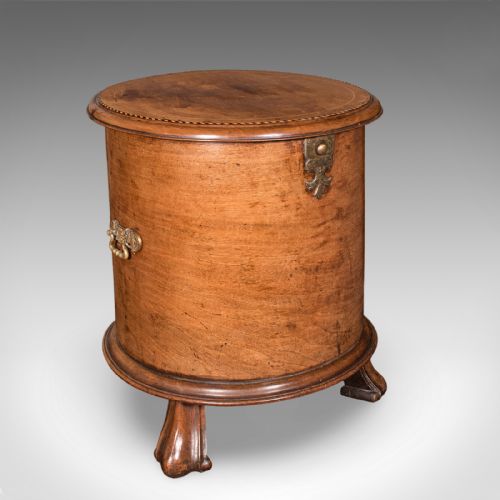
Inlaid Wood Caddy
An inlaid wood caddy holds dry leaves safely away from the damp air while displaying the polished grain of rosewood, satinwood or mahogany.
Inlaid Wood Caddy
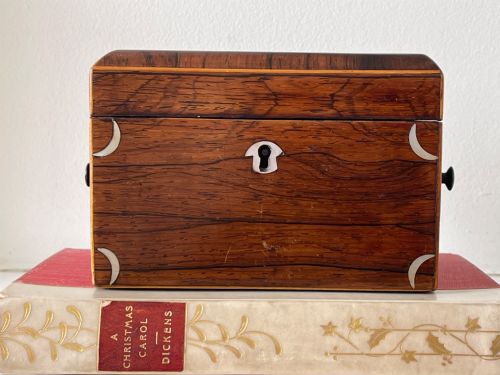
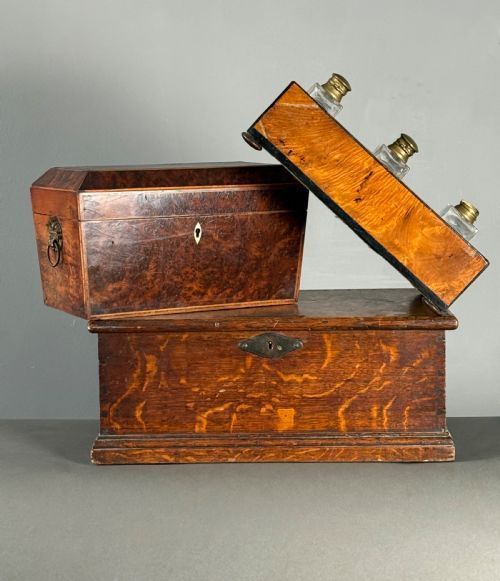
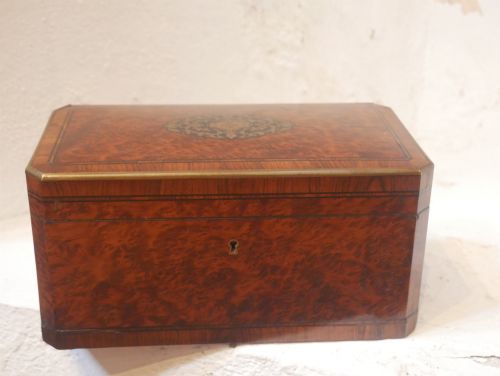
When you search for an inlaid wood caddy, you encounter domestic containers designed to store tea leaves during the eighteenth and nineteenth centuries. The examples on this page span the Georgian, Regency and Victorian periods, taking shapes that range from simple rectangular boxes to sarcophagus forms and octagonal bodies.
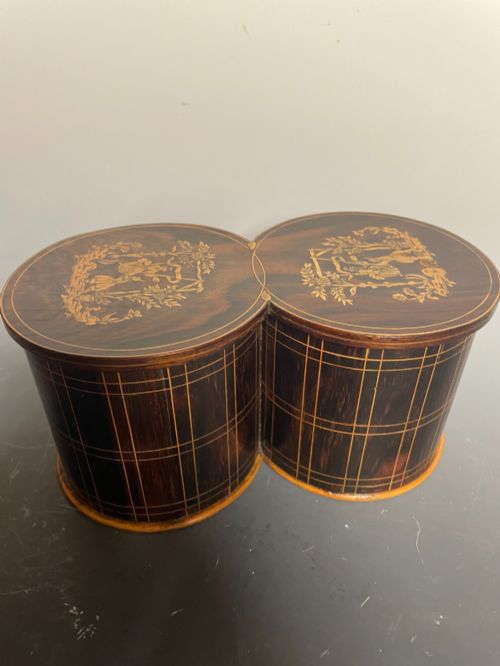
Most pieces serve as tea caddies, though related items like teapoys and decorative boxes appear alongside them. Cabinetmakers shaped these containers from woods such as rosewood, mahogany, burr yew and satinwood, often incorporating contrasting stringing or pictorial marquetry.
Makers constructed these vessels with hinged lids and internal compartments to keep green and black teas separate. Surviving pieces frequently retain working locks and escutcheons, pointing to the high value placed on tea leaves when imports were heavily taxed.
Materials and Technique
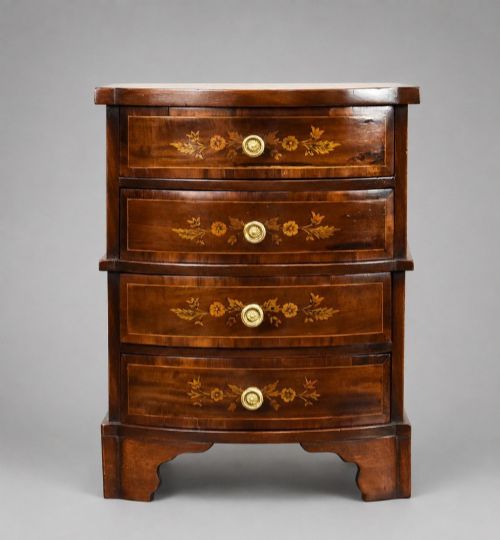
Cabinetmakers built the carcass of each inlaid wood caddy using native and exotic timbers, applying fine veneers of rosewood, satinwood, mahogany or amboyna over a secondary wood. They cut contrasting strips of boxwood, bone or mother-of-pearl to form geometric stringing and complex floral motifs.
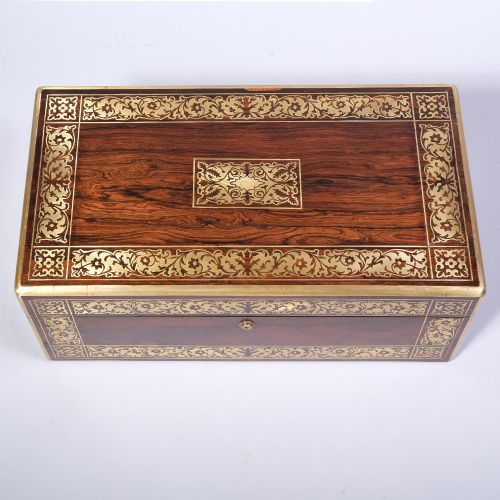
Brass inlay forms a distinct stylistic group, where precision-cut channels receive thin strips of brass to create classical motifs and corner scrolls. Surface decoration also includes parquetry arrangements and specialised techniques like Tunbridge Ware, which uses thousands of tiny coloured wood blocks to build pictorial mosaics.
Internal fittings often include glass mixing bowls and lidded canisters veneered to match the exterior. Joinery relied on precise mitres and dovetails to ensure the box maintained stability against humidity changes over the centuries.
Inlaid Wood Caddy Retail Price Guide 2026
Typical asking prices for inlaid wood caddy among the pieces listed under this phrase on Sellingantiques today, from the lower quarter to the upper quarter. They describe what is for sale here now, not the wider market.
Judging Quality
Quality in an inlaid wood caddy rests upon the selection of timber veneers and the precision of the cabinetwork. Grain matching across the lid and sides signals careful planning by the maker, whereas uneven veneer thickness or mismatched grain indicates hurried construction.
The refinement of the inlay distinguishes standard production from exceptional work. Sharp, tight junctions in brass stringing or multi-wood parquetry require considerable skill, while gaps filled with dark stopping suggest lesser craftsmanship.
Original interior appointments, such as matching veneered tea canisters and functional locks with working keys, elevate the standing of a piece. Later replacements or missing internal lids alter the integrity of the object.
Tahan·Henry Hollamby·Gillows·Freemans of Norwich
The Inlaid Wood Caddy Glossary
- Sarcophagus form
- A container design featuring a stepped, sloping lid and a tapered body reminiscent of a stone coffin, popular during the Regency period for tea caddies and wine coolers.
- Tunbridge Ware
- A type of decorative woodwork produced in Kent, characterised by mosaic patterns assembled from tiny tinted wood prisms to depict flowers, butterflies or geometric borders.
- Stringing
- Thin lines of contrasting wood or light-coloured inlay set into grooves around the edges of panels, drawers and box lids to create a delicate border.
- Teapoy
- A pedestal table fitted with a lidded box on top, designed to hold tea canisters and a mixing bowl for the hostess during the nineteenth century.
- Parquetry
- A geometric mosaic of wood veneers laid down in repeating patterns such as cubes, chequers or triangles across the surface of a box.
Inlaid Wood Caddy: Frequently Asked Questions
What is an inlaid wood caddy?
An inlaid wood caddy is a small, lidded box created to store dry tea leaves securely. Cabinetmakers decorated the exterior surfaces with contrasting veneers, brass stringing and geometric wood patterns.
These boxes date primarily from the eighteenth and nineteenth centuries when tea was a costly commodity. Inside, they typically feature partitioned compartments and occasionally small mixing bowls.
How did people use tea caddies?
Households used tea caddies to keep expensive black and green teas dry and protected from kitchen odours. The mistress of the house kept the key to the caddy, measuring out the leaves herself for each social gathering.
The locked compartments prevented servants from accessing the valuable contents. Once empty, the internal canisters were replenished from larger tea chests kept in the storeroom.
How do I date an inlaid wood caddy?
Dating relies on the combination of wood species, carcass construction and decorative style. Georgian caddies often feature satinwood, shell marquetry and simpler rectangular or oval proportions.
Regency examples frequently employ rosewood with brass inlay and bolder sarcophagus shapes. Victorian pieces incorporate heavier walnut veneers, parquetry and diverse internal fittings.
How should I care for a wood caddy?
Protect antique wood boxes from direct sunlight and sudden temperature shifts to prevent the veneers from lifting or cracking. Maintain a stable indoor humidity level to safeguard the old glue and timber.
Apply a microcrystalline wax occasionally to nourish the polished surface without building up sticky residue. Avoid placing the box near radiators or damp exterior walls.