



Inlaid Wood Book Stand
An inlaid wood book stand brings refined timber and decorative detail to a desk or tabletop, holding volumes upright while offering a polished surface.
Inlaid Wood Book Stand
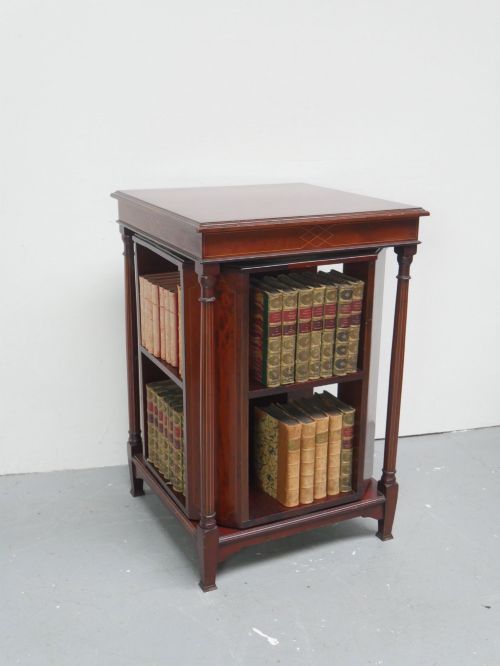
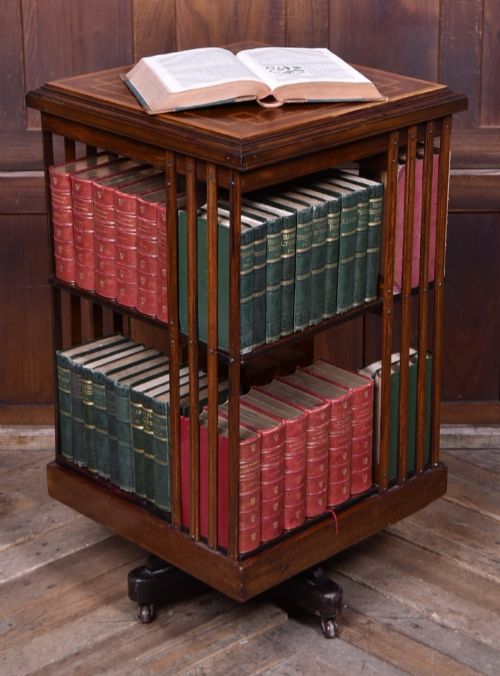
An inlaid wood book stand appears most frequently from the Edwardian period and the early twentieth century, alongside nineteenth-century examples. These pieces range from compact table-top revolving models to static book troughs and slides designed to keep reference books close at hand.
Makers utilised various timber foundations, pairing structural woods with contrasting veneers and geometric or botanical motifs. The resulting pieces served both utilitarian functions in studies and libraries and decorative purposes in domestic drawing rooms.
How they were made
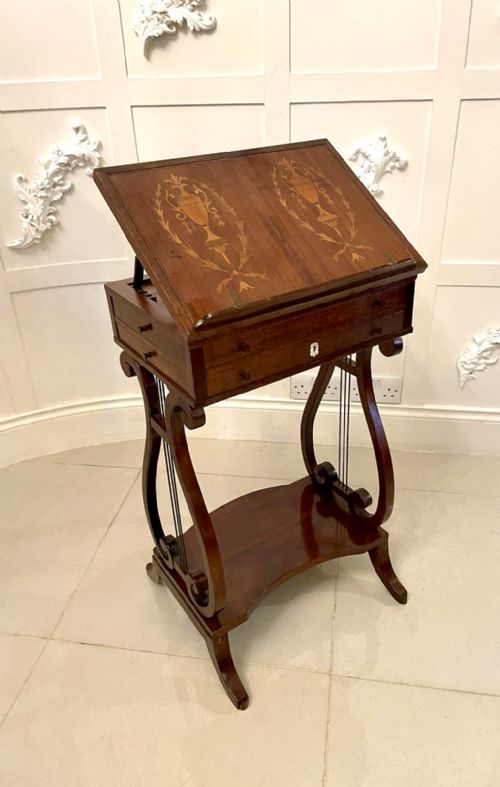
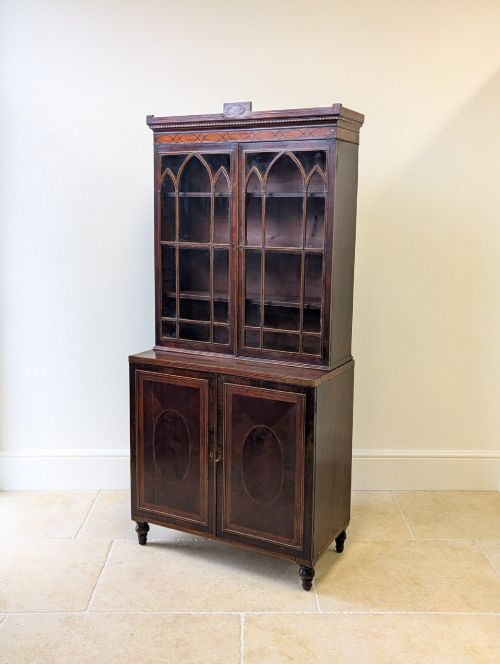
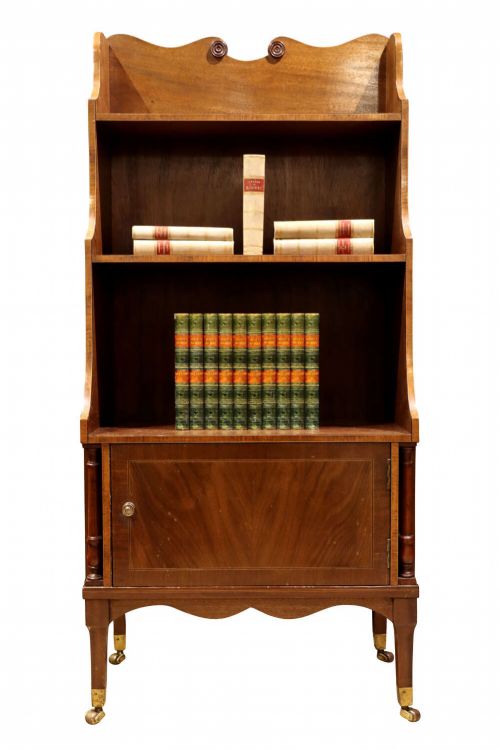
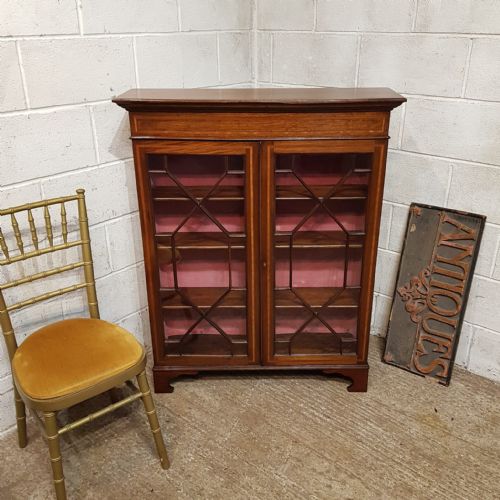
Craftsmen built the carcases primarily from mahogany, rosewood, and walnut, often applying fine satinwood inlay to create contrasting borders and decorative panels. Some variations incorporate brass fittings, such as castors and hinges, while others feature detailed Tunbridge ware or mother-of-pearl embellishments.
Revolving mechanisms relied on internal wooden or metal pivots that allowed the tiers to turn smoothly under a load of heavy volumes. Surface finishes were carefully polished to highlight the natural grain of the primary timber and the precision of the contrasting inlay work.
Listings feature Edwardian, Victorian, and Georgian periods, utilising mahogany, rosewood, walnut, and satinwood with brass hardware.
What varies in quality
The standard of an inlaid wood book stand depends on the crispness of the joinery and the precision of the veneer work. Tighter tolerances in revolving mechanisms and cleaner execution of botanical or geometric inlays distinguish finer pieces from standard production items.
Selection of primary timbers and the depth of the finish also separate workshops, with superior examples displaying carefully chosen grain patterns and well-matched borders. Well-integrated brass details and stable construction under weight indicate a higher grade of manufacture.
Shapland & Petter
The Inlaid Wood Book Stand Glossary
- Inlay
- A technique where pieces of contrasting wood or other materials are inserted into depressions in a timber base to form a decorative pattern. This method defines the surface decoration of many Edwardian and Victorian pieces.
- Revolving bookcase
- A freestanding or table-top stand fitted with a central pivot that allows the entire book storage section to spin around. This form was particularly popular during the Edwardian era for desk-side reference.
- Tunbridge ware
- A specific type of woodwork originating in Kent involving small mosaic tiles made from naturally coloured woods to form pictorial or geometric designs. It frequently decorates nineteenth-century book slides and racks.
- Book slide
- An adjustable stand designed to sit on a desk or shelf, featuring expandable ends to hold a specific number of volumes upright. These items often incorporate brass mounts and inlaid wooden panels.
Inlaid Wood Book Stand: Frequently Asked Questions
What is an inlaid wood book stand?
An inlaid wood book stand is a decorative tabletop or freestanding accessory designed to organise and display volumes. These pieces use contrasting timbers and detailed veneers to elevate functional library items into ornamental furniture.
Most examples date from the Edwardian period and the nineteenth century, reflecting the domestic habits of libraries and studies of those eras.
How do revolving book stands work?
Revolving book stands utilise an internal pivot mechanism concealed beneath the base or between tiers. This engineering allows users to spin the entire bookcase smoothly to access different titles without moving the stand.
Quality mechanisms turn with minimal friction and maintain stability even when fully loaded with heavy reference books.
Where were book stands placed?
These stands typically sat upon large writing desks, library tables, or directly on the floor beside armchairs. Their compact footprints made them ideal for keeping frequently referenced volumes within arm's reach in domestic studies.
Tabletop versions offered convenient access to dictionaries and poetry collections without requiring dedicated floor space.
How do I care for inlaid wood?
Inlaid wood benefits from stable room temperatures away from direct sunlight and strong heat sources. Maintaining consistent humidity prevents the delicate veneers and stringing from drying out and lifting.
Gentle dusting with a dry, soft cloth preserves the polished finish without introducing moisture that could damage the timber joints.