





Inlaid Wood Armoire
An inlaid wood armoire provides substantial bedroom storage through centuries of cabinet-making skill.
Inlaid Wood Armoire
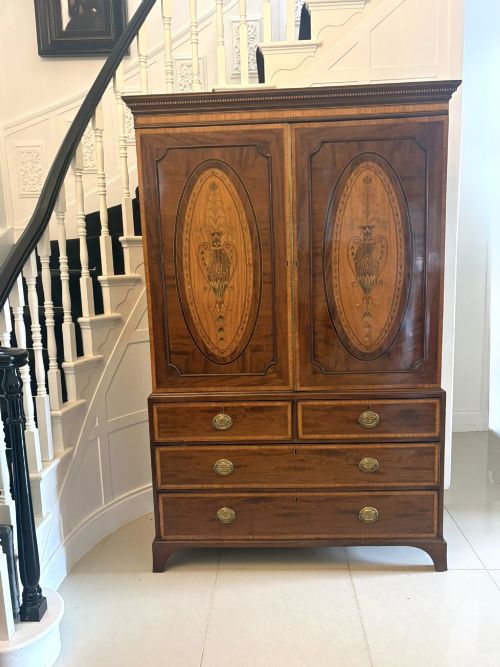
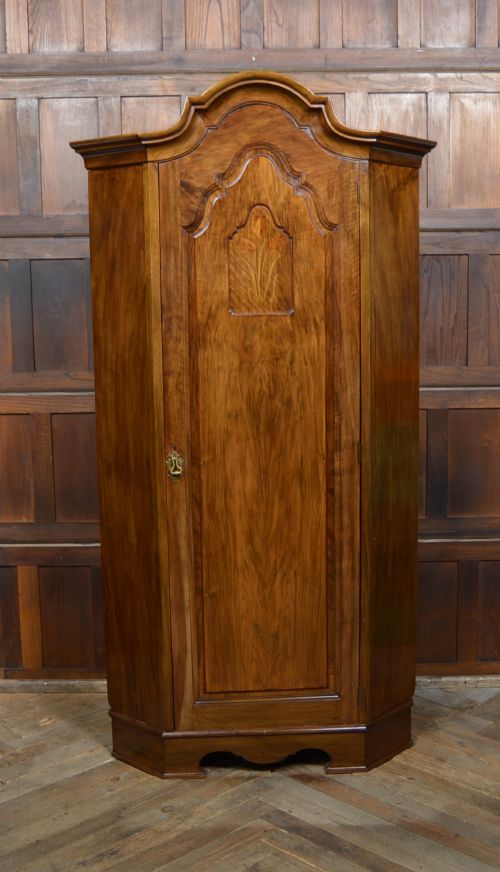
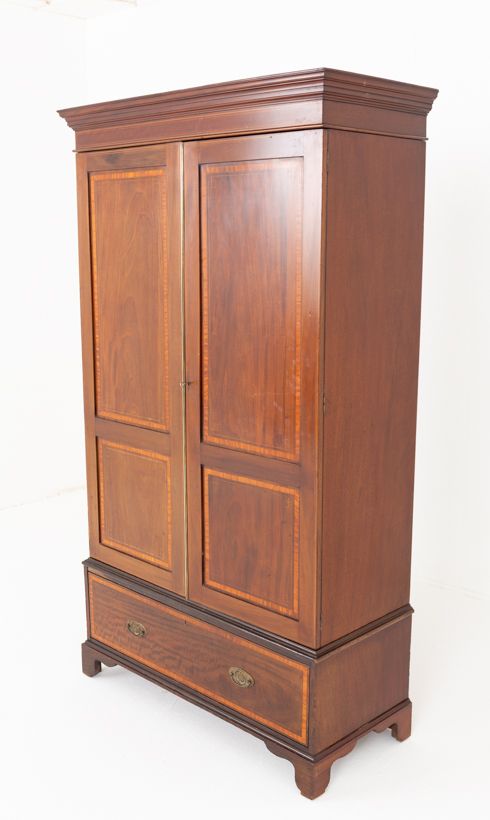
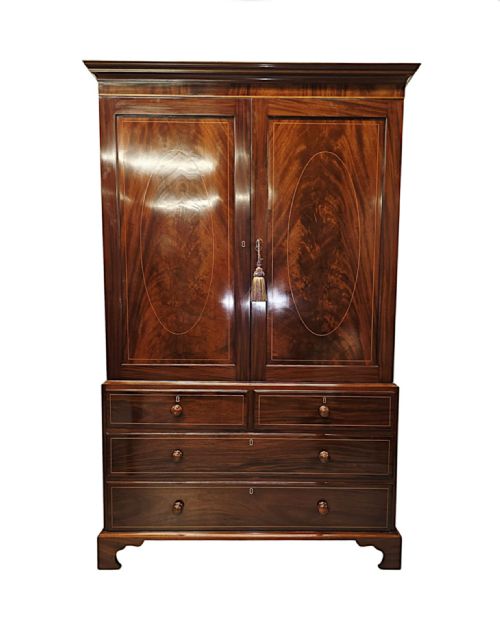
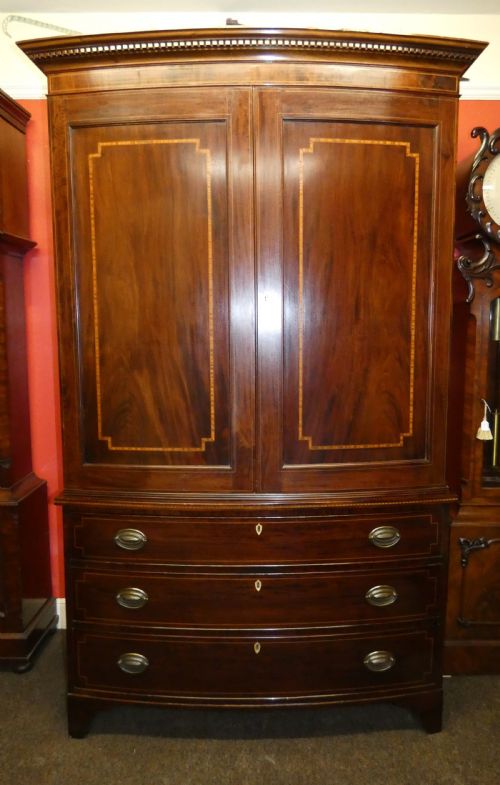
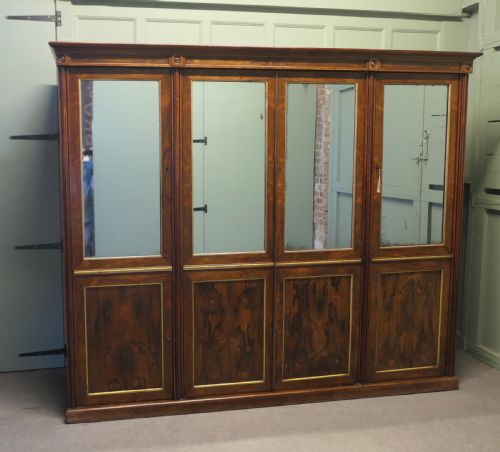
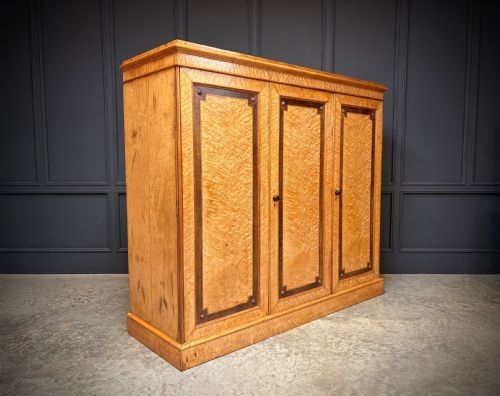
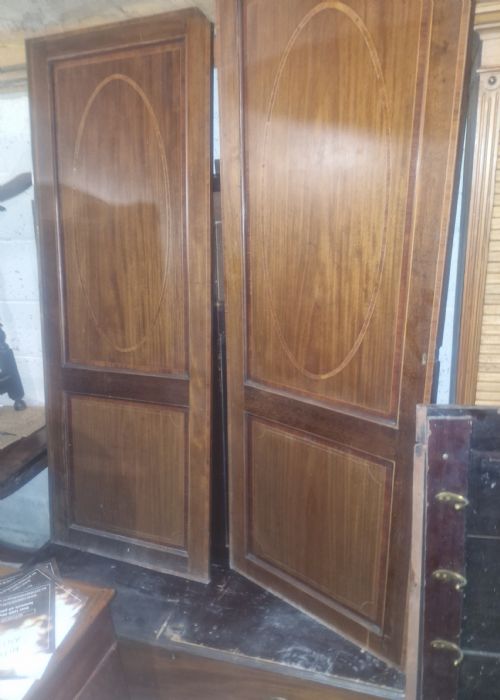
The inlaid wood armoire category encompasses large wardrobes, linen presses, compactums and bedroom cupboards produced across the eighteenth, nineteenth and early twentieth centuries. These pieces combine substantial timber carcases with decorative contrasting veneers to create imposing furniture for domestic storage.
Buyers encountering this group will most frequently find nineteenth-century examples in mahogany or walnut, often featuring satinwood or boxwood stringing and marquetry details. Forms range from single and double door wardrobes to breakfront cupboards and fitted linen presses with internal sliding trays.
Materials and construction methods
Cabinet-makers constructed the main carcases using solid and veneered timbers such as mahogany, rosewood, walnut and satinwood, supported by secondary woods for internal framing. Selected hardwoods provided stable structural foundations capable of bearing heavy cornices, panelled doors and fitted drawer interiors.
Decorative surfaces rely on intricate veneer work, employing satinwood, boxwood and brass inlay to create geometric borders, classical urns and floral motifs. Skilled artisans shaped contrasting woods into recessed channels and marquetry panels before finishing the exterior with traditional polishing methods.
Inlaid Wood Armoire Retail Price Guide 2026
Typical asking prices for inlaid wood armoire among the pieces listed under this phrase on Sellingantiques today, from the lower quarter to the upper quarter. They describe what is for sale here now, not the wider market.
One exceptional Edwardian wardrobe arrived accompanied by eight matching bedroom companions, creating a massive nine-piece suite for a very dedicated collector.
Assessing quality and execution
The standard of an inlaid wood armoire rests primarily on the depth and precision of its decorative veneers and the selection of figured timbers. Pieces utilising finely grained flame mahogany, symmetrical satinwood banding and crisply cut marquetry display superior craftsmanship compared to simpler geometric borders.
Structural integrity and internal fittings further distinguish the range, from basic hanging spaces to elaborate fitted compactums with original sliding linen trays and matching drawer arrangements. Original brass hardware, sound door alignment and well-preserved timber patination separate finer workshop productions from utilitarian examples.
Wylie Lochhead of Glasgow·Edwards & Roberts·Maples & Co
The Inlaid Wood Armoire Glossary
- Armoire
- A large standing cupboard or wardrobe used for storing garments and household linens. These tall pieces typically feature hinged doors enclosing hanging space or sliding shelves.
- Linen Press
- A tall storage cabinet featuring upper sliding trays or shelves above a chest of base drawers. Originally designed for storing flat linens before general wardrobe use became standard.
- Compactum
- A multi-compartment wardrobe combining hanging sections, drawers and linen slides within a single unified piece. This fitted layout maximises bedroom storage capacity.
- Marquetry
- The decorative art of applying pieces of veneer to a structural structure to form decorative patterns and pictures. Artisans utilise contrasting woods and metals to achieve pictorial designs.
- Satinwood
- A hard, durable timber with a characteristic golden lustre and smooth texture, frequently utilised for contrasting inlay work and banding. It provides a bright visual accent against darker carcase woods.
Inlaid Wood Armoire: Frequently Asked Questions
How do I identify a Georgian piece from a Victorian one?
Georgian pieces, produced during the eighteenth and early nineteenth centuries, often exhibit architectural proportions with flame mahogany veneers and classical stringing. Details like swan-neck pediments and bracket feet frequently appear on earlier examples.
Victorian cabinets from the later nineteenth century tend to be heavier in scale, frequently incorporating rosewood, walnut and extensive marquetry. These later items often utilise breakfront configurations and machine-sawn veneers alongside traditional hand-craftsmanship.
Where should I place a large armoire in my home?
Large wardrobes require stable wall space with adequate clearance for doors to swing fully open. Rooms with moderate humidity levels prevent timber shrinkage and protect delicate veneer work.
Because these pieces were constructed as monumental furniture, measuring ceiling height and access stairwells before delivery ensures safe placement within a bedroom or dressing room.
What maintenance do antique veneered wardrobes require?
Maintaining these wooden cabinets involves protecting them from direct sunlight and rapid temperature fluctuations. Applying traditional beeswax polish periodically nourishes the timber and preserves the natural surface sheen.
Avoiding excessive moisture and heavy chemical cleaners ensures the delicate satinwood and boxwood inlay remains secure within the surrounding mahogany or walnut carcase.