
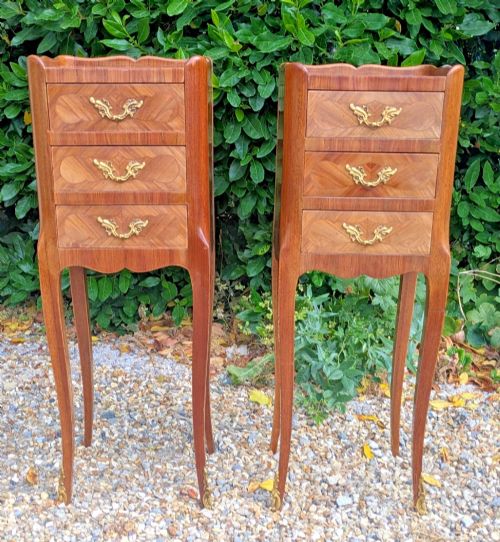
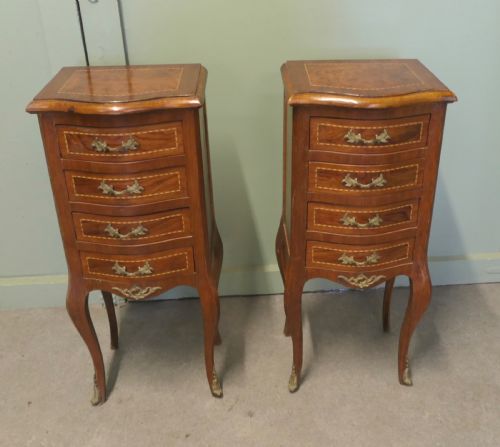
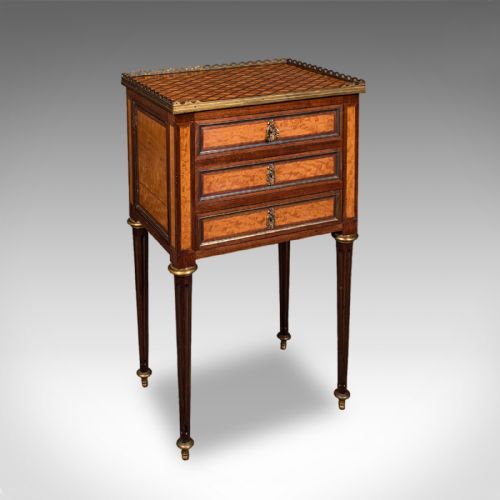
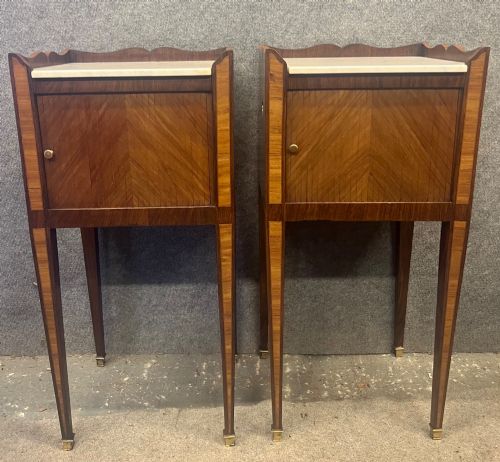

Inlaid Walnut Nightstands
These inlaid walnut nightstands combine decorative woodworking with practical bedside storage, offering French and English designs from the eighteenth century to the art deco period.
Inlaid Walnut Nightstands
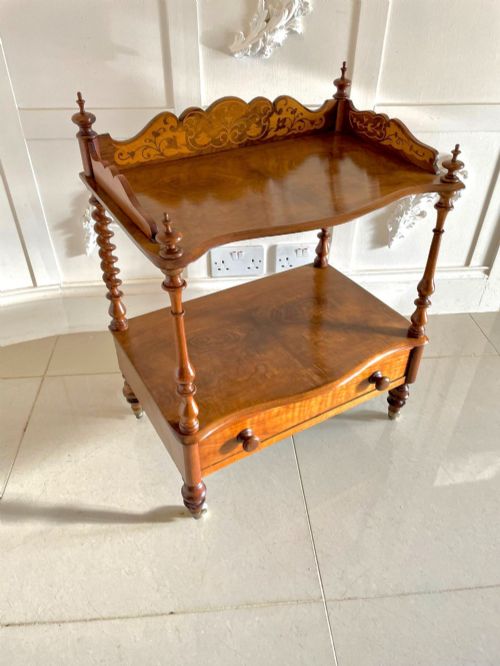
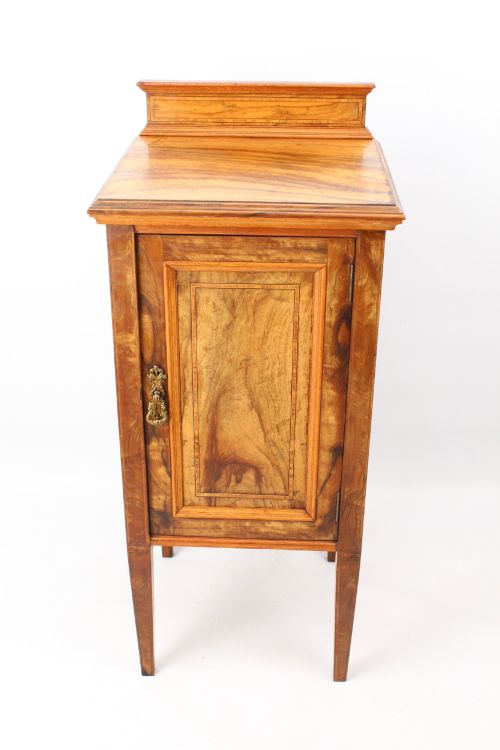
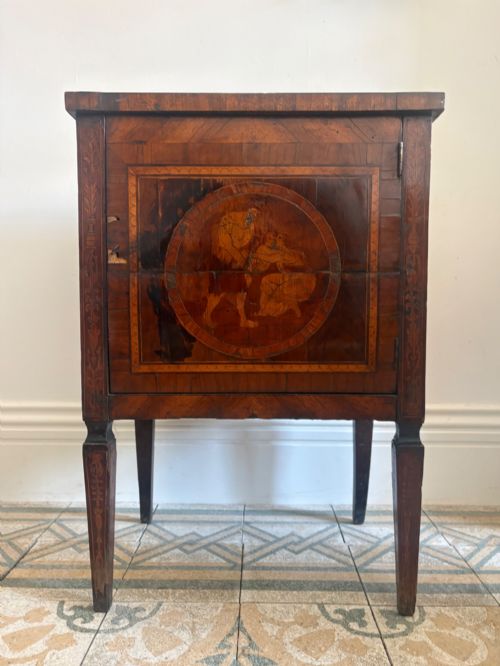
When you search for inlaid walnut nightstands, you encounter a selection of bedside cabinets, lamp tables, and small side chests that span several centuries. The pieces on this page lean heavily towards twentieth-century French models, alongside Victorian, Edwardian, and eighteenth-century examples.
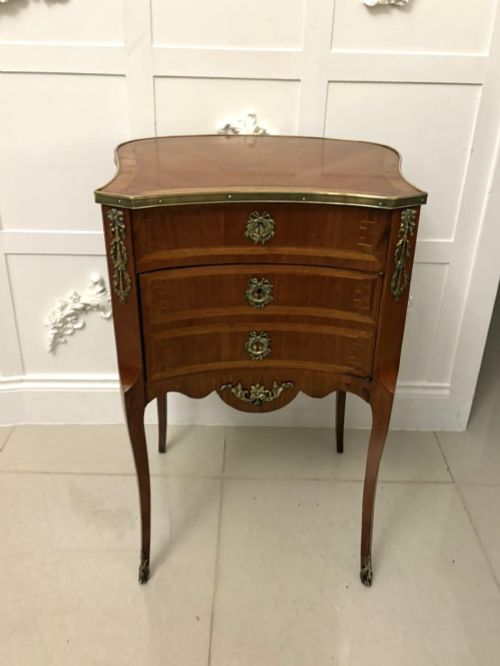
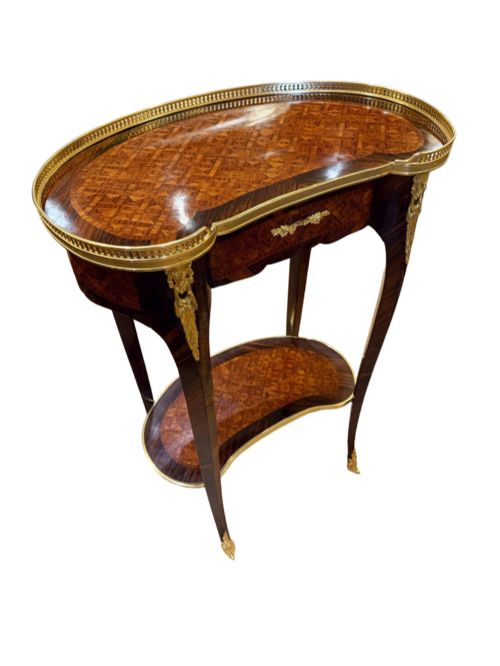
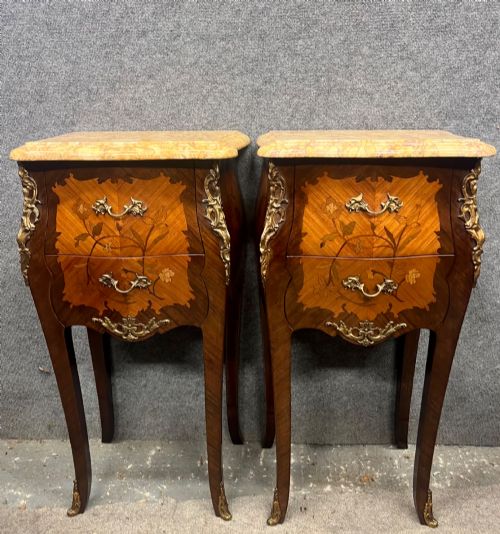
Makers and workshops produced these tables in various configurations, including kidney shapes, commodes, and cabinets with marble tops or multiple drawers. Walnut serves as the primary timber across the inventory, often paired with contrasting woods in detailed marquetry and parquetry patterns.
How they were made
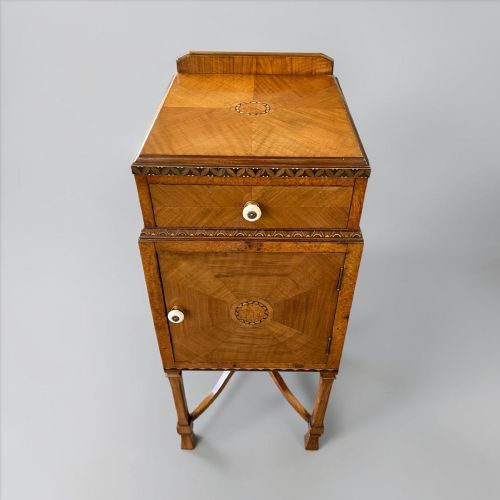
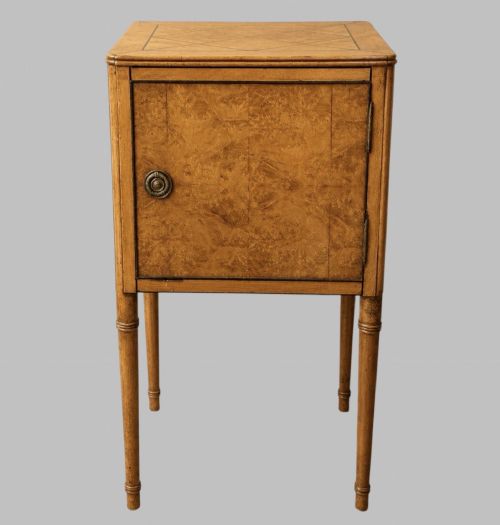
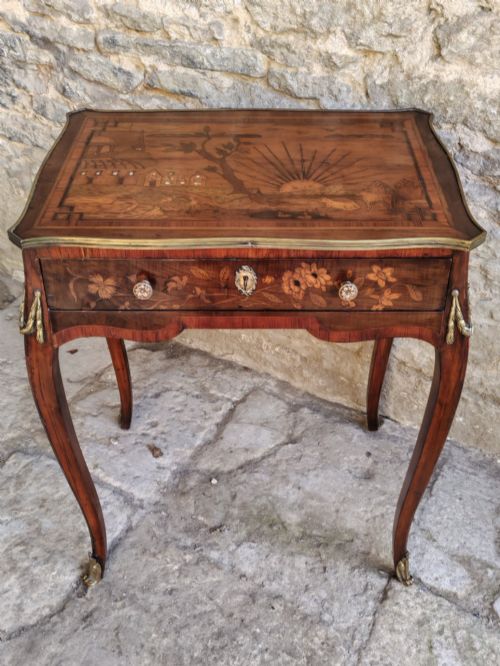
Craftsmen utilised walnut and burr walnut veneers applied over solid secondary woods, creating patterned surfaces across tops and drawer fronts. Marquetry and parquetry techniques incorporated fruitwood and kingwood to form floral or geometric inlay.
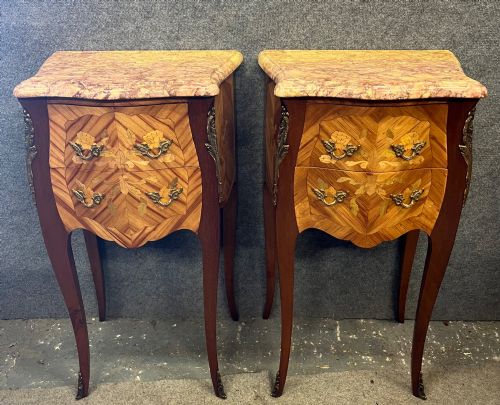
Many cabinets incorporate fitted marble tops and cast ormolu mounts made from gilt bronze. Brass hardware frequently appears on drawer pulls, key escutcheons, and sabots.
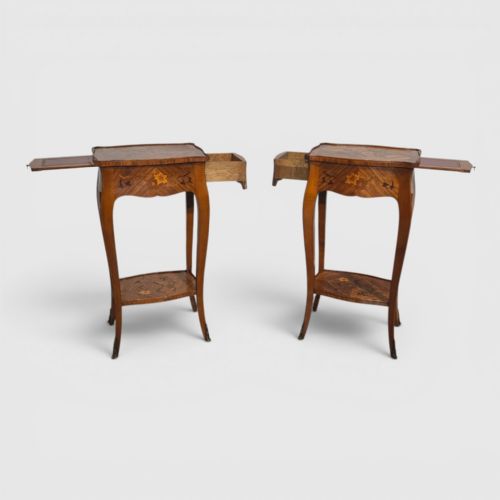
Some nineteenth-century tables served as secretive poudreuses with hidden compartments for powders and mirrors.
What varies in quality
The standard of timber selection largely dictates the quality of these tables, with burr walnut and intricate multi-wood marquetry sitting at the upper end of production. Precision in the geometric parquetry and the crispness of floral inlay separate standard workshops from premier cabinet makers.
Secondary materials also distinguish the pieces, such as the thickness and veining of inset marble slabs and the weight of cast ormolu mounts. Structural execution, including the dovetailing of drawers and the stability of curved kidney shapes, marks the difference between basic utility items and fine decorative pieces.
Maple and Co·Walter Carter Harrods
The Inlaid Walnut Nightstands Glossary
- Marquetry
- Decorative veneer work forming pictorial or floral patterns using various coloured woods. This technique requires precise cutting and fitting of thin timber sheets.
- Parquetry
- Geometric wood inlay forming repeating patterns such as cubes or chequers. It often covers the entire top surface of a bedside table.
- Ormolu
- Gilt bronze mounts applied to furniture for decorative effect. The metal is cast and then treated with a gold wash.
- Burr Walnut
- Wood taken from a walnut tree growth, showing highly figured and swirling grain patterns. Cabinet makers prized this timber for prominent display surfaces.
- Commode
- A low chest of drawers or cabinet originating in France. Many bedside versions feature marble tops and enclosed cupboard spaces.
Inlaid Walnut Nightstands: Frequently Asked Questions
What periods do these nightstands come from?
The pieces span from the eighteenth century through the Victorian and Edwardian eras up to the art deco period of the 1930s. French styles from the nineteenth and early twentieth centuries dominate the selection.
Earlier examples display neoclassical or rococo influences, while later items embrace cleaner art deco lines or simpler proportions.
Are these tables usually sold as pairs?
Many of the bedside cabinets and lamp tables on this page appear as matched pairs. This reflects the traditional placement of matching tables on either side of a bed.
Single pieces also feature in the listings, functioning independently as lamp tables or side cabinets in hallways and living spaces.
What materials appear most frequently?
Walnut and burr walnut form the primary wooden structure and veneer for almost all the pieces. Fruitwood and kingwood are used alongside walnut for contrasting inlay work.
Surface materials frequently include inset marble slabs on the top, while brass and ormolu provide mounts and hardware.
How do I distinguish French styles from other origins?
French pieces often incorporate kidney shapes, bombe profiles, and elaborate marquetry referencing Louis XV or Louis XVI designs. They frequently feature marble tops and delicate ormolu mounts.
English and Italian pieces present different proportions and simpler geometric parquetry, though walnut remains the unifying timber across regions.