

Inlaid Walnut Display Sideboard
An inlaid walnut display sideboard brings nineteenth-century British and continental craftsmanship into a room with polished timber and gilt metal.
Inlaid Walnut Display Sideboard
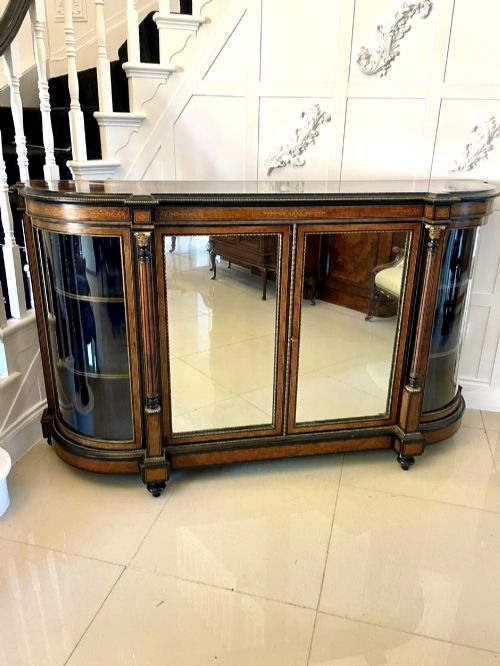
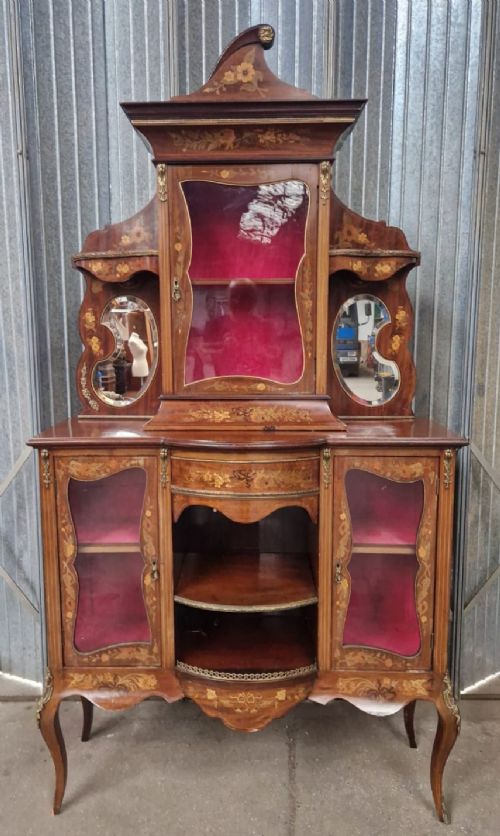
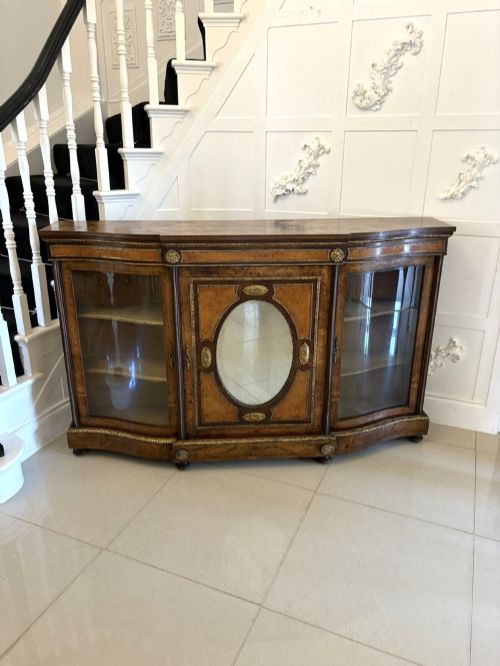
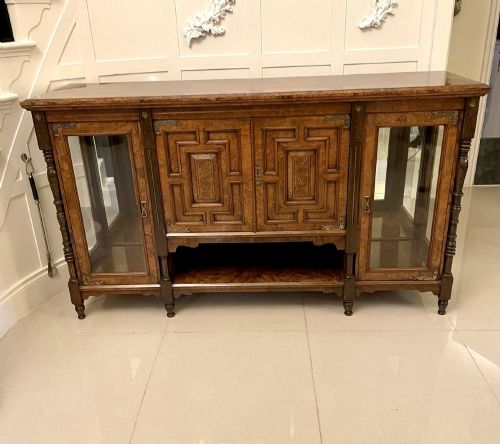
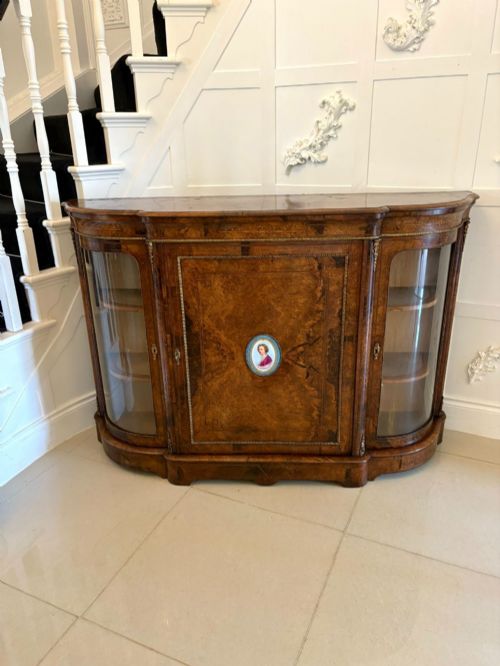
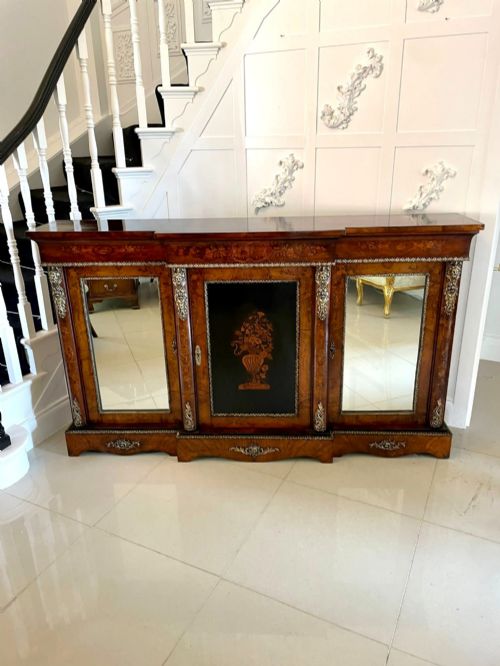
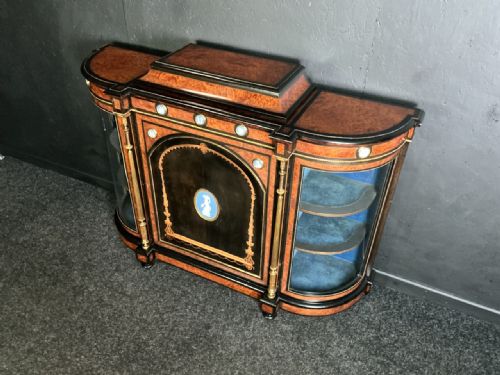
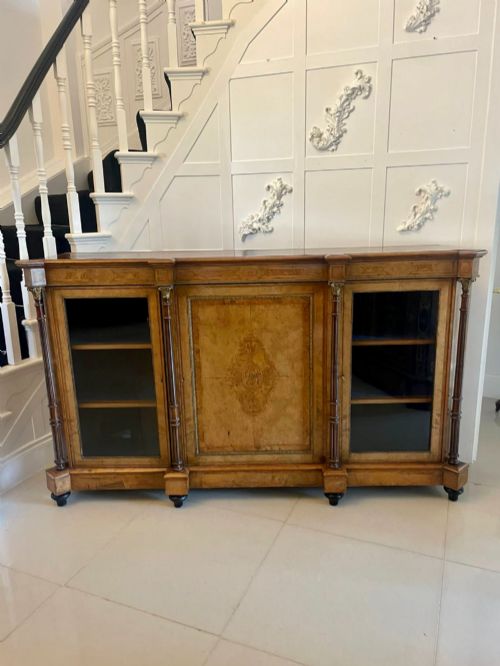
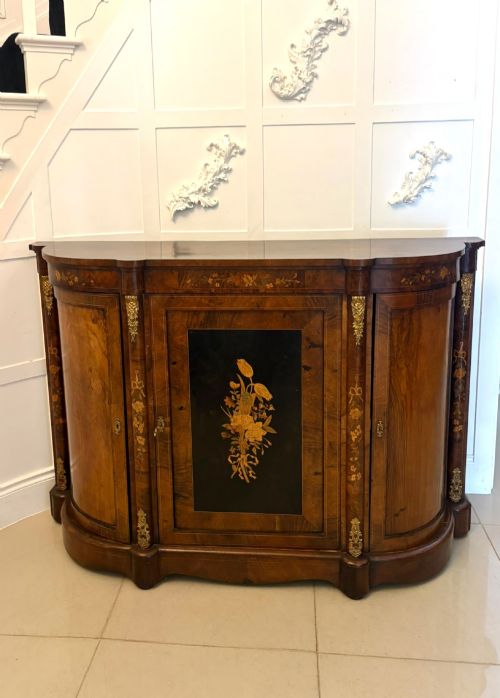
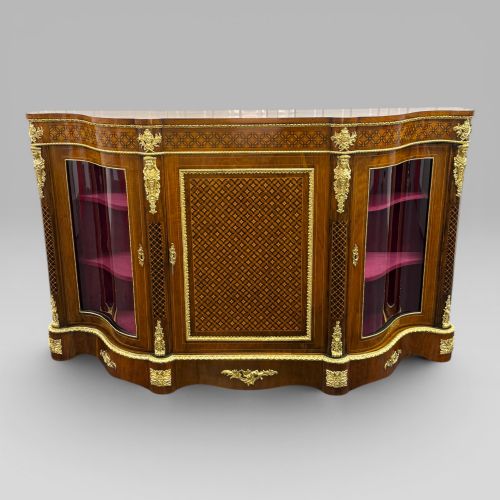
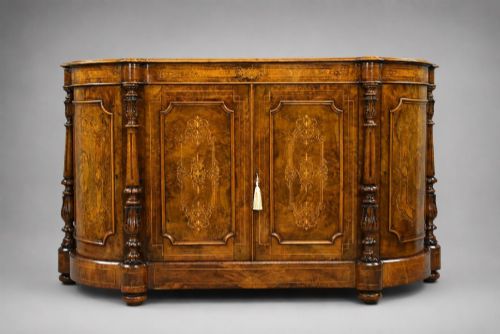
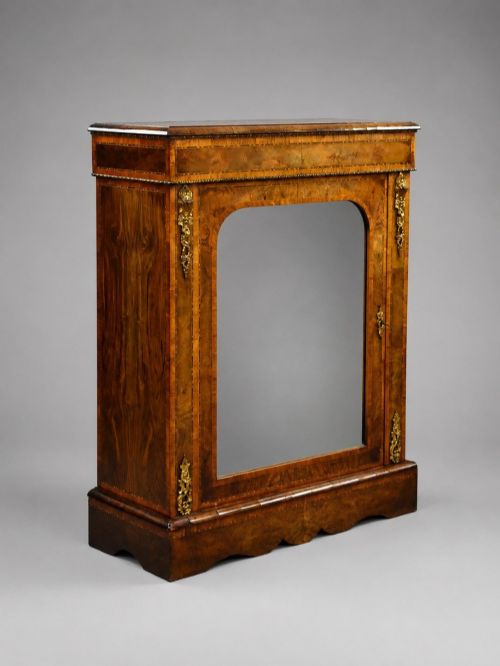
An inlaid walnut display sideboard is an impressive nineteenth-century cabinet designed to store and exhibit prized possessions. These pieces take various forms across the inventory, appearing most frequently as credenzas, side cabinets, and pier cabinets from the Victorian era. They combine enclosed cupboard space with glazed display sections, presenting a formal presence in a drawing room or dining space.
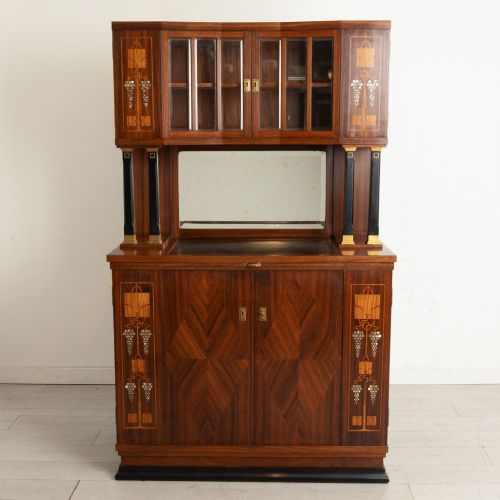
The dominant style on this page is Victorian, alongside examples from the Aesthetic Movement, Viennese Secessionist, and French Second Empire periods. Credenzas form the majority of the available shapes, often featuring serpentine fronts and glazed side doors. Buyers encounter pieces spanning several decades of the nineteenth century, from mid-century productions to later interpretations.
Materials and construction methods
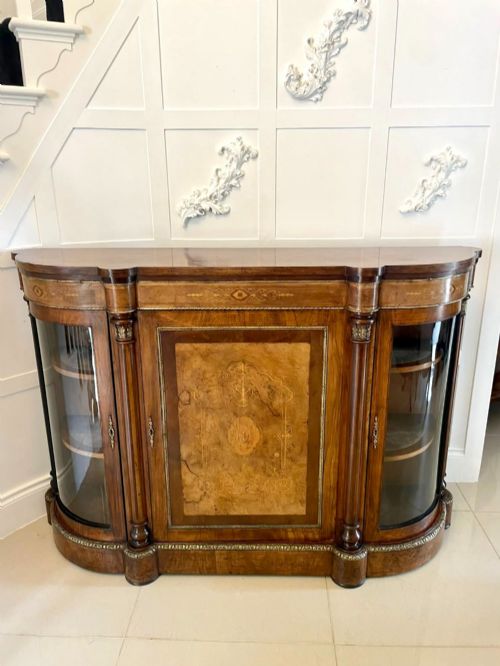
Makers utilised figured burr walnut veneers applied over solid timber carcasses to achieve rich, swirling grain patterns across the front and top surfaces. This timber was frequently embellished with contrasting boxwood and satinwood inlay, creating intricate floral marquetry and geometric banding. Ebonised wood, rosewood, and ebony often appear alongside the walnut to frame panels and accentuate structural lines.
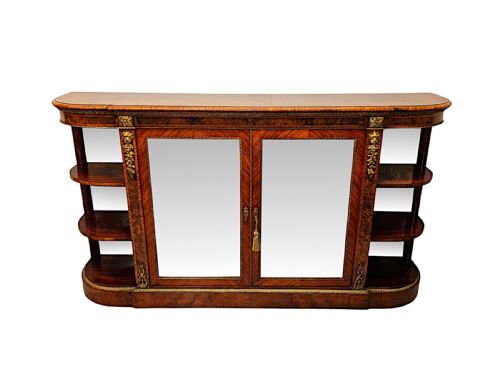
Gilded bronze ormolu mounts punctuate the timber surfaces, reinforcing the corners and outlining glazed doors in the manner of French Revival and Victorian design. Many pieces incorporate glass panels for display, whilst select examples feature porcelain plaques or Sevres-style porcelain set directly into the walnut framework. Metal brass details secure the interior shelving and locking mechanisms behind the doors.
The inventory spans the Victorian period through to the early twentieth century, incorporating Aesthetic Movement and Viennese Secessionist designs.
Distinguishing quality across the range
Quality rests upon the selection of the burr walnut veneer and the precision of the marquetry inlay. Superior examples display symmetrical, highly figured grain patterns that wrap fluidly around the curves of serpentine cabinets. The execution of the boxwood inlay reveals the hand of a skilled artisan through sharp lines and tight botanical motifs rather than crude, blurred borders.
The integration of metalwork and secondary materials marks the upper tier of production. Finely chased ormolu mounts, heavy cast bronze detailing, and the inclusion of painted porcelain plaques distinguish ambitious cabinet work from standard domestic pieces. Furthermore, the fluidity of shaped timber carpentry and substantial cabinetry joinery separate standard workshop output from exhibition pieces.
Gillows·August Ungethüm·Maison Gagneau·Gillow
The Inlaid Walnut Display Sideboard Glossary
- Credenza
- A low cabinet featuring central doors flanked by curved glazed compartments, designed for display and storage. They sit low to the floor and often incorporate mirrored backs inside the central section.
- Ormolu
- Gilded bronze mounts applied to furniture for decorative accent and edge protection. These gilded details catch the light and define the architectural proportions of the cabinet.
- Marquetry
- Decorative veneer work forming pictures or patterns from different woods and tinted veneers. Craftsmen cut these thin elements to fit together precisely within the walnut surface.
- Burr Walnut
- Timber taken from the growth excrescences of walnut trees, yielding highly twisted and complex grain patterns. It provides the primary visual texture for the best nineteenth-century cabinet work.
- Pier Cabinet
- A narrow display cabinet built specifically to fit the wall space between windows. These upright pieces typically feature a single glazed door and modest footprint.
Inlaid Walnut Display Sideboard: Frequently Asked Questions
Where should I place a credenza?
These long, low cabinets suit principal reception rooms or large dining spaces where their reflective glass and polished walnut can be seen properly. They work well against wide expanses of wall away from direct sunlight.
Ensure there is sufficient floor clearance for the doors to open fully, particularly on serpentine shapes with curved glass. Their finished backs and refined timber surfaces also allow them to command attention as freestanding focal points in a balanced interior layout.
How do I clean walnut veneer?
Maintain the polished timber surface using a soft, dry lint-free cloth to remove dust regularly. Avoid abrasive polishes or modern chemical sprays that can degrade nineteenth-century French polish and finishes.
Apply a traditional beeswax sparingly once or twice a year to nourish the dry burr walnut grain and protect the delicate boxwood inlay. Keep the cabinet away from direct heat sources and radiators to prevent the timber veneers from splitting or lifting.
What is the difference between a credenza and a pier cabinet?
Credenzas are wide, symmetrical pieces featuring a central cupboard flanked by curved glass compartments and doors. They command significant wall space and offer substantial surface area on top.
Pier cabinets are tall and narrow, built to fit into the wall space between windows. They typically rely on a single upright glazed door to showcase porcelain or small collectibles within a compact footprint.
Can I store heavy items inside?
Interior shelving in these antique cabinets is designed to hold display china, glassware, and decorative objects rather than heavy library books or dense modern storage loads. The internal wooden or glass shelves rest on traditional supports suited for lighter decorative collections.
Distribute weight evenly across the shelves and avoid overloading the central sections of older credenzas. Treating the internal joinery with care preserves the structural integrity of the nineteenth-century framing.