
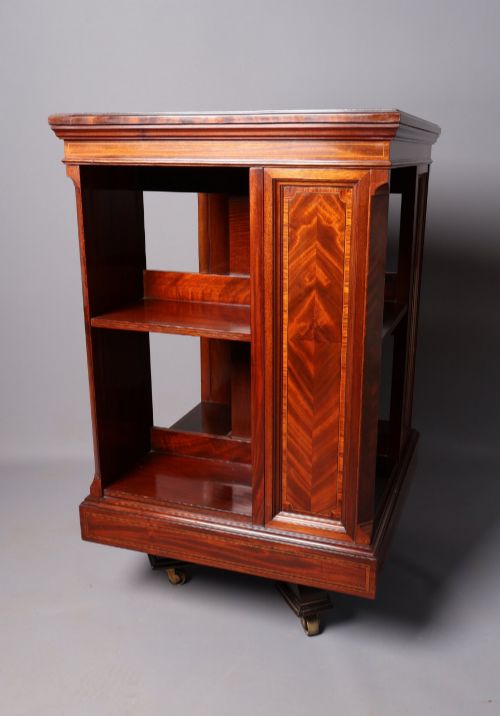


Inlaid Revolving Stand
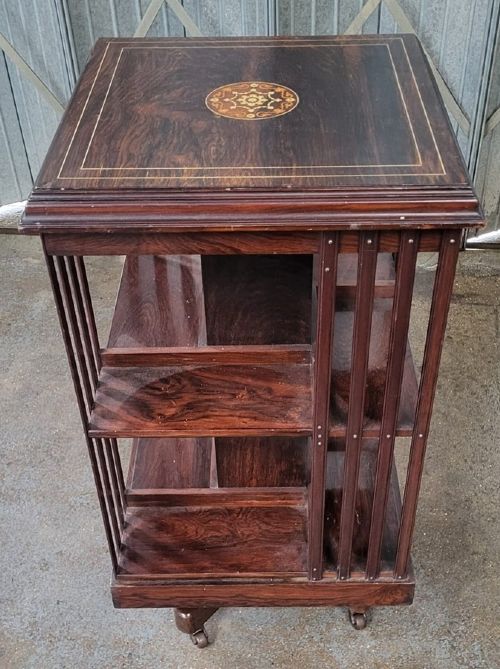
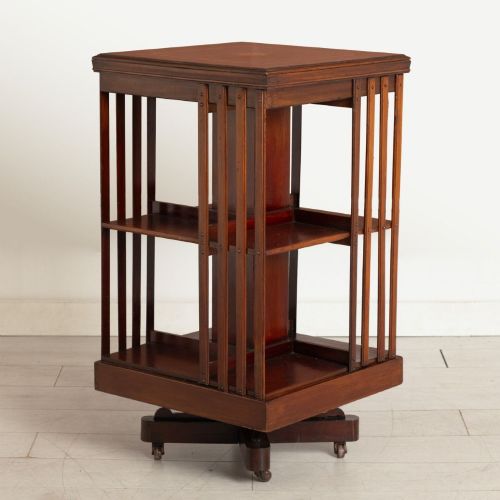
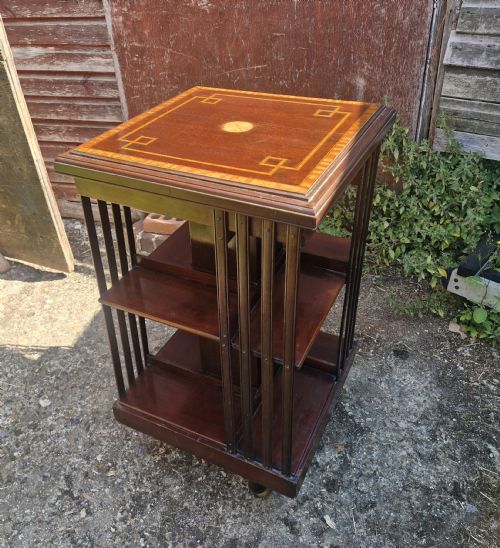
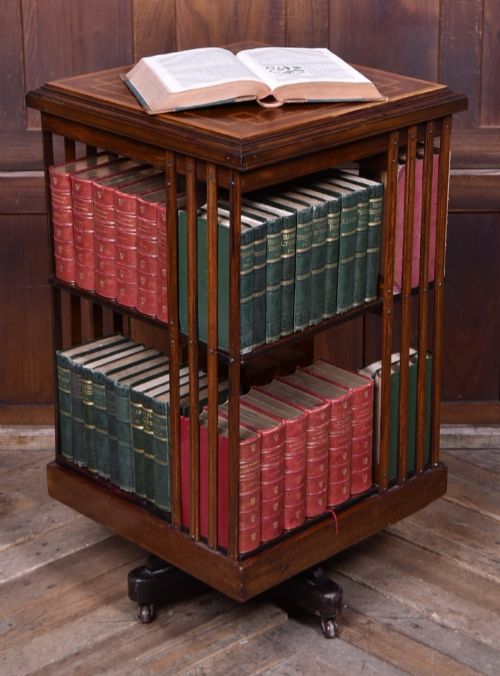
An inlaid revolving stand is a rotating timber tier for books or surfaces, turned smoothly on a spindle by hand to keep volumes at your elbow.
Inlaid Revolving Stand
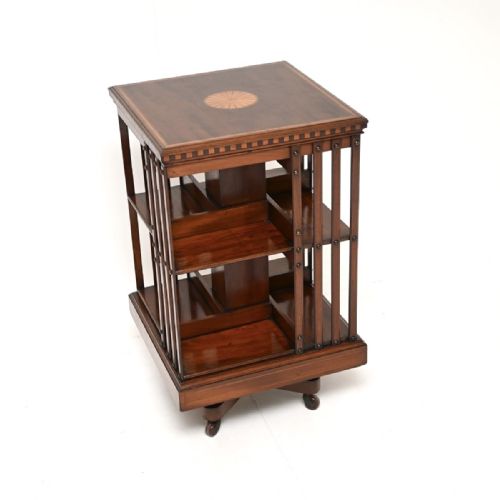
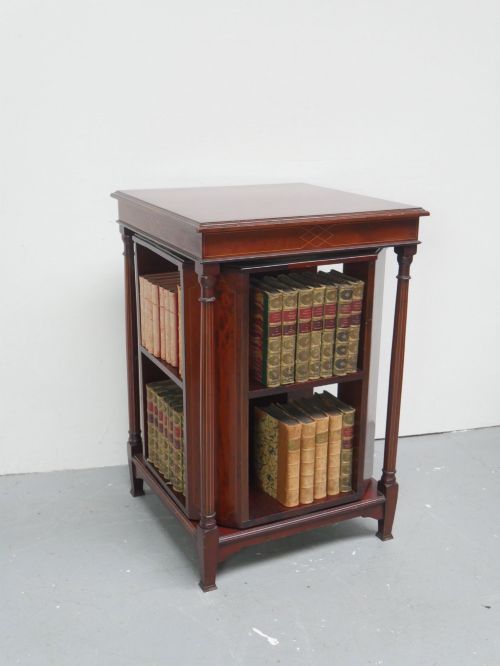
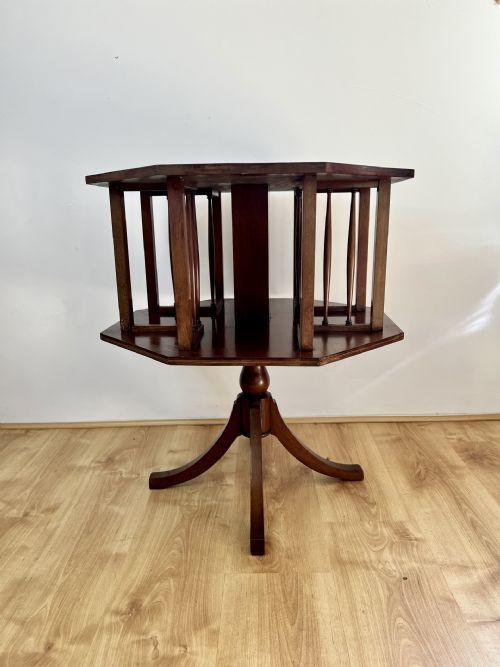
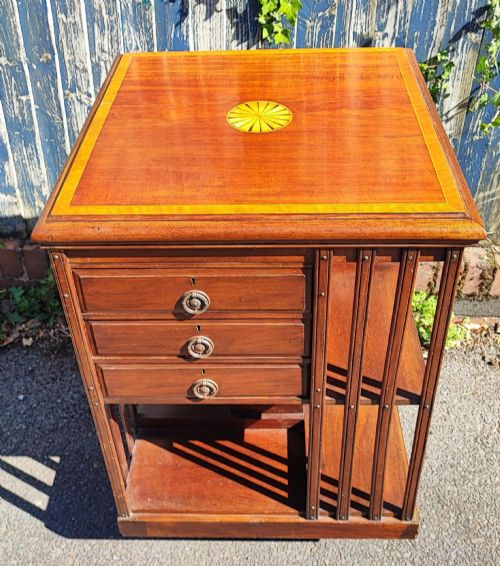
When you search for an inlaid revolving stand, you are looking at rotating timber tiers designed to hold volumes or serve surfaces within reach. The pieces you are most likely to meet on this page are Edwardian revolving bookcases made in mahogany, alongside occasional walnut or rosewood examples.
The forms vary from small table-top versions to larger floor-standing models and even a walnut marquetry dumb waiter. Most date from the Edwardian period or around nineteen hundred, though walnut marquetry pieces stretch back to the eighteenth century and Victorian brass-inlaid marble-top variants appear.
These rotating stands combine utility with decorative cabinet work, designed to sit beside a desk, armchair or in the centre of a room. The revolving mechanism allows multiple books to be accessed easily from a single stationary position.
How they were made
Makers constructed these pieces primarily in mahogany, flame mahogany, walnut and rosewood timber. Brass components frequently support the internal spindle mechanism and castors.
Inlay work relied on contrasting woods such as satinwood and boxwood, set into the timber surface to create linear borders or floral motifs. Marquetry technique appears on eighteenth-century walnut examples, building pictorial patterns from wood veneers.
Object forms recorded on this site include bookcases, revolving bookcases, side tables, dumb waiters, and table-top book stands.
What varies in quality
The sophistication of the timber veneer and the precision of the satinwood or boxwood inlay set the finer examples apart. Flame mahogany figure and crisp marquetry indicate a higher standard of cabinet-making.
The engineering of the internal revolving action determines mechanical quality. A smooth, quiet rotation on its spindle distinguishes a superior stand from a stiffer mechanism.
The Inlaid Revolving Stand Glossary
- Inlay
- A technique where contrasting pieces of wood are fitted into recesses flush with the surface. Satinwood and boxwood are common inlay materials on these stands.
- Revolving bookcase
- A rotating tiered stand designed to hold books upright on multiple sides. It turns on a central spindle mechanism.
- Marquetry
- Elaborate veneer work forming decorative patterns or pictures using various coloured woods. This appears on walnut examples from the eighteenth century.
- Flame mahogany
- Timber cut to reveal a characteristic flamelike grain pattern. This figure is prized in Edwardian cabinet-making.
- Dumb waiter
- A tiered stationary or rotating serving stand. The eighteenth-century walnut marquetry piece listed uses this form.
Inlaid Revolving Stand: Frequently Asked Questions
How do I care for my revolving stand?
Keep the timber polished with a traditional wax to nourish the grain and protect the satinwood or boxwood inlay from drying out. Avoid placing the stand in direct sunlight or near heat sources that could warp the wood.
Periodically check the internal revolving mechanism beneath the stand to ensure it turns freely without grinding. Gentle cleaning with a soft cloth preserves both the finish and the brass fittings.
Are these stands suitable for modern books?
Most Edwardian revolving bookcases accommodate standard novels and octavo volumes comfortably within their vertical compartments. Table-top versions work well for smaller reference books and desk accessories.
Heavier modern folio editions may exceed the weight capacity intended for turn-of-the-century spindle mechanisms. Check the compartment height and depth if you intend to store oversized modern volumes.
How do I distinguish Edwardian from Victorian pieces?
Edwardian stands frequently feature lighter mahogany, satinwood inlay, and Sheraton Revival influences resulting in a more refined appearance. Victorian examples in the record tend to incorporate heavier elements such as brass inlay and marble tops.
The majority of pieces listed originate from the Edwardian era and around nineteen hundred, showing lighter proportions than their mid-nineteenth-century predecessors.
What is the difference between a bookcase and a dumb waiter?
A revolving bookcase is specifically constructed with vertical partitions to keep upright books organised on rotating tiers. A dumb waiter functions as a tiered serving stand rather than a dedicated book holder.
The walnut marquetry piece dated to the eighteenth century takes the dumb waiter form, whereas nearly all other listings are bookcases or book stands.