



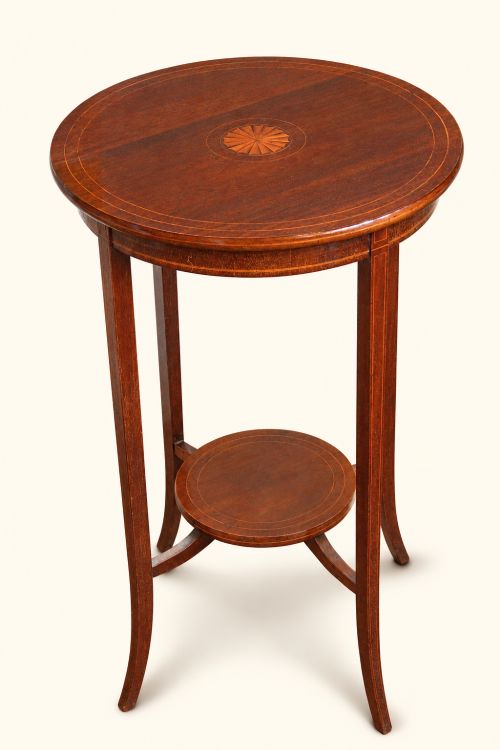
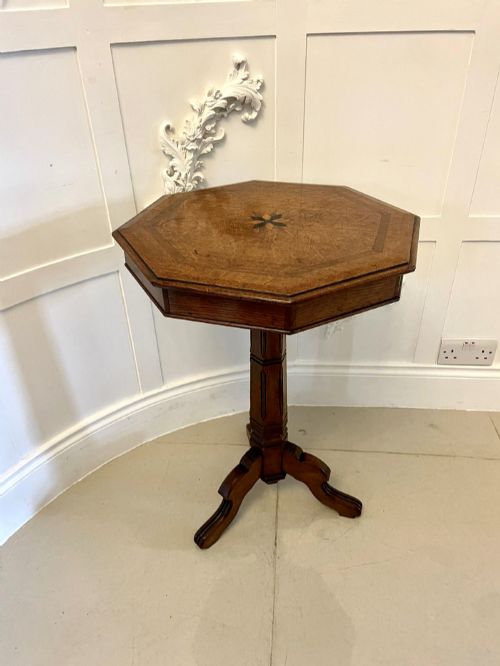
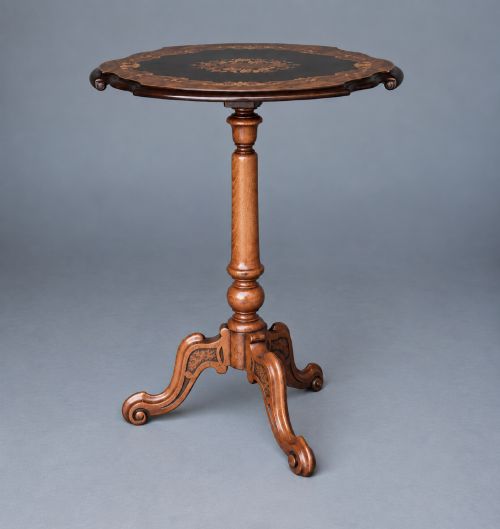
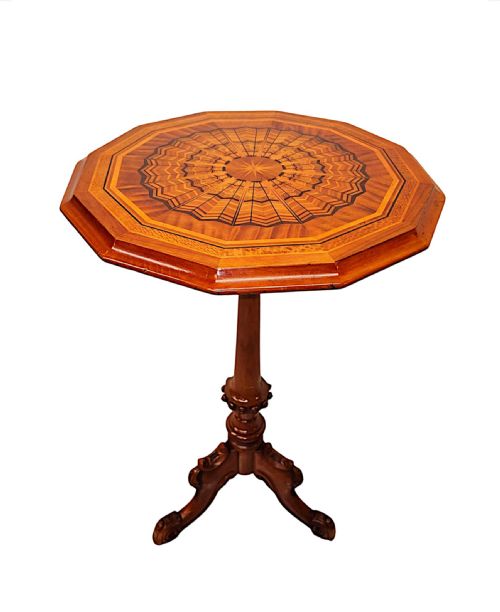
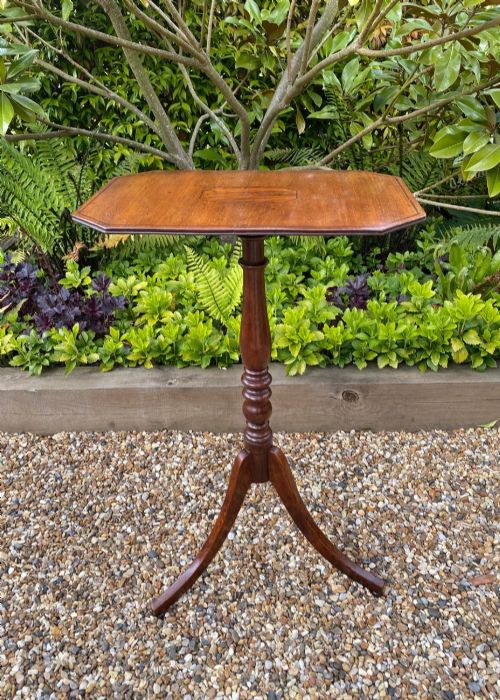

Inlaid Pedestal Stand
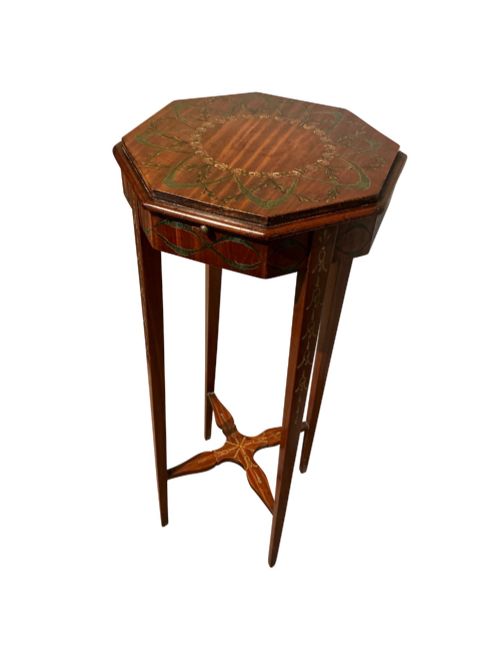
An inlaid pedestal stand brings architectural height and detailed craftsmanship to a corner, supporting plants, lamps, or urns.
Inlaid Pedestal Stand
An inlaid pedestal stand elevates decorative objects, plants, and lamps on a single shaft or slim legs, taking up minimal floor space while drawing the eye upward.
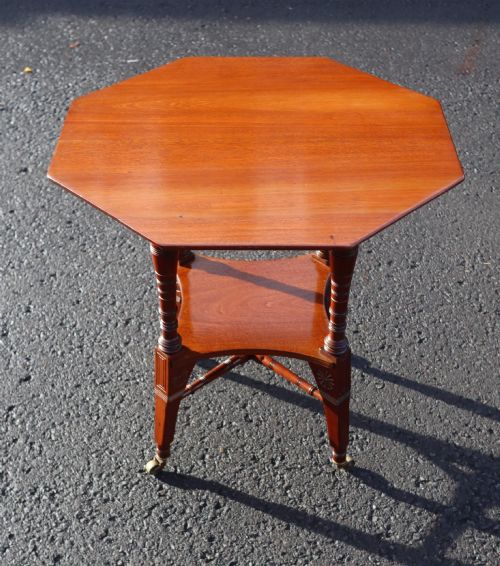
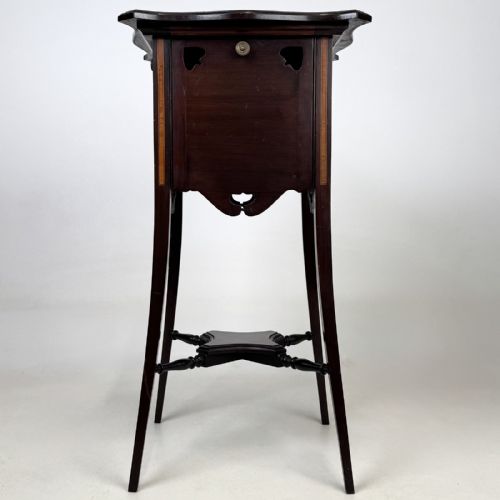
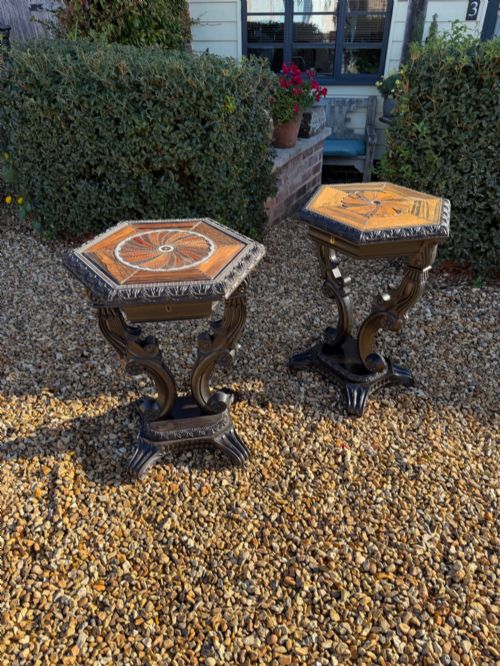
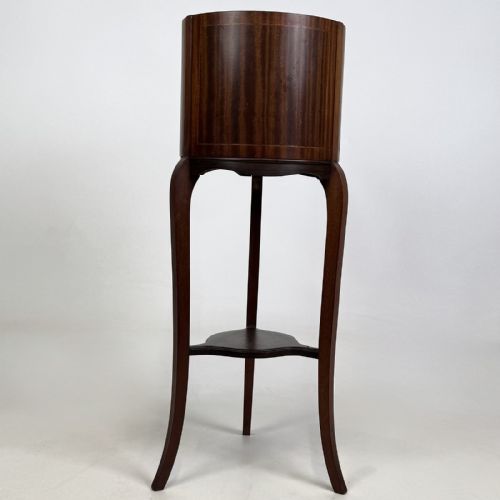
The pieces grouped under an inlaid pedestal stand span plant stands, torchères, wine tables, and display columns dating from the Georgian, Regency, Victorian, and Edwardian periods.
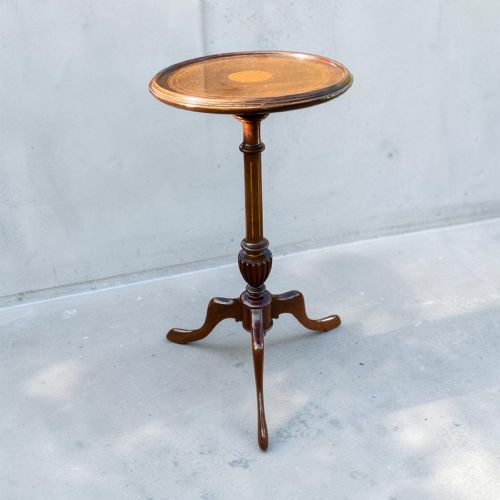
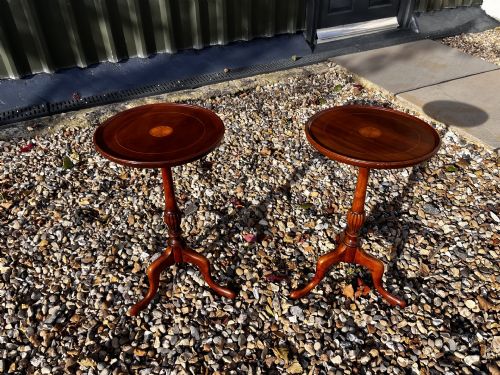
Edwardian mahogany examples and 19th-century rosewood or satinwood versions dominate the selection, often featuring circular or octagonal tops supported by tripod bases or central columns.
How they were made
Cabinet makers built the structural frames primarily from timbers such as mahogany, rosewood, walnut, and satinwood, shaping the central columns and turning the legs on a lathe.
Surface decoration relies heavily on wood inlay, utilising contrasting species like boxwood and satinwood alongside brass stringing, mother of pearl, and bone to create geometric or floral motifs.
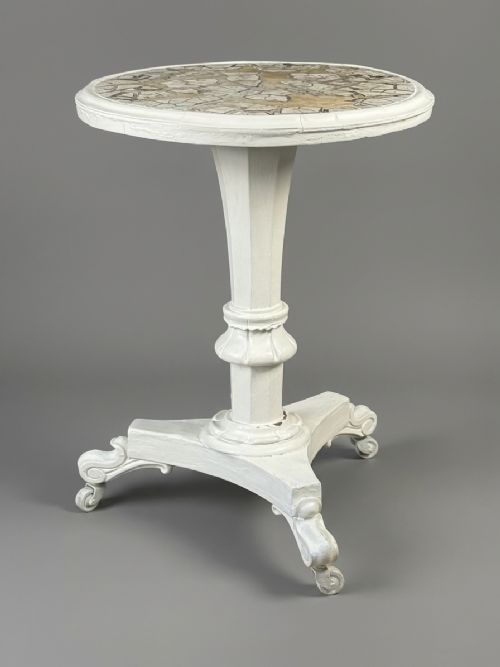
Marquetry and specimen wood techniques introduce pictorial designs and varied natural grain patterns directly into the table tops and pedestals.
Inlaid Pedestal Stand Retail Price Guide 2026
Typical asking prices for inlaid pedestal stand among the pieces listed under this phrase on Sellingantiques today, from the lower quarter to the upper quarter. They describe what is for sale here now, not the wider market.
Listings feature woods such as mahogany, rosewood, walnut, and satinwood, spanning Georgian, Regency, Victorian, and Edwardian eras.
What varies in quality
The crispness and complexity of the inlay separate standard production from finer cabinet work, with tightly fitted contrasting woods indicating superior hand-cut craftsmanship.
Timber selection and grain matching determine visual depth, particularly on circular tops where figured mahogany or rich rosewood enhances the overall proportion.
Stability and weight distribution in the pedestal base or tripod legs dictate how securely the stand carries taller urns or heavy planters.
Gillows·George Bullock·Edwards & Roberts
The Inlaid Pedestal Stand Glossary
- Torchère
- A tall, slender stand designed specifically to hold a candle, lamp, or small decorative sculpture. These pieces lift light sources to eye level in a room.
- Inlay
- A technique where contrasting materials are inserted into recessed cavities of a wooden base to form a flat surface design. Boxwood and satinwood provide pale contrast against dark mahogany.
- Marquetry
- An elaboration of inlay that forms pictorial or floral patterns using multiple tinted and natural wood veneers. This method covers entire tabletops in complex botanical scenes.
- Tripod base
- A three-legged support structure commonly found on round occasional tables and plant stands. This configuration prevents rocking on uneven historical floorboards.
- Brass stringing
- Thin strips of brass embedded into grooves along table edges or legs to create sharp linear borders. Regency pieces frequently employ this metallic detailing.
Inlaid Pedestal Stand: Frequently Asked Questions
What were inlaid pedestal stands used for originally?
These tall supports held lighting, botanical specimens, or decorative urns to break up flat room elevations and display prized possessions.
In period interiors, they occupied dark corners or flanking spaces where they provided functional surface area without crowding the floor.
How do I distinguish an Edwardian stand from a Georgian one?
Edwardian versions frequently combine lighter satinwood inlay with mahogany frames using machine-assisted precision typical of the early 20th century.
Georgian and Regency pieces rely on heavier solid timbers, hand-cut brass stringing, and proportions tied to neoclassical design principles.
Can these stands support heavy plants or large lamps?
Most stands with sturdy tripod bases or weighted pedestals comfortably accommodate moderate table lamps and potted plants.
Checking the rigidity of the central column and the tightness of the leg joints ensures the piece remains stable under weight.
Where should I place a pedestal stand in a modern room?
They fit naturally into empty corners, beside reading chairs, or between windows where their vertical height adds visual interest.
Their compact footprints allow them to function as landing spots for small items without disrupting traffic flow.