




Inlaid Oval Coffee Table
An inlaid oval coffee table brings nineteenth-century cabinet-making into a modern room through refined timber and delicate marquetry.
Inlaid Oval Coffee Table
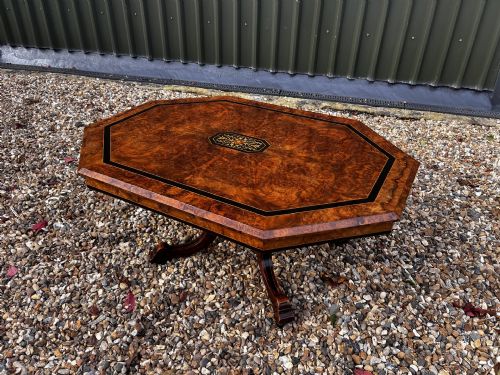
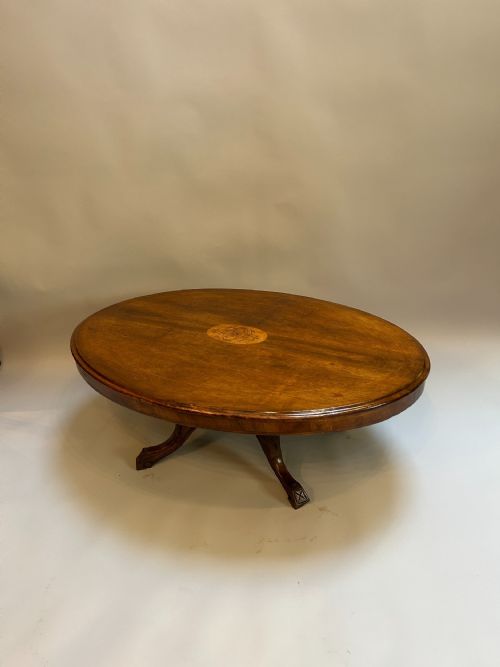
The search for an inlaid oval coffee table directs attention towards nineteenth-century and early twentieth-century domestic furniture, spanning the Victorian and Edwardian eras alongside revival styles such as Sheraton Revival and Regency Revival. These tables frequently originate from transformations of earlier occasional tables, centre tables, or tea tables adapted for lower seating heights.
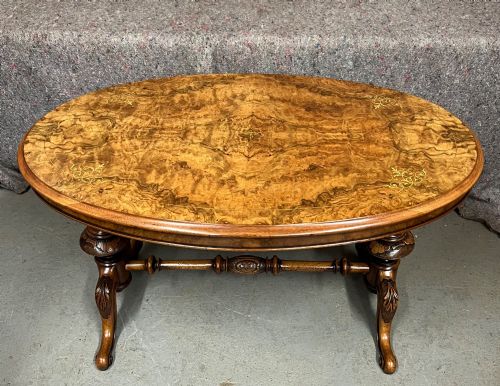
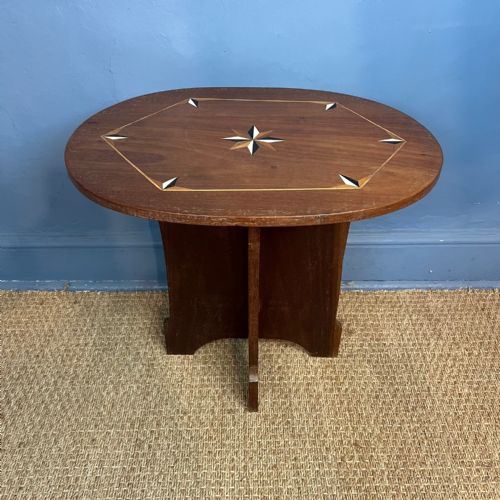
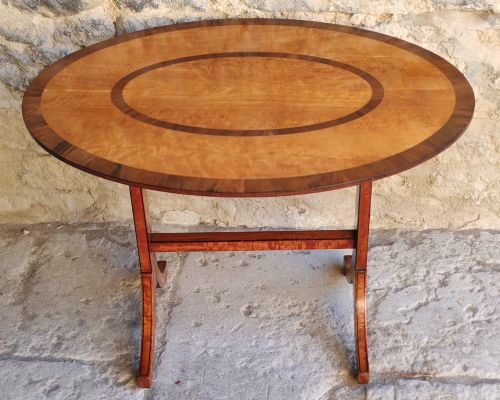
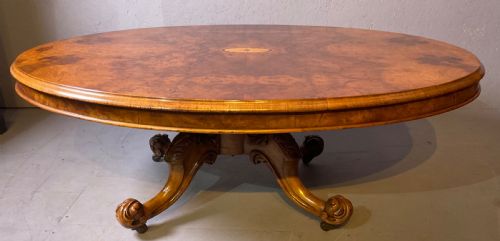
Buyers most commonly encounter mahogany, satinwood, and burr walnut frameworks shaped into curved ellipses. Marquetry and boxwood inlay decorate the tops, often incorporating classical motifs or floral scrollwork within geometric borders.
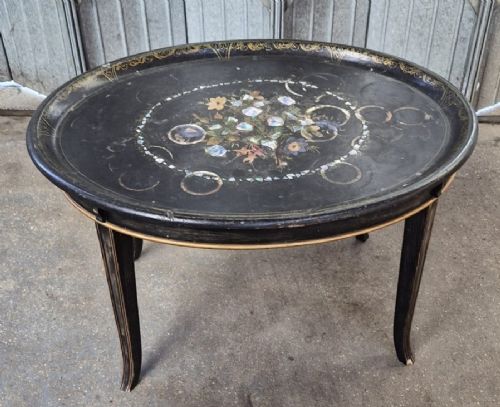
Alongside standard freestanding coffee tables, related forms appear on this page, including nest of tables, two-tier occasional tables, and removable trays set upon folding stands. These variations provide compact surfaces suitable for smaller reception rooms while retaining the curved silhouette characteristic of the category.
Timbers and inlay techniques
Cabinet-makers constructed the foundational carcasses using dense hardwoods like mahogany and walnut, frequently applying highly figured veneers such as burr walnut and satinwood across the top surface to create visual depth. Boxwood served as a contrasting linear element for stringing and delicate floral or neoclassical marquetry patterns.
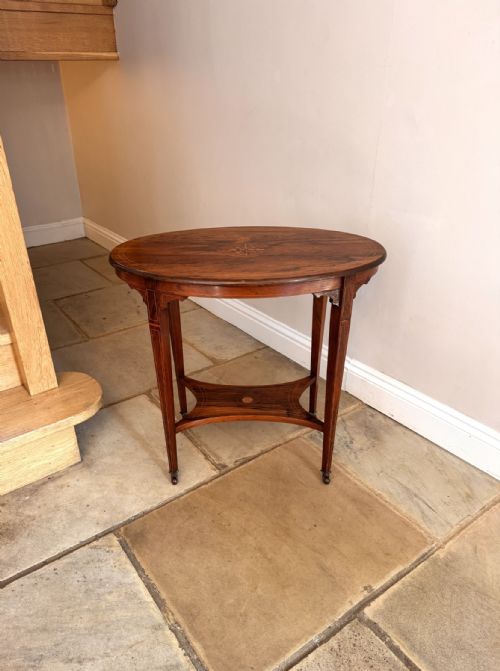
Surface decoration relied upon precise hand-cutting of contrasting veneers, inlaid directly into the primary timber ground before polishing. Certain examples incorporate hand-carved wooden bases or slender tapered legs augmented by brass fittings and castors.
Inlaid Oval Coffee Table Retail Price Guide 2026
Typical asking prices for inlaid oval coffee table among the pieces listed under this phrase on Sellingantiques today, from the lower quarter to the upper quarter. They describe what is for sale here now, not the wider market.
Listings span from the 1860s through the Edwardian period, uniting Victorian burr walnut, satinwood, and mahogany under the Sheraton Revival and Neo-Classical styles.
Distinctions in construction and decorative depth
Superior examples demonstrate meticulous grain matching in the burr timber and crisp execution in the boxwood marquetry without gaps or heavy filler. The intricacy of the floral or classical inlay and the selection of fine satinwood or walnut dictate the upper tier of the range.
Structural integrity, stability in the oval frame, and the condition of the polished finish separate workshop pieces of high merit from simpler domestic items. Pieces bearing documented cabinet-maker signatures reflect the pinnacle of period craftsmanship.
Edwards and Roberts
The Inlaid Oval Coffee Table Glossary
- Marquetry
- A decorative technique where small pieces of veneer are assembled into pictorial or geometric patterns and glued onto a structural surface. This method defines the ornamented tops of many Victorian and Edwardian tables.
- Satinwood
- A lustrous, hard timber native to Ceylon and the West Indies, prized for its golden colour and smooth sheen. It frequently forms the primary surface veneer on Edwardian and Sheraton Revival pieces.
- Burr walnut
- Timber taken from the abnormal growth of a walnut tree, yielding highly twisted, knotted grain patterns. It creates a rich, mottled texture across table surfaces.
- Stringing
- A thin, narrow strip of contrasting wood inlaid into grooves in the furniture surface to form geometric borders. Boxwood is commonly utilised for this linear detailing.
- Sheraton Revival
- A late nineteenth and early twentieth-century design movement inspired by the neoclassical furniture of George Sheraton. These pieces emulate eighteenth-century lightness through inlaid satinwood and tapered supports.
Inlaid Oval Coffee Table: Frequently Asked Questions
Are these original coffee tables?
Many tables found in this category began life as nineteenth-century occasional, tea, or centre tables rather than low furniture designed specifically for modern seating heights. Cabinet-makers or later restorers occasionally adjusted the height of these pieces to suit contemporary living.
Despite these alterations, the timber frames, marquetry tops, and structural components remain genuine period antiques from the Victorian or Edwardian eras.
How do I care for satinwood and burr walnut?
Inlaid timber surfaces require protection from direct sunlight and excessive heat to prevent the delicate boxwood stringing and fine veneers from drying out or lifting. Regular dusting with a dry, soft cloth preserves the polished finish without chemical buildup.
Applying a traditional beeswax polish occasionally helps nourish the wood and maintain the natural lustre of the burr walnut or satinwood grain.
What is the difference between Victorian and Edwardian tables?
Victorian pieces often utilise darker timbers like burr walnut and mahogany, featuring heavier proportions, hand-carved bases, and dense marquetry panels. They reflect a nineteenth-century preference for rich, dramatic grain patterns and robust construction.
Edwardian tables tend to display lighter satinwood frames, delicate tapered legs, and refined neoclassical or Sheraton Revival motifs that brighten interior spaces.
Can I use an occasional table as a coffee table?
Occasional tables and centre tables from the nineteenth century function effectively as coffee tables due to their stable surface area and accessible proportions. Their decorative inlaid tops provide a distinct focal point in a modern sitting room.
Checking the height and leg clearance ensures the piece fits comfortably alongside contemporary sofas and chairs.