
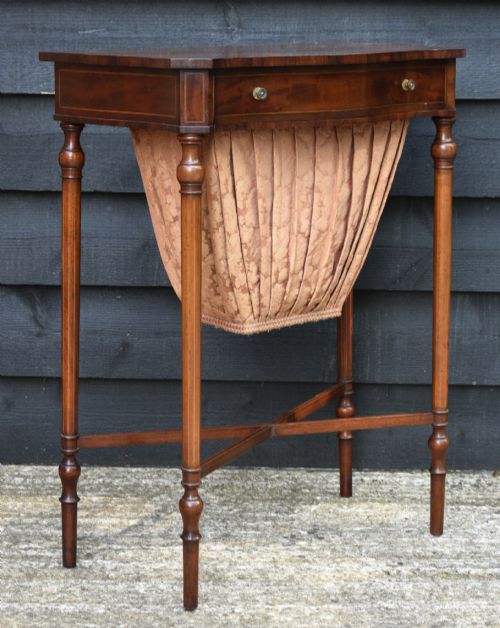
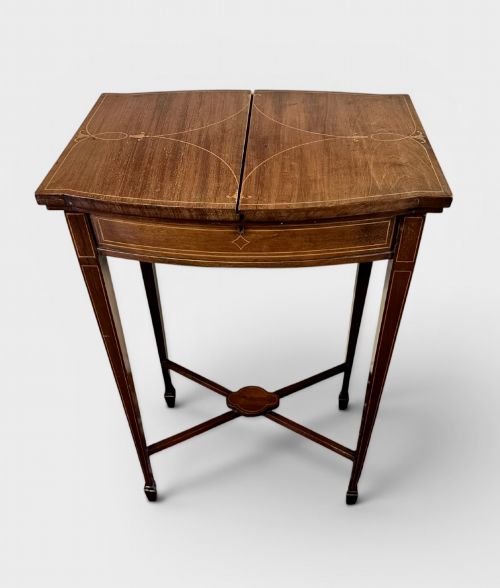


Inlaid Needlework Table
An inlaid needlework table combines practical storage for sewing materials with decorative woodwork, serving as a versatile piece for period interiors.
Inlaid Needlework Table
An inlaid needlework table serves multiple functions, appearing primarily as a sewing table, work table, or occasional table across the Regency, Victorian, and Edwardian periods.
Makers designed these pieces with fitted interiors, silk baskets, or compartments specifically intended to hold sewing implements and needlework supplies.
The selections on this page span the nineteenth and early twentieth centuries, featuring forms such as octagonal work tables, trumpet tables, and serpentine sewing cabinets.
Materials and Technique
Cabinetmakers utilised dense hardwoods such as mahogany, rosewood, walnut, and burr walnut as the primary structural foundations for these tables.
Decorative surfaces incorporate intricate wood inlay, marquetry, and brass detailing, often complemented by satinwood borders or shell motifs.
Interiors frequently include specialised compartments lined in fabric, alongside suspended silk baskets or fitted boxes for needles and thread.
Listings feature woods including mahogany, satinwood, walnut, burr walnut, and rosewood, alongside brass and fabric elements.
Distinctions in Standard
The precision and complexity of the wood inlay or marquetry separate standard examples from finer pieces, particularly where multi-toned woods or portrait decorations appear.
Timber selection dictates overall character, with figured burr walnut and richly grained rosewood indicating superior material choice by the maker.
The survival of original fitted interior compartments, silk baskets, and working locks distinguishes well-preserved examples from altered or heavily restored pieces.
Waring & Gillow·John MaClean
The Inlaid Needlework Table Glossary
- Inlay
- A technique where pieces of contrasting timber, brass, or other materials are set into recessions flush with the surface. This method creates decorative patterns across the top and sides of the table.
- Marquetry
- An elaborate form of inlay utilising various coloured wood veneers to form pictorial or geometric designs. It frequently defines the lids of Victorian work tables.
- Trumpet Table
- A nineteenth-century work table style featuring an octagonal or round body that flares outward toward the base, resembling the bell of a musical instrument. It usually conceals a sewing bag below.
- Sheraton Revival
- A late nineteenth and early twentieth-century design style drawing inspiration from eighteenth-century neoclassical furniture. These tables often feature satinwood, delicate inlay, and tapered legs.
Inlaid Needlework Table: Frequently Asked Questions
What is an inlaid needlework table?
An inlaid needlework table is a small nineteenth or early twentieth-century furnishing designed with compartments and storage specifically for sewing, embroidery, and needlecraft.
These pieces combine decorative wood inlay or marquetry with functional internal trays and suspended fabric baskets.
How were work tables used historically?
Women used work tables in drawing rooms and parlours to keep threads, needles, and unfinished sewing projects organised and close at hand.
Many examples also double as games tables or occasional lamp tables, offering a dual purpose for everyday domestic life.
How do I identify a Victorian sewing table?
Victorian sewing tables typically feature dark timbers such as rosewood or burr walnut, often complemented by elaborate marquetry and turnings.
They frequently incorporate hinged lids revealing fitted compartments above a fabric bag or a trumpet-shaped pedestal base.
What is the difference between Edwardian and Regency work tables?
Regency work tables generally display dark rosewood or mahogany with brass inlay, bold pedestal bases, and clean classical lines dating from the early nineteenth century.
Edwardian examples, built around 1900, tend to utilise lighter satinwood or mahogany with delicate shell inlays and slender, tapered legs reflecting Sheraton Revival tastes.