

Inlaid Marquetry Lamp Table
An inlaid marquetry lamp table combines decorative surface craft with useful small-scale furniture suited to period and modern interiors alike.
Inlaid Marquetry Lamp Table
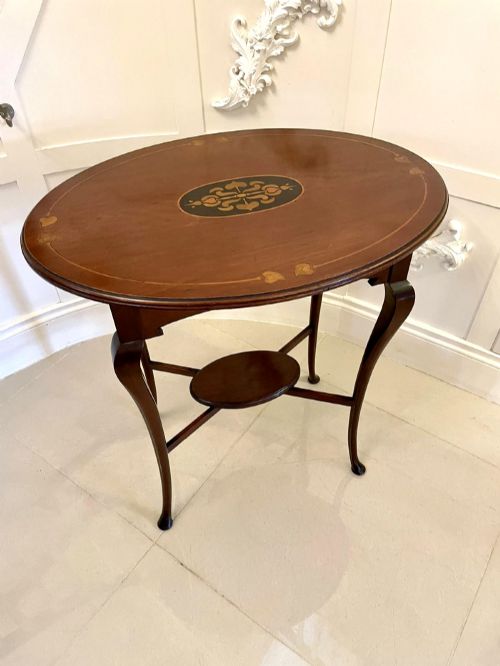
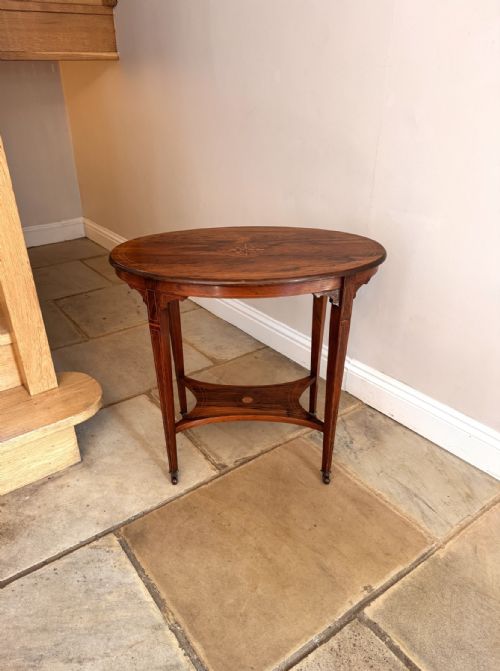
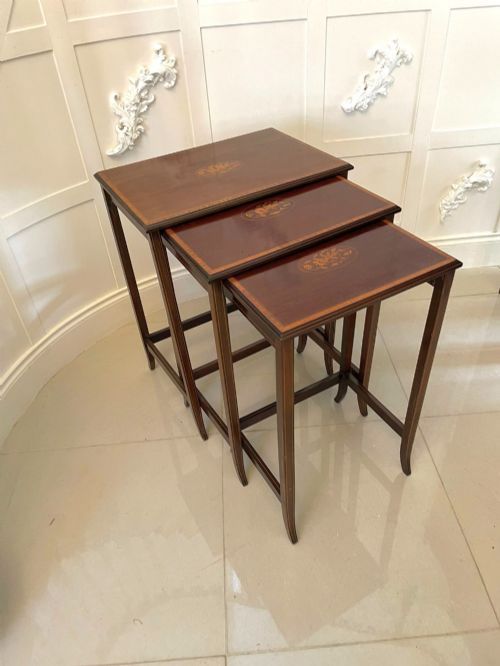
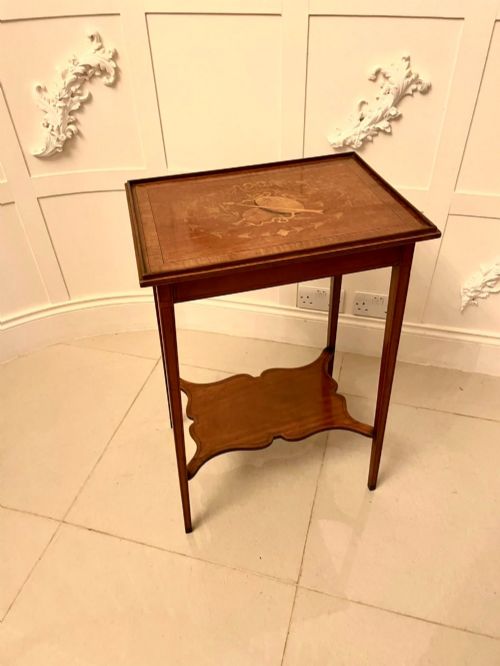
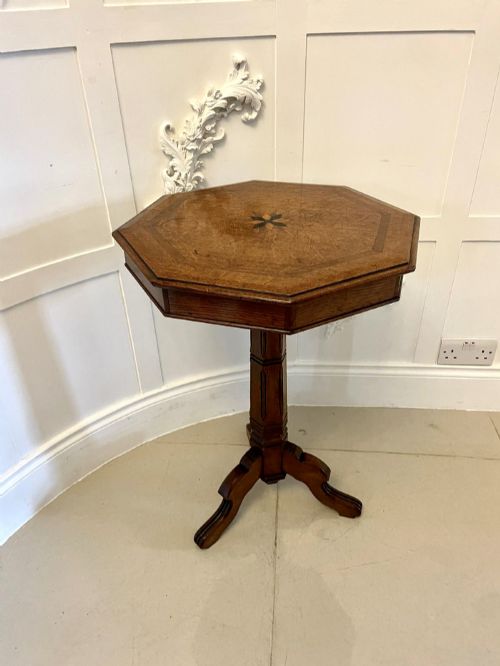
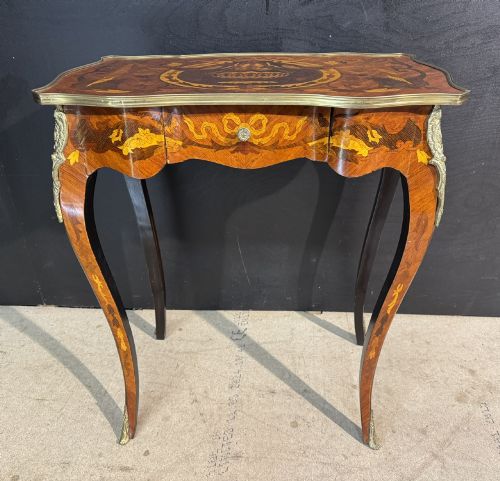
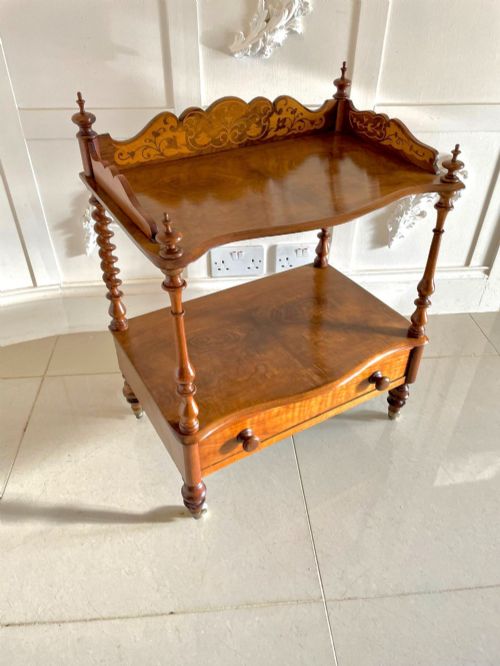
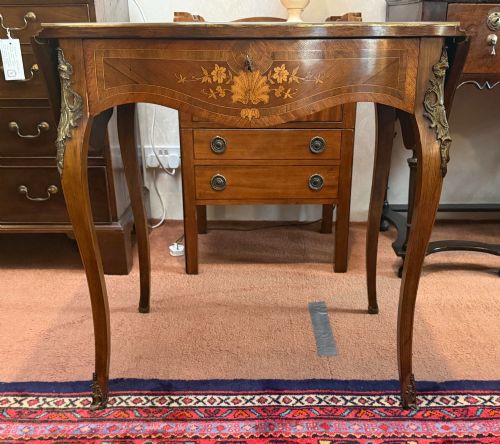
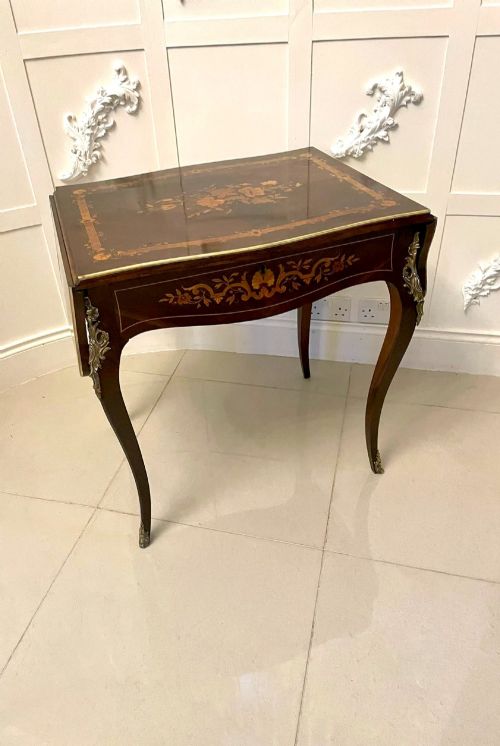
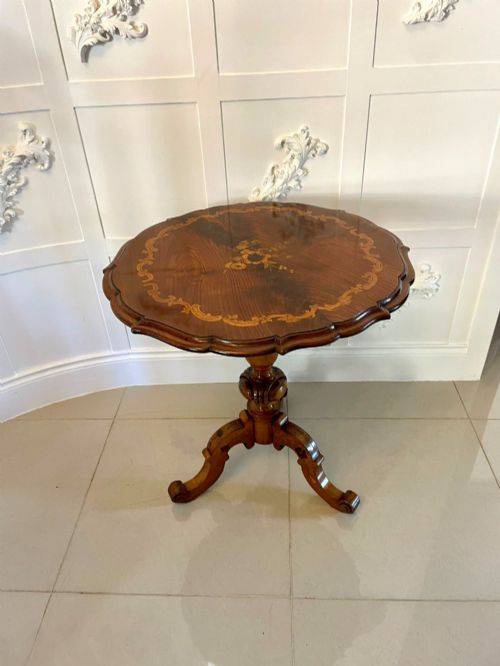
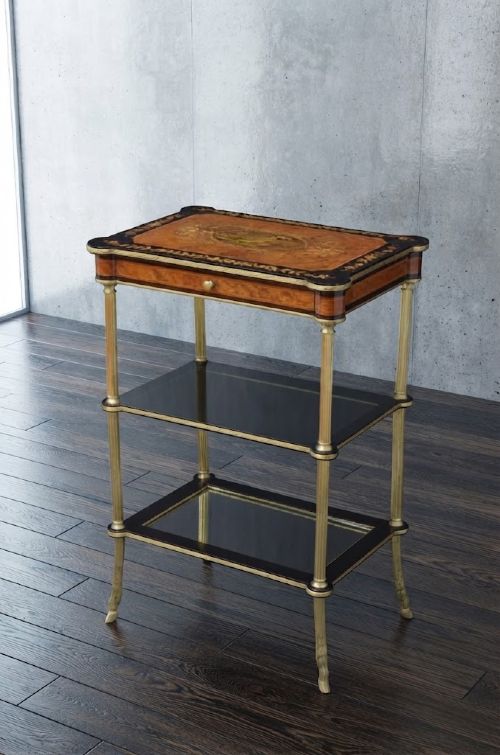
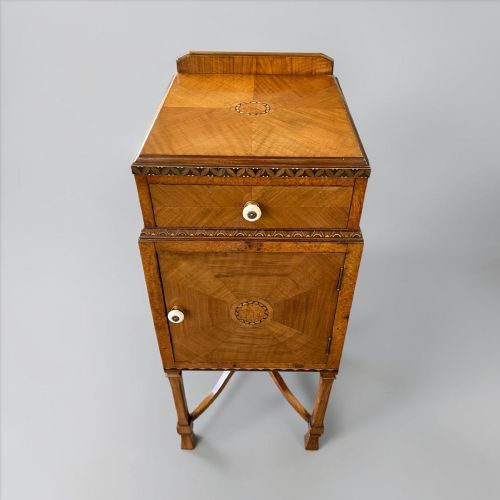
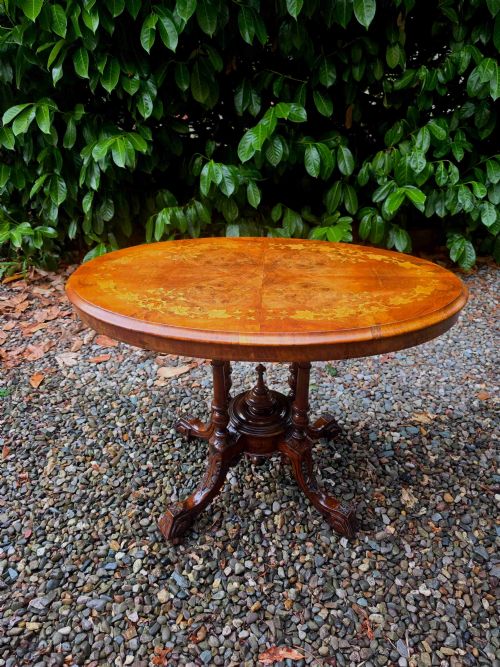
An inlaid marquetry lamp table functions primarily as an occasional piece, resting beside seating or serving as a bedside chest, centre table, or pedestal stand. These small tables appear frequently in Victorian, Edwardian, and Art Deco iterations, alongside continental European forms influenced by Louis XV styles.
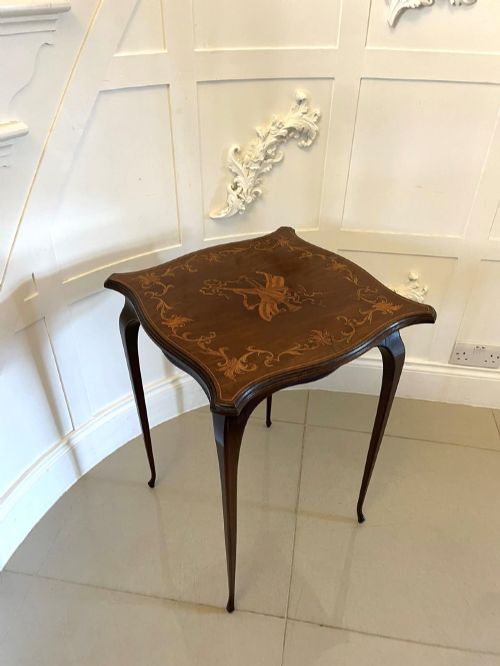
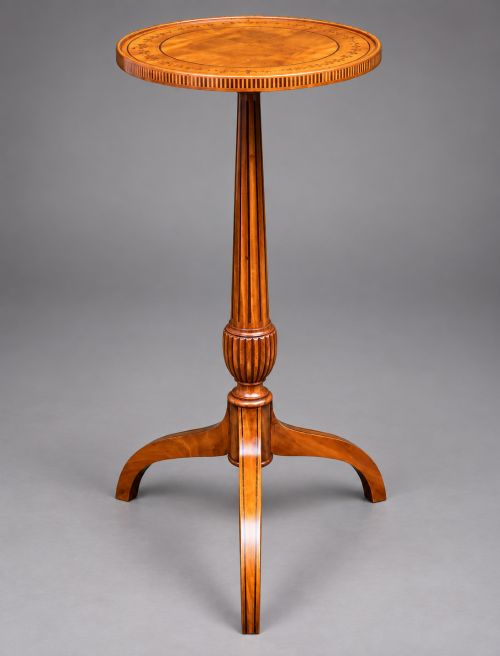
The silhouettes span circular, oval, octagonal, and serpentine shapes, often supported by tripod bases, slender legs, or tier arrangements. Walnut, mahogany, and rosewood form the principal structural woods supporting the decorative upper surfaces.
Makers adapted these compact tables for various domestic settings, ranging from formal drawing rooms to intimate bedrooms. Surviving examples demonstrate how diverse periods utilised fine woodworking to elevate everyday utility into ornamental art.
Materials and Technique
Cabinetmakers constructed these tables using solid timber frames overlaid with rich veneers of walnut, satinwood, kingswood, and mahogany. Contrast came from specialised contrasting timbers such as boxwood and maple, which cabinetmakers shaped into intricate floral or geometric patterns.
Marquetry entails cutting thin slices of different coloured woods and assembling them like a jigsaw puzzle before gluing the composite sheet onto the table top. Additional embellishments include brass galleries, ormolu mounts, bone inlays, and ebonised detailing that defined high-end workshop production.
Listings feature walnut, mahogany, and rosewood predominantly, spanning Victorian and Edwardian periods with notable French and Italian influences.
Craftsmanship and Execution
The distinction between standard production and top-tier pieces lies in the precision of the veneer cutting and the complexity of the timber selection. Finer tables employ burr walnut or figured satinwood with tightly aligned grain, whereas simpler examples rely on plain mahogany with basic stringing.
Master workshops invested heavily in hand-cut marquetry detail featuring varied natural grain tones, while lesser pieces utilised repetitive stamped motifs or simpler symmetrical layouts. The integration of secondary materials, such as cast brass mounts and polished marble tops, further elevates the tier of the finished object.
Gillows·George Bullock·Collingson & Lock·Donald Ross·Maples & Co
The Inlaid Marquetry Lamp Table Glossary
- Marquetry
- A decorative technique where small pieces of veneer are assembled into pictorial or geometric patterns on a wooden ground. This method requires steady hands and precise cutting to ensure tight joints between contrasting timbers.
- Ormolu
- Gilt bronze ornamentation applied to furniture mounts and feet during the nineteenth century. This decorative metalwork adds a bright metallic contrast to dark woods like rosewood and walnut.
- Parquetry
- Geometric wood inlay forming regular patterns such as cubes, diamonds, or chequers across a table top. This technique showcases mathematical precision alongside wood grain variation.
- Stringing
- A thin inlay of contrasting light or dark wood set into channels around the edges of a table top or drawer front. It provides a crisp border that defines the primary veneer panels.
- Specimen wood
- Timber harvested from exotic or unusual trees, assembled to display natural colour variation within a single tabletop design. Collectors prize these pieces for their botanical diversity.
Inlaid Marquetry Lamp Table: Frequently Asked Questions
Where should I place my table?
These compact tables fit easily beside armchairs, sofas, or beds as functional surfaces for lamps and small objects.
They also function effectively as freestanding centre pieces in smaller rooms or hallways.
How do I date these tables?
Dating relies on examining the secondary timbers, construction methods, and prevailing design styles such as Victorian burr walnut or Edwardian satinwood.
Changes in leg turns, edge mouldings, and inlay complexity offer clear chronological markers.
Are these tables sturdy?
Most examples use durable hardwood frames designed to support daily domestic use alongside decorative objects.
Careful handling of tripod bases and veneered surfaces ensures longevity in modern interiors.