





Inlaid Mantel Timepiece
An inlaid mantel timepiece sits on the shelf as a functional ornament, bringing the precision of past centuries into a quiet room.
Inlaid Mantel Timepiece
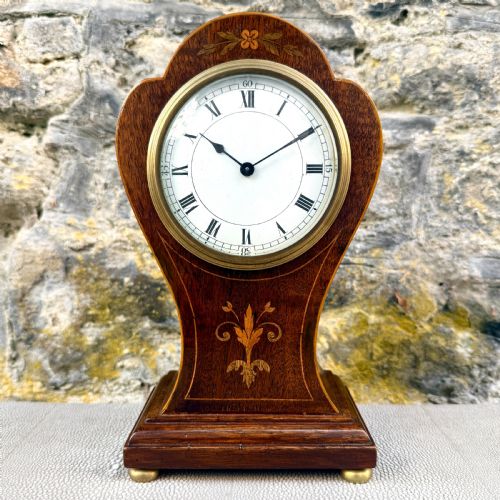
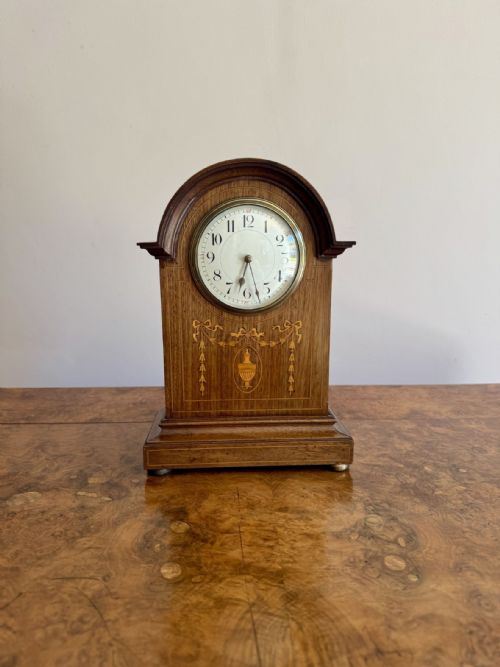
An inlaid mantel timepiece is a domestic clock designed to stand on a shelf, mantelpiece, or library table, keeping time without the complication of a striking mechanism. When you search for an inlaid mantel timepiece on this page, you encounter pieces that span the Georgian, Victorian, and Edwardian eras, alongside French workshop productions from the nineteenth century. These objects function primarily as personal timekeepers and decorative focal points for domestic interiors.
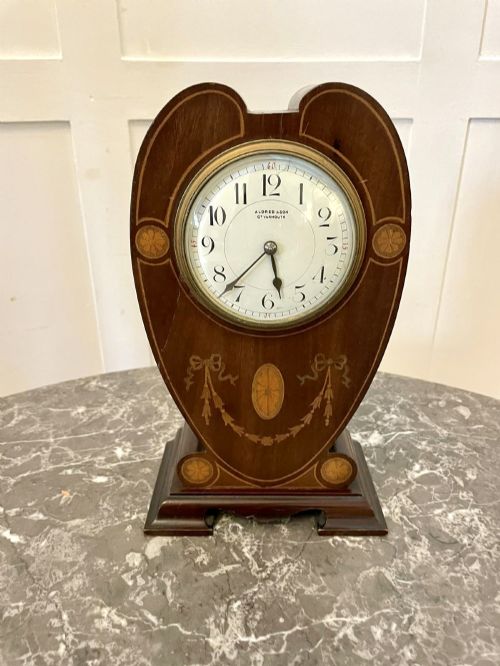
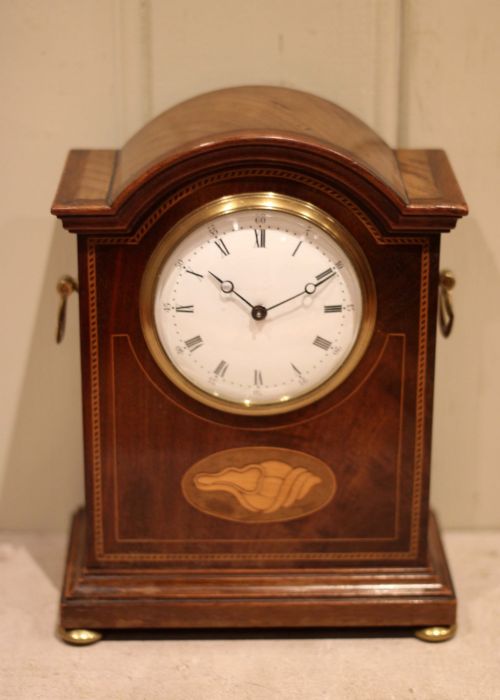
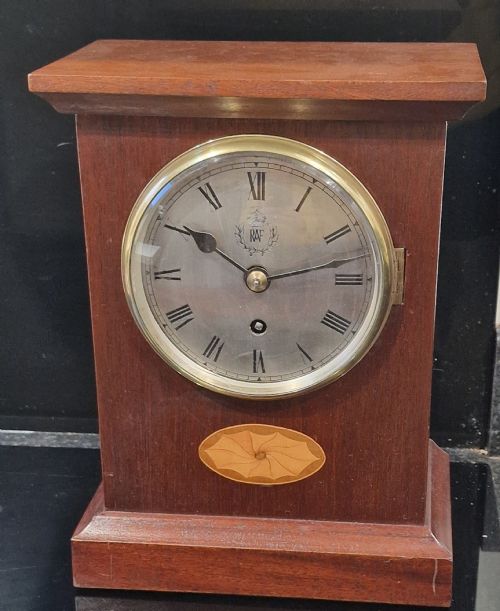
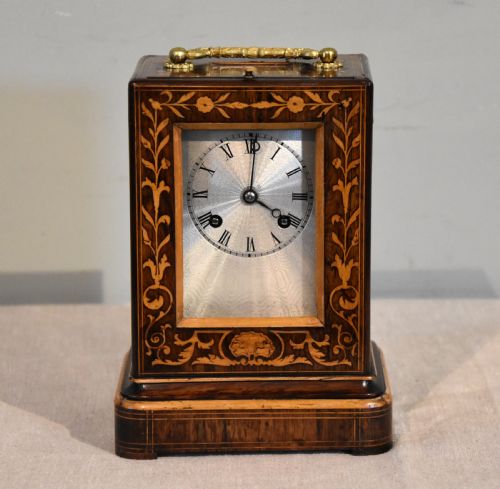
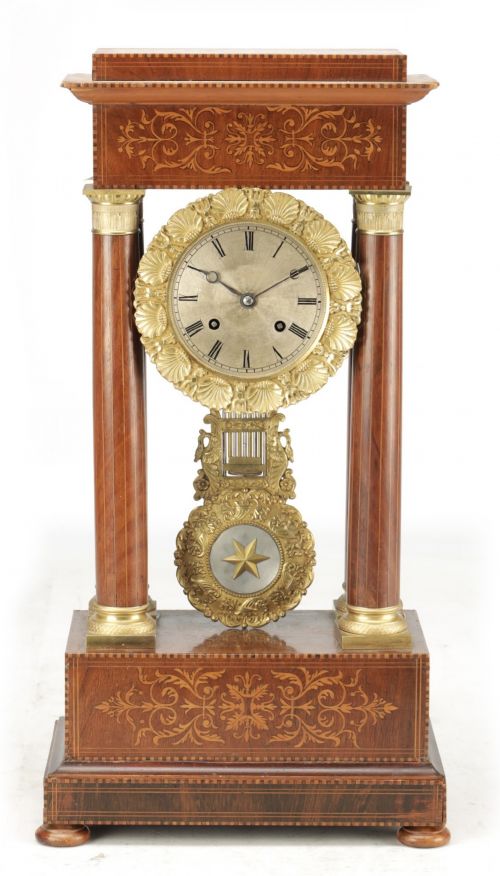
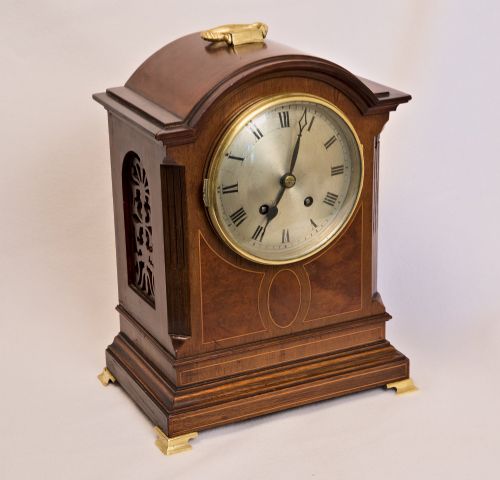
The version you are most likely to meet on this page is an Edwardian or late nineteenth-century mahogany mantel clock featuring delicate satinwood inlay or herringbone banding. English examples frequently take lancet, balloon, or traditional bracket forms, while continental pieces often adopt portico or architectural shapes. Cabinet makers utilised rich timbers such as rosewood and mahogany as a dark canvas for lighter decorative woods.
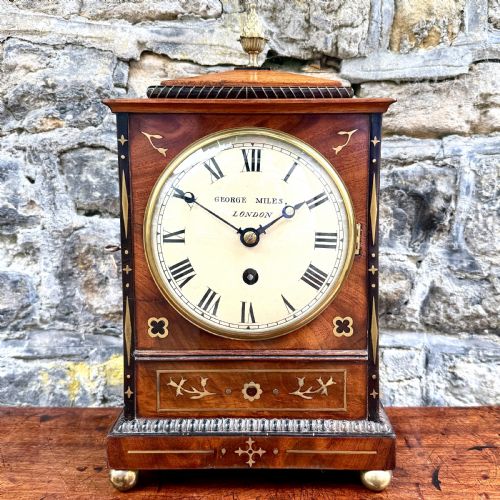
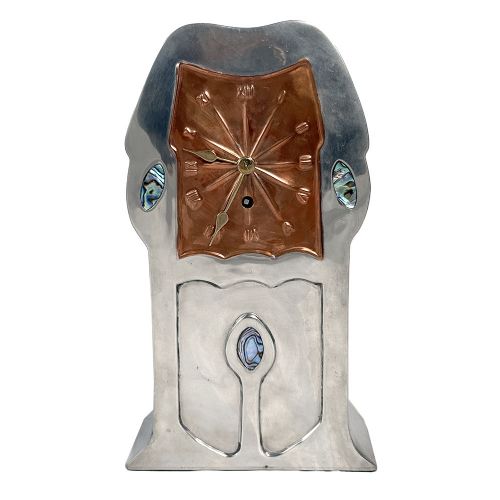
Makers shaped these enclosures to suit the shifting tastes of the Georgian, Victorian, and Edwardian periods, moving from austere architectural lines to the flowing curves of Art Nouveau. The dial typically sits behind glass within a brass bezel, protected by a hinged door that allows access to the movement. These timepieces reflect the domestic priorities of middle and upper-class homes, where punctuality and refined interior decoration met on the drawing room mantel.
Materials and construction
Cabinet makers constructed the carcasses of these timepieces from dense hardwoods like mahogany and rosewood, applying thin veneers and contrasting stringing of satinwood or lemon wood. Artisans cut intricate patterns into the primary timber to receive lighter wood insertions, creating geometric borders, floral motifs, or classical urns. French makers frequently incorporated polished or gilt ormolu mounts to accent the polished wood surfaces and frame the dial.
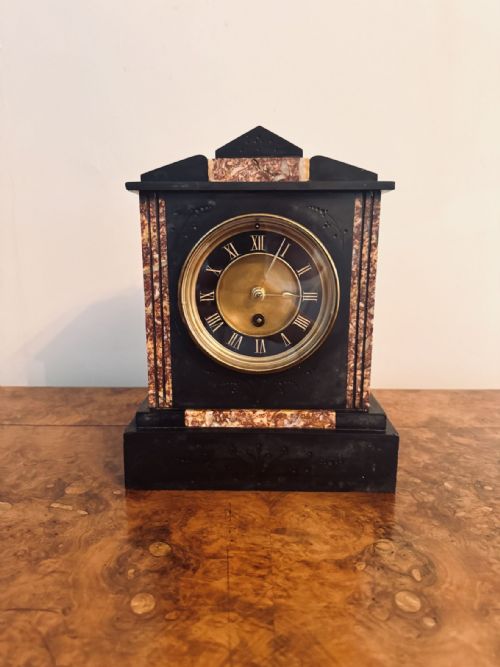
The dials themselves combine brass bezels, white enamel chapter rings, and protective convex or flat glass panes. Inside the timber housing, brass clockwork movements rely on cogwheels, mainsprings, and escapements to regulate the passage of hours. Where marble appears, masons shaped heavy sienna or black stone into classical temple facades to house French portico timepieces.
Inlaid Mantel Timepiece Retail Price Guide 2026
Typical asking prices for inlaid mantel timepiece among the pieces listed under this phrase on Sellingantiques today, from the lower quarter to the upper quarter. They describe what is for sale here now, not the wider market.
Some provincial timepieces recorded local history long before digital alarms disturbed the domestic peace.
Distinctions in quality
Quality in an inlaid mantel timepiece rests on the crispness of the cabinet work and the depth of the marquetry. Superior examples display precise, tight joints where the lighter inlay meets the dark ground timber, without visible gaps or coarse filler. The choice of timber also separates standard production from finer work, with carefully selected grain patterns and balanced symmetry elevating the piece.
Mechanical refinement distinguishes the better movements from ordinary workshop output. A finer clock houses a robust, clean brass movement that holds adjustment reliably over eight days or thirty hours, operating with an even tick. The weight and casting quality of the brass bezel, the legibility of the enamel dial, and the integrity of the original glass all contribute to the standing of the piece.
Archibald Knox for Liberty and Co·Bush of London·Bryson Edinburgh·John Bull of Bedford·Hyde of Salisbury·Taylor of London·Henry Marc·Paul Garnier
The Inlaid Mantel Timepiece Glossary
- Timepiece
- A clock that tells the time without a striking mechanism or bell. This term designates a simpler movement focused entirely on the progression of hours and minutes.
- Portico clock
- A monumental clock built in the shape of a classical temple with pillars or columns. These architectural pieces often feature a central suspended pendulum visible through the open frame.
- Inlay
- A decorative technique where pieces of contrasting wood, metal, or shell are set into recesses flush with the surrounding surface. Craftsmen utilise this method to create fine borders and floral panels.
- Bezel
- The metal ring that holds the glass protecting the clock face. It is typically hinged on one side to allow access for hand-setting.
- Fusee
- A conical pulley used in better quality clocks to maintain an equal pull on the chain as the mainspring unwinds. This mechanism ensures consistent force and improved timekeeping accuracy.
Inlaid Mantel Timepiece: Frequently Asked Questions
What is the difference between a timepiece and a clock?
A timepiece denotes a clock that records the hours and minutes without sounding chimes or striking on the hour. It relies entirely on its internal gear train to display the time.
Clocks with striking mechanisms include additional gear trains, hammers, and gongs or bells. Timepieces offer a quieter operation suited to bedrooms and quiet libraries.
How do I wind an antique mantel timepiece?
You wind an antique timepiece using a matching key inserted into the winding arbor on the dial face. Turn the key gently until you feel firm resistance, avoiding overwinding.
Most spring-driven movements require attention once a week. Handle the key with care to preserve the original square on the winding arbor.
Where should I place a mantel timepiece in my home?
Place your timepiece on a stable, level surface away from direct sunlight, drafts, and extreme temperature fluctuations. A sturdy mantelpiece, sideboard, or library shelf provides an ideal setting.
Ensure the surface does not vibrate excessively from foot traffic. A level foundation allows the pendulum or balance wheel to beat evenly and keep accurate time.
How do I distinguish Edwardian inlay from Victorian work?
Edwardian inlay tends to feature lighter satinwood banding, delicate swags, and a brighter overall finish on mahogany grounds. The designs often reflect a lighter, more restrained neoclassical revival.
Victorian pieces frequently display heavier rosewood housings, bolder brass or marquetry ornamentation, and darker finishes. The architectural forms of the mid-nineteenth century prioritize presence over delicate tracery.