




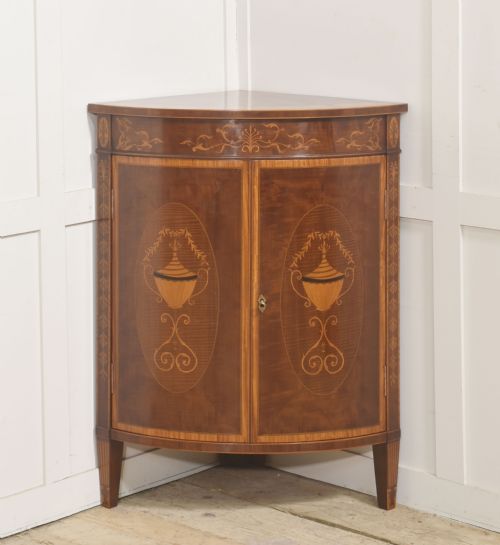
Inlaid Mahogany Urns
Inlaid mahogany urns are formal dining accessories and decorative vessels that bring refined timber grain and precise stringing into a room.
Inlaid Mahogany Urns
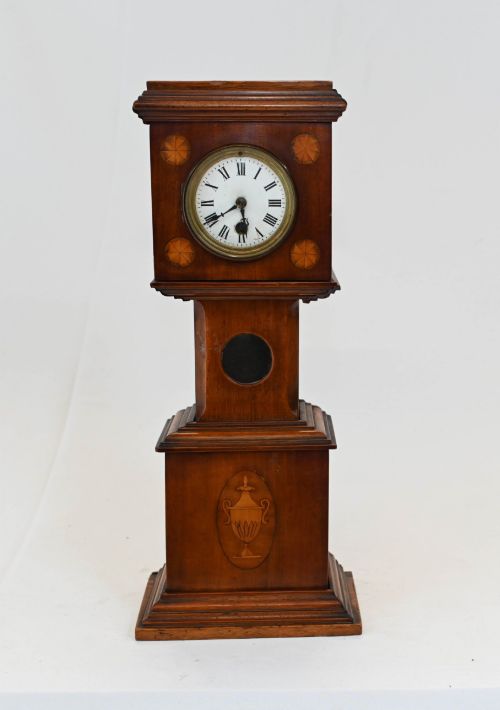
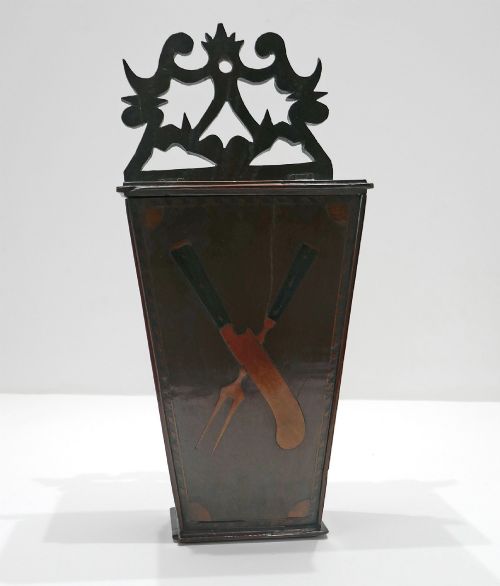
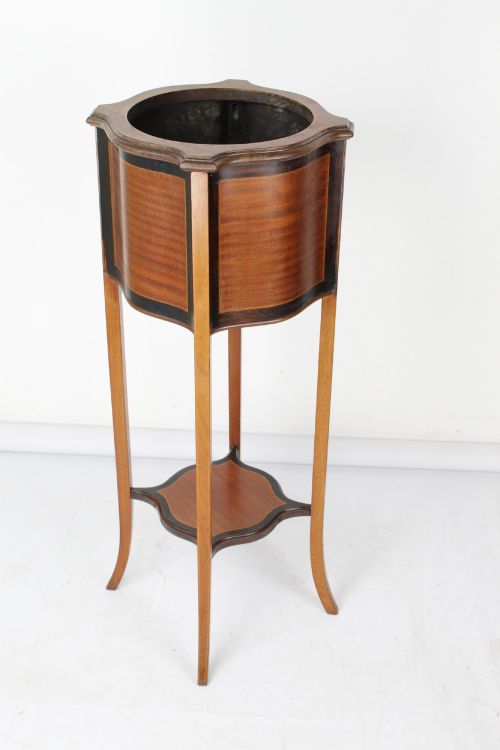
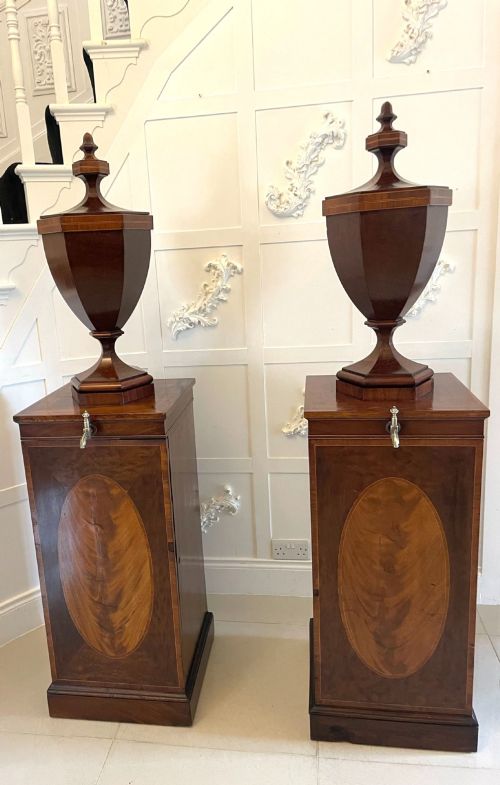
Inlaid mahogany urns represent specialised dining room vessels and display pieces created across the eighteenth, nineteenth, and twentieth centuries. The selection includes George III wine urns mounted on pedestal cupboards alongside lidded cutlery urns from the Victorian era and Sheraton revival stands.
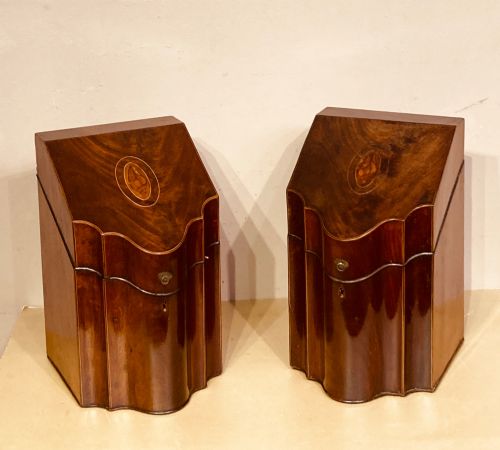
Buyers encounter distinct forms such as octagonal knife boxes, lidded cutlery urns, and wine urns paired with pedestals. These objects originate from Georgian, Victorian, and Edwardian workshops, reflecting shifts in dining customs and interior decoration over two centuries.
Materials and technique
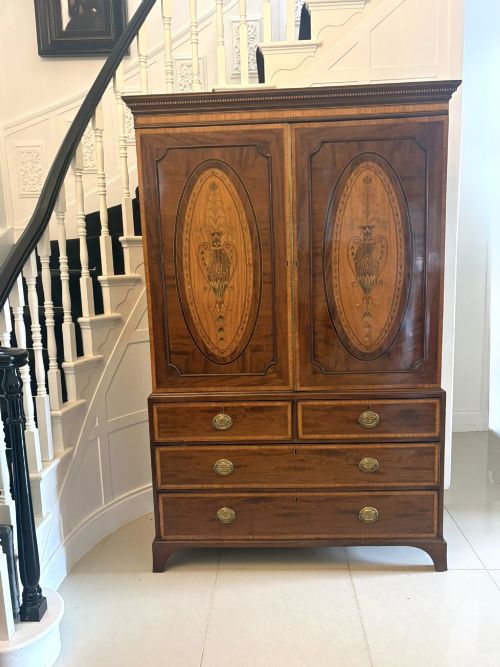
Cabinetmakers constructed these vessels using solid and veneered mahogany, enhanced with contrasting timber details like satinwood and boxwood inlay. Brass hardware, including hinges, escutcheons, and handles, provides structural reinforcement and visual contrast.
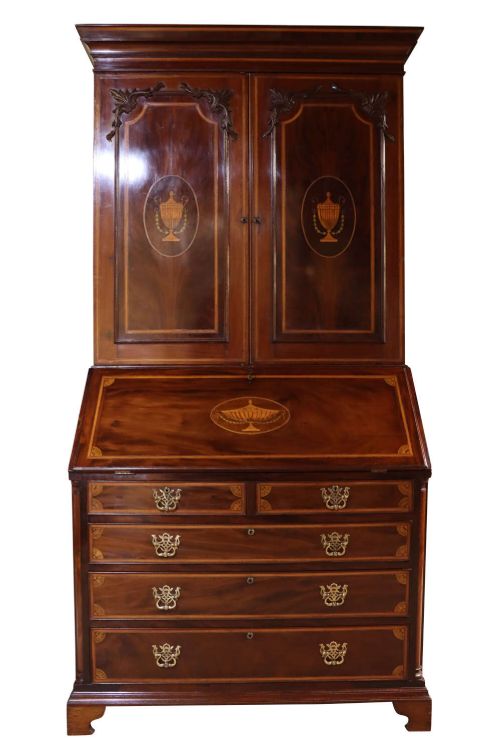
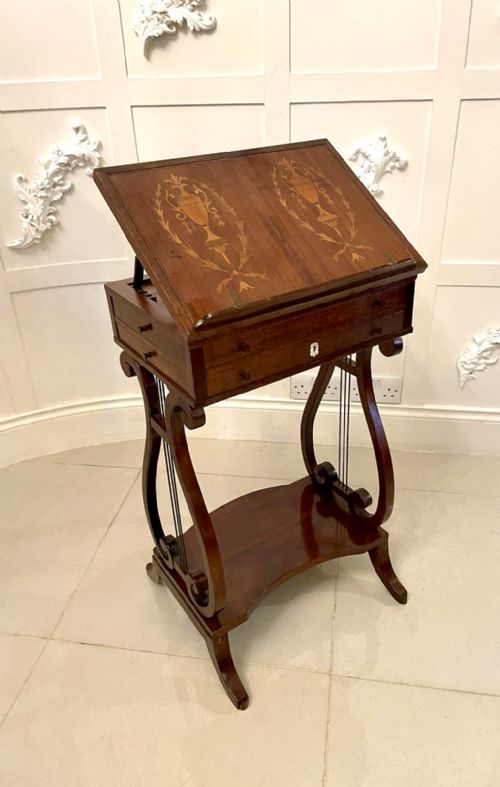
Wood inlay techniques incorporate delicate stringing and geometric motifs set directly into the mahogany ground. Lids often feature turned finials and precise joinery to ensure symmetrical proportions.
Inlaid Mahogany Urns Retail Price Guide 2026
Typical asking prices for inlaid mahogany urns among the pieces listed under this phrase on Sellingantiques today, from the lower quarter to the upper quarter. They describe what is for sale here now, not the wider market.
Inlay materials recorded include satinwood, boxwood, and assorted fruitwood details.
Judging the work
Quality depends upon the crispness of the timber inlay and the precision of the mitred joints forming the multi-sided bodies. Superior examples display carefully chosen grain patterns that align symmetrically across the lid and panels.
The integrity of the original hardware and the subtlety of the satinwood or boxwood contrast distinguish finer specimens from later reproductions or utilitarian pieces.
Keeble London
The Inlaid Mahogany Urns Glossary
- Mahogany
- A durable tropical hardwood prized for its rich reddish-brown colour and stable grain. It serves as the primary structural material for these vessels.
- Satinwood
- A lustrous, yellowish timber utilised for contrasting inlay and decorative banding. It creates bright geometric lines against darker mahogany surfaces.
- Boxwood
- A dense, pale wood cut into thin strips for stringing and delicate inlay work. Craftsmen employ it to outline panels and architectural details.
- Urn
- A lidded, vase-shaped vessel traditionally designed for holding cutlery or wine in formal dining rooms. These objects stand upon tables, sideboards, or dedicated pedestals.
- Stringing
- Narrow lines of contrasting wood inlaid into channels cut on the surface of the furniture. This linear decoration defines the edges of panels and lids.
Inlaid Mahogany Urns: Frequently Asked Questions
What were inlaid mahogany urns used for?
These vessels functioned primarily in Georgian and Victorian dining rooms to store table knives, flatware, or bottles of wine. Placed on sideboards or dedicated pedestals, they added symmetry and formality to elite interiors.
Over time, their role shifted from functional dining storage to decorative display objects. Collectors today appreciate them as sculptural examples of period cabinetwork.
How do I date an inlaid mahogany urn?
Dating relies upon examining the timber preparation, the style of the inlay, and the internal construction of the vessel. Georgian examples from the eighteenth century typically show hand-cut dovetails and subtle boxwood stringing.
Victorian and Edwardian pieces often incorporate broader marquetry or revival styling. Comparing the hardware fixings and secondary woods provides further clues to the period of manufacture.
Are these urns sold as pairs?
Many surviving dining vessels appear as matched pairs designed to sit symmetrically on either side of a sideboard or upon dedicated pedestal cupboards. Single examples also occur frequently in the record.
Matching pairs command distinct attention from collectors seeking balanced arrangements for period dining rooms. Individual pieces often served narrower sideboard configurations.
How do I care for mahogany urns?
Maintenance involves keeping the timber away from direct heat sources and rapid humidity changes to prevent veneer lifting. Regular dusting with a dry, soft cloth preserves the polished surface without building up residue.
Applying a traditional beeswax polish occasionally helps nourish the historic mahogany and satinwood inlay. Avoid modern aerosol cleaners containing silicone.