

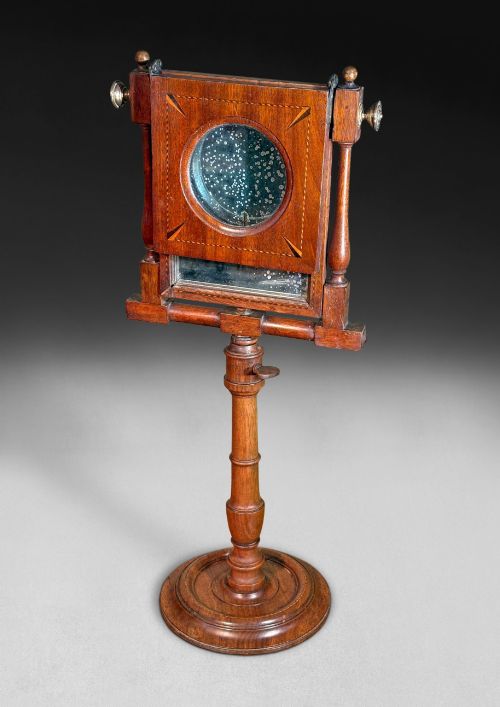


Inlaid Mahogany Instrument
An inlaid mahogany instrument brings precision weather-reading and fine cabinetmaking into the room through timber and glass.
Inlaid Mahogany Instrument
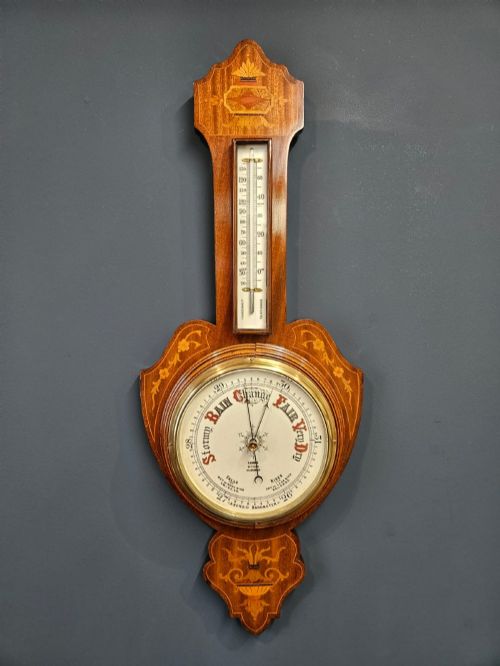
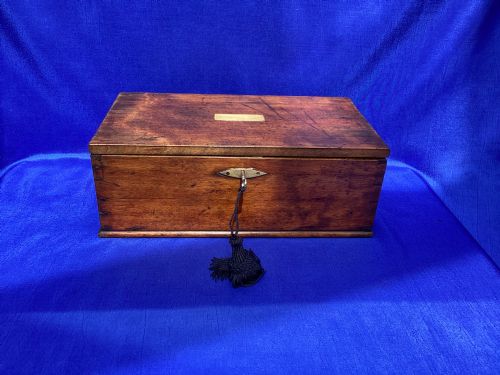
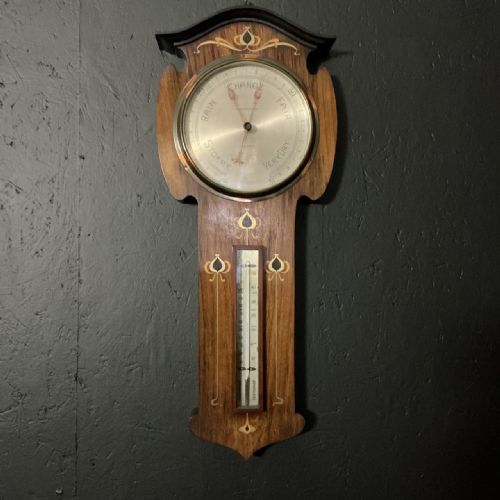
When you search for an inlaid mahogany instrument, you encounter barometers, barographs, and toolboxes created across the Georgian, Regency, and Victorian periods. The most common form on this page is the wheel or banjo barometer, housed in shaped mahogany cases.
These instruments originate from diverse makers working in London, provincial cities like Norwich, York, and Nottingham, and European workshops established in Britain. Their primary function was domestic weather forecasting, combining scientific dials with decorative cabinetry.
Makers utilised rich timber grains and contrasting stringing to elevate practical scientific apparatus into domestic ornaments. The selection spans tall stick barometers, wheel barometers with silvered metal dials, and fitted storage boxes.
How they were made
Cabinetmakers constructed the main bodies from solid and veneered mahogany, shaping the timber into classic banjo profiles, rectangular stick cases, and storage chests. They incorporated contrasting boxwood and ebony inlay along the borders to accentuate the silhouette.
The dials feature engraved silvered metal plates protected by brass bezels and curved glass covers. Delicate spirit levels, thermometer tubes, and mercury cisterns were integrated into the wooden fascias by specialist instrument makers.
Inlaid Mahogany Instrument Retail Price Guide 2026
Typical asking prices for inlaid mahogany instrument among the pieces listed under this phrase on Sellingantiques today, from the lower quarter to the upper quarter. They describe what is for sale here now, not the wider market.
Instrument types documented in the selection include wheel barometers, stick barometers, barographs, and fitted mahogany toolboxes.
What varies in quality
The distinction between standard workshop output and superior production lies in the crispness of the cabinetwork and the delicacy of the wood inlay. Finer examples display meticulously hand-engraved silvered dials and tightly mitred boxwood stringing.
Makers' signatures add another layer of distinction, with instruments bearing the names of established London or provincial opticians commanding greater interest. The overall preservation of the original mahogany surfaces and glass elements determines the ultimate character of the piece.
Holtzapffel and Co·Ganthony of London·Prada of High Wycombe·Molton of Norwich·Luisetti of London·L Casatelli of Liverpool·Vecchio and Co·J Groce York·Charles Aiano London·Pozzoby London·Pinchetti and Co·F Salteri and Co·Dominic Gatty·Schiavi of Chesham
The Inlaid Mahogany Instrument Glossary
- Banjo barometer
- A domestic weather instrument housed in a case shaped like a banjo. The large circular dial sits at the base while the hygrometer or thermometer occupies the long stem above.
- Stick barometer
- A tall, narrow instrument that displays atmospheric pressure directly through a vertical mercury column. These examples often feature exposed scales and open cistern covers.
- Silvered metal
- A brass or copper dial plate treated to achieve a brushed silver finish. Graduations and maker inscriptions are subsequently engraved and darkened for legibility.
- Boxwood inlay
- Narrow strips or decorative motifs of pale boxwood inserted into recesses within the darker mahogany surface. This technique creates contrasting geometric or floral borders.
Inlaid Mahogany Instrument: Frequently Asked Questions
How do I read the dial?
The silvered metal dial displays standard barometric pressure markers alongside weather forecasts ranging from stormy to very dry.
A secondary manual pointer is adjusted to track whether the mercury rises or falls over the course of the day.
Where were these instruments made?
These pieces originate from workshops across Britain, spanning metropolitan centres like London as well as regional towns such as York, Norwich, and Nottingham.
Many makers bore Italian surnames, reflecting the strong tradition of immigrant craftsmen working in British instrument making.
How should I care for mahogany?
Keep the timber away from direct heat sources and sudden temperature shifts to prevent the wood or veneer from splitting.
Dust the surface gently with a dry cloth and avoid applying modern chemical polishes that can damage the antique finish.