




Inlaid Mahogany End Tables
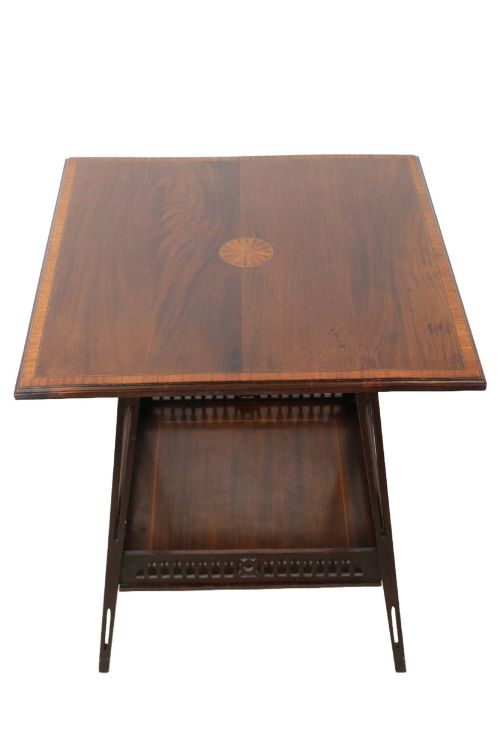
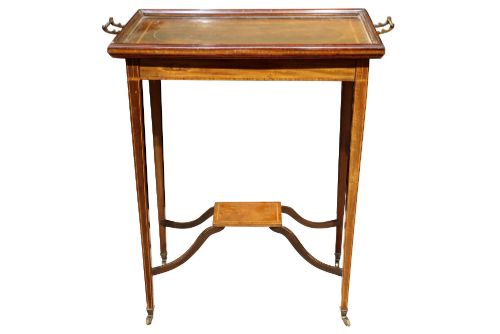
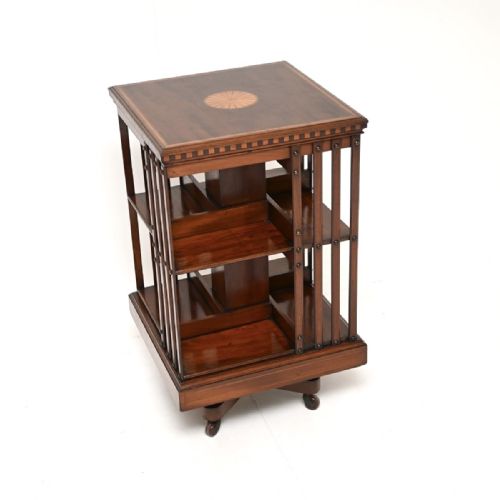
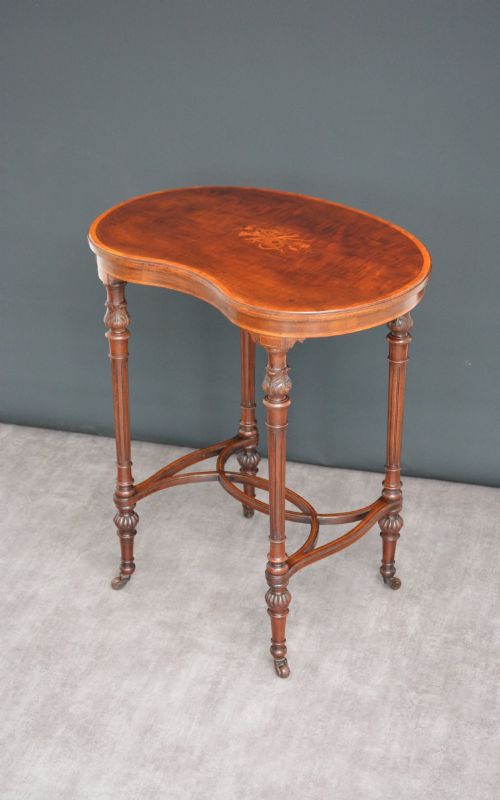
These inlaid mahogany end tables bring crisp timber figures and fine contrasting stringing to any room.
Inlaid Mahogany End Tables
When you search for inlaid mahogany end tables, you encounter a selection spanning the Georgian, Regency, Victorian, and Edwardian periods. The majority of pieces you meet on this page belong to the Edwardian era, alongside occasional George III, Regency, and Victorian examples.
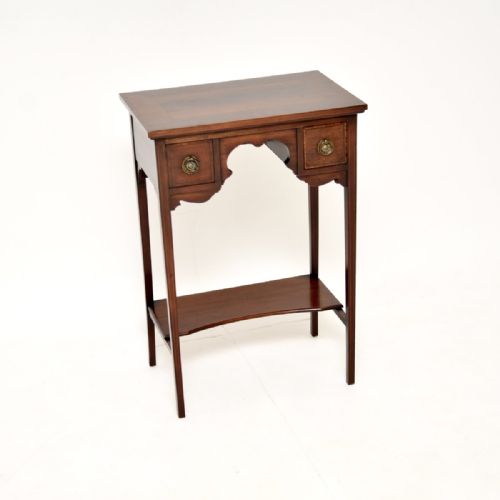
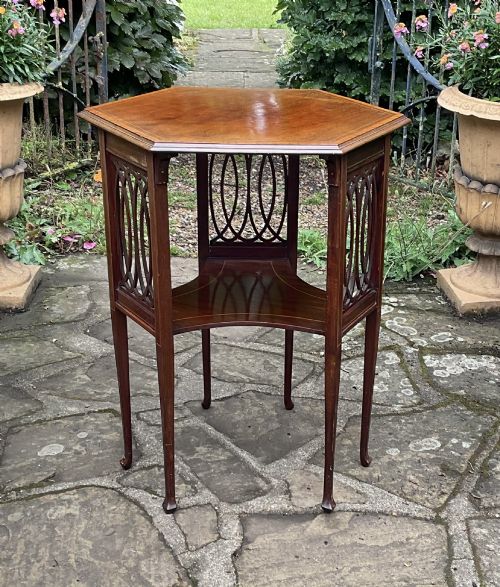
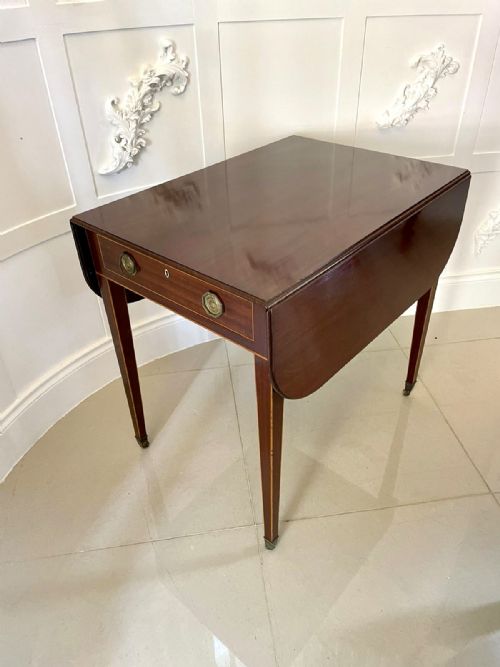
Forms vary widely according to period and function. You will find side tables, lamp tables, occasional tables, nests of tables, pembroke tables, and bedside tables among the listings.
Materials and construction
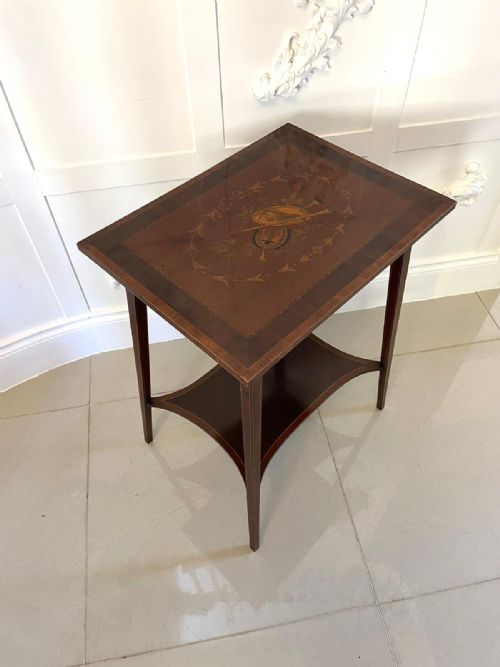
Cabinet makers built these pieces using solid mahogany and mahogany veneers over secondary timbers. They embellished the surfaces with contrasting wood inlays including satinwood, boxwood, and ebony.
Detailing often incorporates brass hardware and delicate stringing lines. Marquetry techniques appear on selected pieces to create pictorial or geometric motifs across the top.
Some Edwardian tables feature lift-up tops designed to conceal hidden compartments for sewing or stationery.
Distinctions in quality
The degree of hand craftsmanship and the crispness of the inlay define the upper tier of pieces. Selected items feature exhibition quality work with finely figured timber and intricate contrasting borders.
Simpler pieces rely on clean structural lines and restrained stringing rather than complex pictorial marquetry. The choice of secondary woods and the precision of the joinery also separate standard production from finer workshop output.
Trevor Page & Co
The Inlaid Mahogany End Tables Glossary
- Inlay
- A technique where pieces of contrasting wood are fitted into recesses carved into the primary timber surface to form a flat decorative pattern.
- Pembroke table
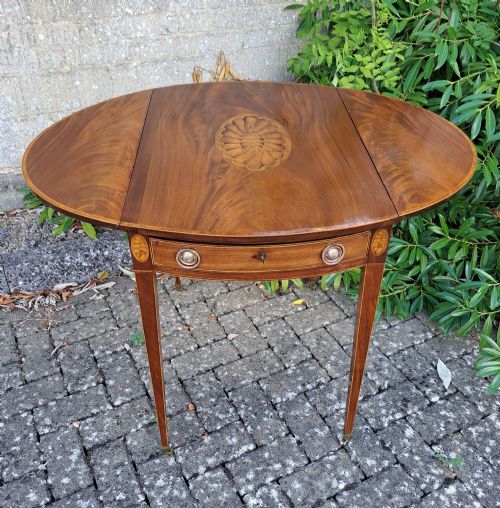
- A small occasional table featuring two hinged drop leaves on opposing sides, often fitted with a single drawer.
- Quartetto nest
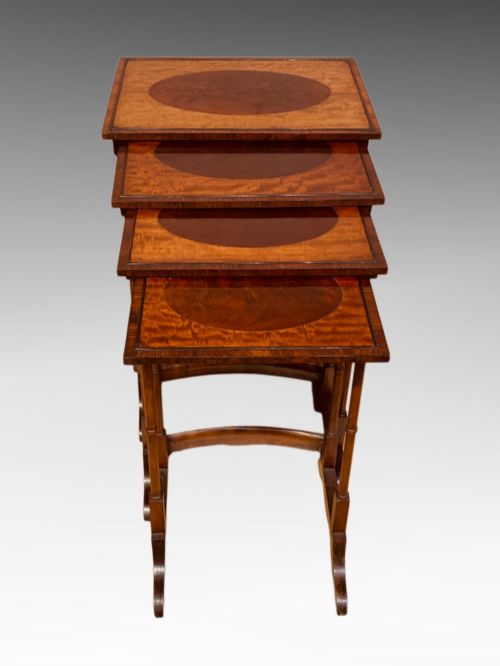
- A set of four graduating tables designed to slide neatly beneath one another when not in use.
- Satinwood
- A pale, lustrous exotic timber native to India and Ceylon, frequently utilised for contrasting inlay work on dark mahogany grounds.
- Stringing
- Narrow lines of inlay in contrasting light or dark woods used to outline table edges, drawers, and legs.
Inlaid Mahogany End Tables: Frequently Asked Questions
How do I date an inlaid mahogany end table?
Examination of the timber, secondary woods, and construction methods reveals the period of manufacture. Edwardian pieces often display lighter mahogany veneers and machine-assisted stringing, whereas Georgian examples show hand-cut joinery and deeper patination.
The style of the inlay and leg form also provide clues. Tapered legs and delicate boxwood stringing typically point toward the Sheraton Revival or Edwardian eras, while heavier turned pillars align with Victorian or Regency periods.
Where were these tables used historically?
These versatile pieces served domestic functions throughout the drawing room, parlour, and bedroom. Lamp tables and occasional tables held lighting and small decorative objects beside seating.
Pembroke and side tables provided temporary surface space for writing or serving tea. Nests of tables offered flexible placement for guests before sliding away to save floor space.
Can I use an antique end table daily?
Solid mahogany construction provides robust durability for everyday household use. Normal placement for lamps and books suits these pieces well.
Protecting the polished surface from moisture and direct heat preserves the finish. Gentle maintenance with appropriate furniture wax keeps the timber nourished over time.
What is the difference between an end table and a lamp table?
End tables and lamp tables frequently overlap in form and proportion within historical listings. Lamp tables generally offer a compact surface specifically sized for holding a table lamp beside a chair or sofa.
End tables encompass a broader category of small tables placed at the termination of seating arrangements. Both variants utilise similar mahogany framing and inlaid decorative schemes.