


Inlaid Library Furniture
Inlaid library furniture comprises sophisticated wooden desks, tables and bookcases decorated with contrasting veneers and metal mounts, designed to bring elegance and utility to study spaces.
Inlaid Library Furniture
Inlaid library furniture encompasses a variety of functional pieces designed for study and reading rooms, predominantly featuring bookcases, writing tables, centre tables, and library steps.
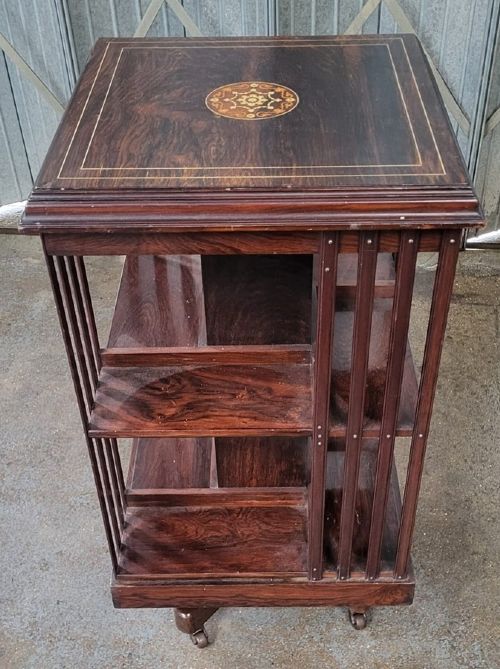
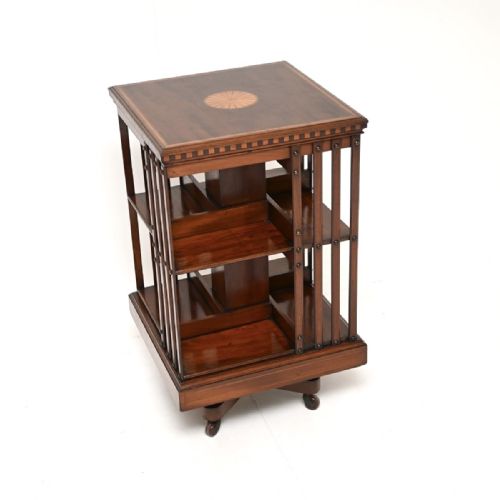
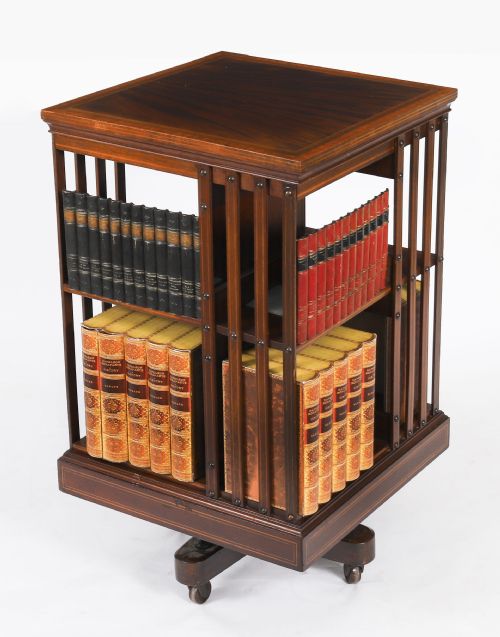
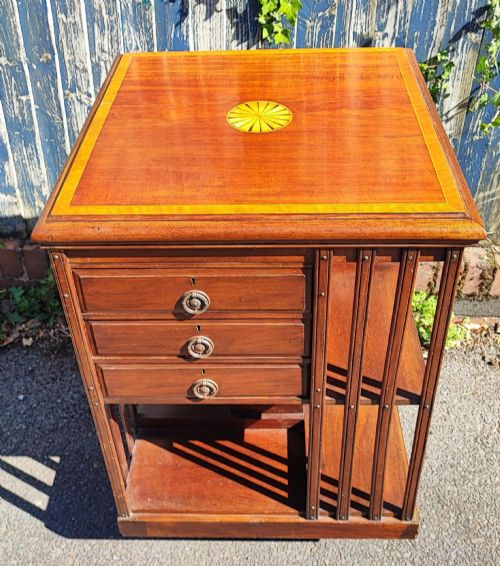
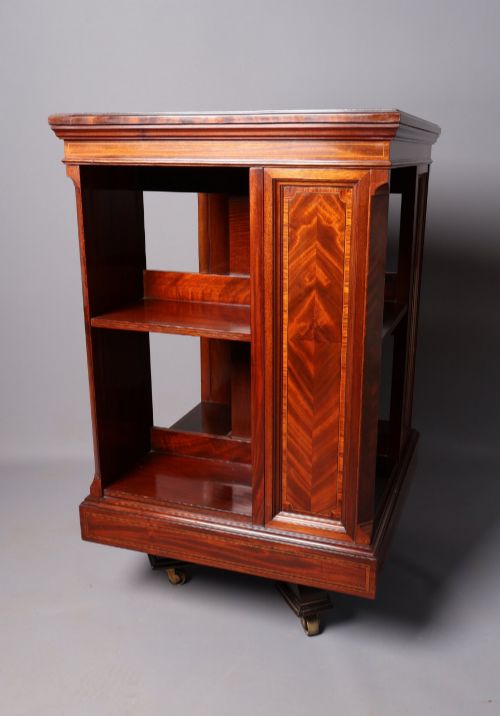
Revolving bookcases form a significant portion of what a buyer encounters on this page, appearing frequently in Edwardian mahogany alongside larger Regency and Victorian library tables.
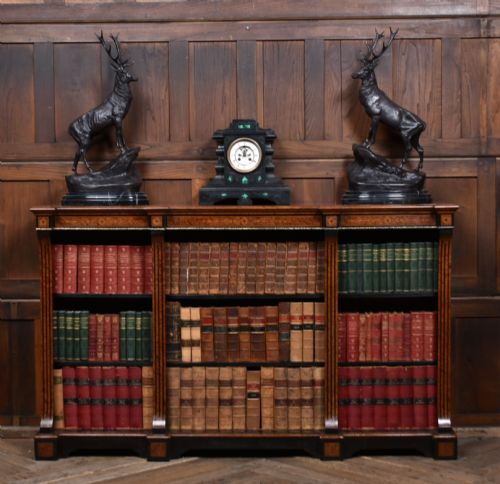
The selection ranges from compact rotating bookstands to substantial breakfront bookcases and sofa tables, spanning periods from the Georgian era through the nineteenth century and the Edwardian period.
Materials and construction
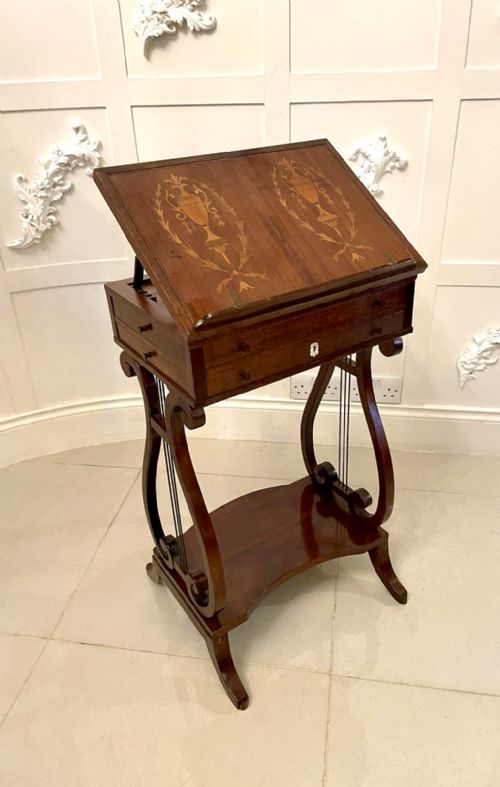
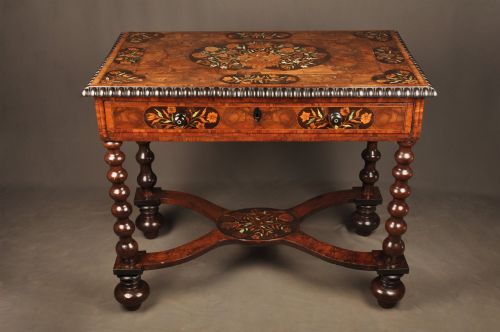
Cabinet makers utilised primary timbers such as mahogany, rosewood, walnut, and satinwood, frequently enhancing surfaces with contrasting marquetry, parquetry, and detailed stringing.
Metal elements including brass inlay, cut brass, and ormolu mounts were integrated into wood surfaces, while specific pieces incorporated leather writing surfaces and turned wooden supports.
The inventory encompasses nineteenth-century, Regency, Victorian, and Edwardian periods utilising mahogany, rosewood, walnut, satinwood, and brass.
Distinctions in craftsmanship
Quality separates pieces through the precision of the marquetry and the choice of secondary timbers, where intricate parquetry and figured flame mahogany indicate higher workshop standards.
The integration of materials such as brass mounts, bronze ormolu, and amboyna veneer demonstrates the level of specialist labour invested by the maker.
Donald Ross·Maison Millet·Lamb and Co·Gillows·James Winter·Benjamin Taylor and Sons·Maple and Co
The Inlaid Library Furniture Glossary
- Marquetry
- Decorative patterns formed by inserting pieces of wood, bone, or shell into a veneer to create pictorial or geometric designs. This technique requires meticulous hand-cutting and fitting.
- Parquetry
- Geometric mosaic woodwork used for floors or furniture surfaces, constructed from small blocks or strips of timber. It creates a repeating pattern across tabletops and cabinet doors.
- Ormolu
- Gilded bronze mounts applied to furniture edges, corners, and feet. It provides a metallic contrast to dark woods like rosewood and mahogany.
- Satinwood
- A durable, lustrous timber with a golden-yellow sheen used extensively for fine inlay work and banding during the eighteenth and nineteenth centuries.
- Breakfront
- A cabinet design where the central section projects forward from the flanking wings. This architectural form adds depth and visual interest to large bookcases.
Inlaid Library Furniture: Frequently Asked Questions
What is a revolving bookcase?
A revolving bookcase is a freestanding, rotating unit designed to hold a compact collection of books within easy reach of a desk or chair.
Most examples seen here date from the Edwardian period and utilise mahogany or rosewood construction.
How do I identify Regency library furniture?
Regency pieces often feature dark timbers like rosewood augmented with cut brass inlay and classical proportions.
They typically date from the early nineteenth century and include large sofa tables and library tables.
Where were centre tables placed?
Centre tables were positioned in the middle of a room rather than against a wall, finished with decoration on all sides.
Victorian and Edwardian iterations frequently incorporate marquetry or amboyna and ebonised wood.
What is Sheraton revival style?
Sheraton revival furniture reinterprets late eighteenth-century neoclassical designs using lighter woods and delicate inlay.
Pieces from this movement often date to the late nineteenth and early twentieth centuries.