


Inlaid Jewellery Chest
An inlaid jewellery chest organises precious trinkets inside fine timber housings set with brass, bone and mother-of-pearl.
Inlaid Jewellery Chest
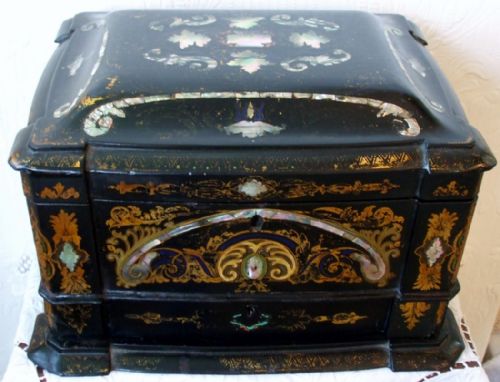
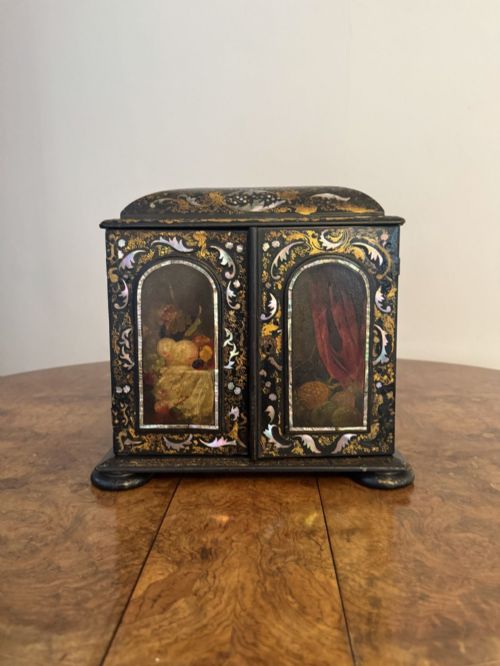
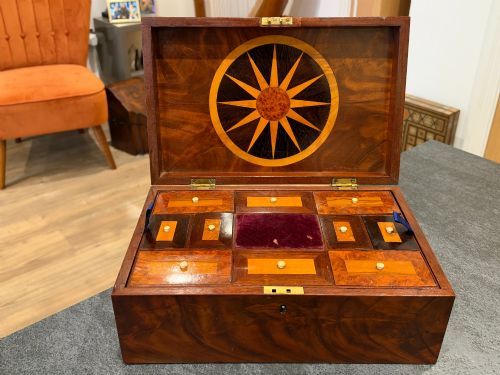
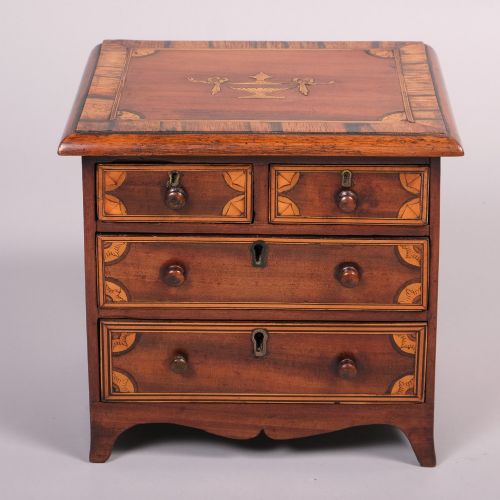
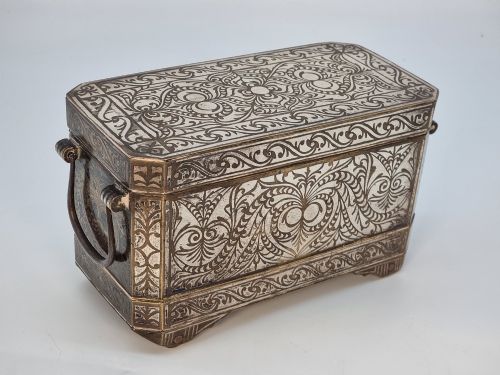
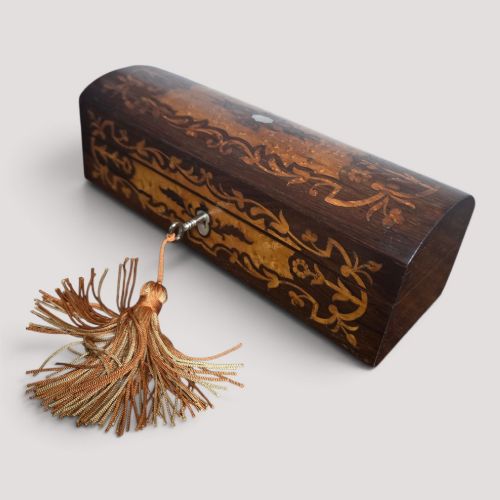
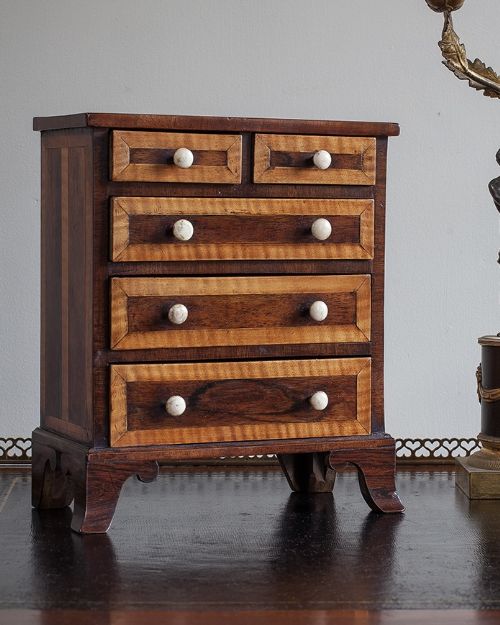
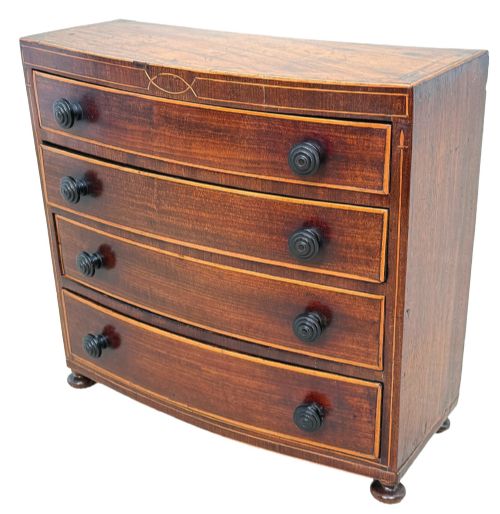
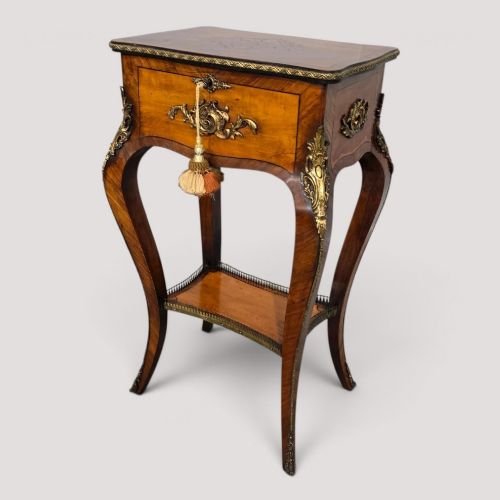
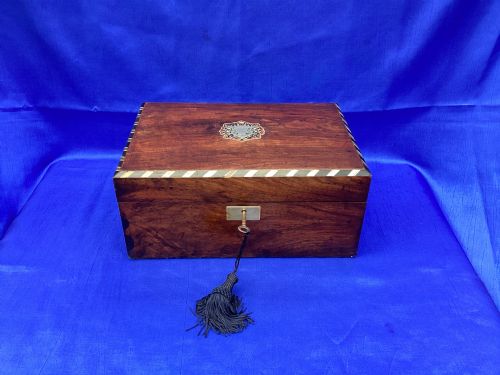
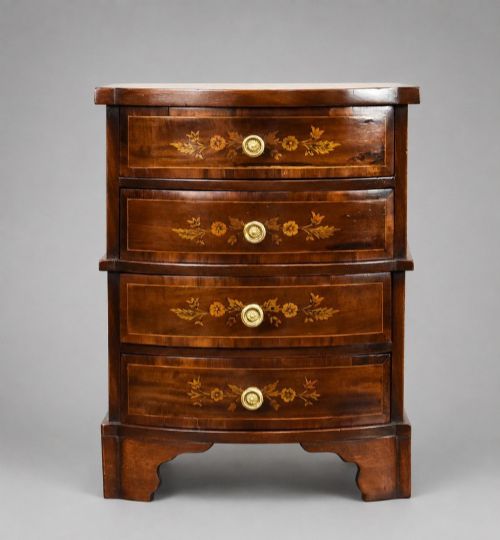
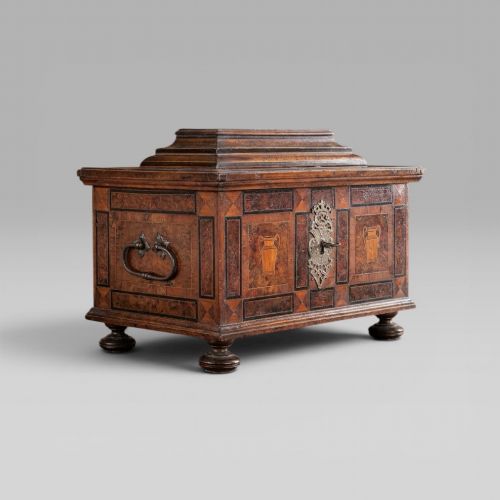
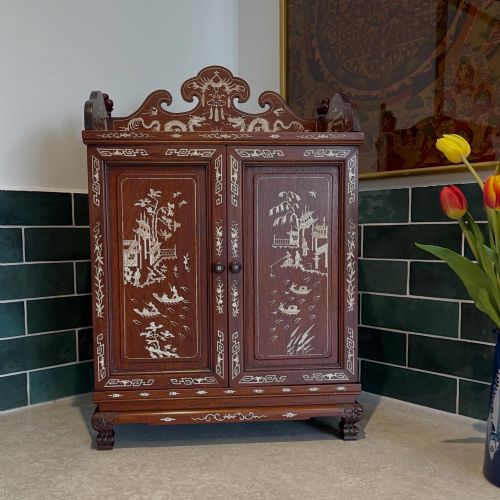
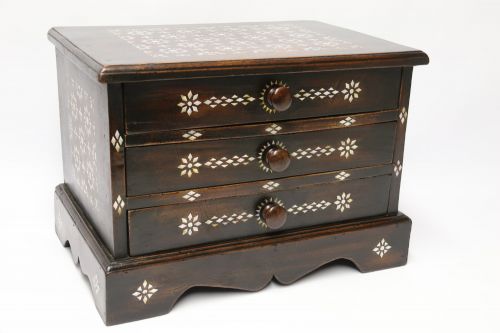
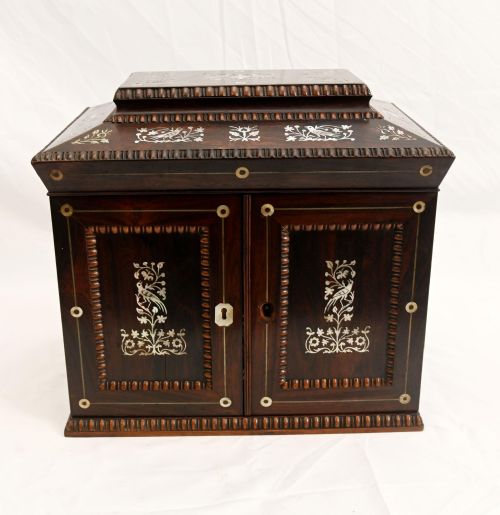
When you search for an inlaid jewellery chest, you encounter a variety of tabletop containers designed to safeguard keepsakes and rings. The pieces span Georgian, Victorian and Regency periods, taking the form of miniature chests of drawers, caskets and fitted cabinets. Rosewood, walnut and mahogany dominate the selection, often complemented by intricate marquetry or mother-of-pearl details.
Miniature chests of drawers provide multiple tiers for storage, whilst traditional boxes feature hinged lids opening to lined trays. Anglo-Indian, Chinese and Sorrento work also appear, showing diverse regional interpretations of decorative storage. These containers served dressing tables and writing desks, holding rings, watches and personal documents.
Materials and construction methods
Cabinet makers utilised dense hardwoods such as rosewood, walnut and mahogany as the structural base for each piece. They applied contrasting veneers, boxwood lines and marquetry patterns to the exterior surfaces. Mother-of-pearl, bone and brass inserts were meticulously embedded into the wood to create geometric or floral motifs.
Interiors frequently received silk or velvet linings alongside fitted wooden trays to separate delicate items. Joinery relied on precise dovetail joints for drawers and accurate mitres for box frames. Surfaces were finished with shellac polishes that highlighted the natural grain and the precision of the inlay.
Inlaid Jewellery Chest Retail Price Guide 2026
Typical asking prices for inlaid jewellery chest among the pieces listed under this phrase on Sellingantiques today, from the lower quarter to the upper quarter. They describe what is for sale here now, not the wider market.
Distinctions in quality
Quality rests in the precision of the inlay work and the selection of timber veneers. Superior examples display tight, flush fitting elements where bone, mother-of-pearl and brass meet the surrounding wood without gaps or heavy adhesive lines. The choice of burr woods, amboyna or figured rosewood elevates a piece above standard mahogany or plain pine carcasses.
Internal fitting further separates fine examples from ordinary boxes. Original trays, intact silk linings and working locks with matching keys contribute to desirability. The crispness of carved details on Sorrento ware or Anglo-Indian hardwood chests indicates the level of craftsmanship involved.
Edwards & Roberts
The Inlaid Jewellery Chest Glossary
- Marquetry
- The art of forming decorative patterns by fitting together veneer pieces of different woods, shells or metals. This technique defines the ornate lids and drawer fronts seen on many Victorian and Georgian pieces.
- Sorrento Ware
- Wooden objects decorated with micro-mosaic inlay, originating from the Italian town of Sorrento during the nineteenth century. These items frequently incorporate olive wood and intricate geometric scenes.
- Tunbridge Ware
- Small wooden boxes decorated with mosaic patterns created by gluing together thousands of differently coloured wood strips. Sections are sliced off and applied to the surface.
- Casket
- A small ornamental box or chest used for holding jewels, letters or valuables. They often feature hinged lids and secure locks.
Inlaid Jewellery Chest: Frequently Asked Questions
What fits inside an inlaid jewellery chest?
These chests accommodate rings, earrings, brooches and pocket watches within their fitted trays and compartments. Deeper miniature drawers hold small keepsakes, letters and loose beads.
Larger cabinets provide tiered storage suitable for varied collections of personal ornaments and dressing table accessories.
How do I date an inlaid jewellery chest?
Dating relies on timber choices, construction techniques and decorative styles associated with Georgian, Regency or Victorian periods. Mahogany and simple brass stringing often indicate earlier work, whilst extensive mother-of-pearl and rosewood point to the Victorian era.
Secondary woods inside drawers and the style of lock mechanisms offer further chronological clues for evaluation.
Were these chests made for travel?
Certain designated campaign boxes and travelling vanity cases featured robust locks and reinforced corners for journeys. Table cabinets and miniature chests of drawers remained stationary on dressing tables or writing desks.
Portable trinket boxes allowed owners to transport daily jewellery securely between rooms or residences.
How should I clean the wood surface?
Maintain the polished timber by dusting gently with a dry, soft microfibre cloth. Avoid commercial liquid polishes or moisture, which can damage aged veneers and loosen delicate inlay.
Occasional application of microcrystalline wax helps protect the shellac finish without harming the historic surface.