



Inlaid Etagere
An inlaid etagere brings tiered open display and delicate surface decoration to a room, offering multiple levels for small objects and ornaments.
Inlaid Etagere
An inlaid etagere is a multi-tiered piece of furniture designed for display and small storage, combining open shelves with decorative surface work. These pieces appear frequently in Victorian and Edwardian iterations, spanning the nineteenth and early twentieth centuries.
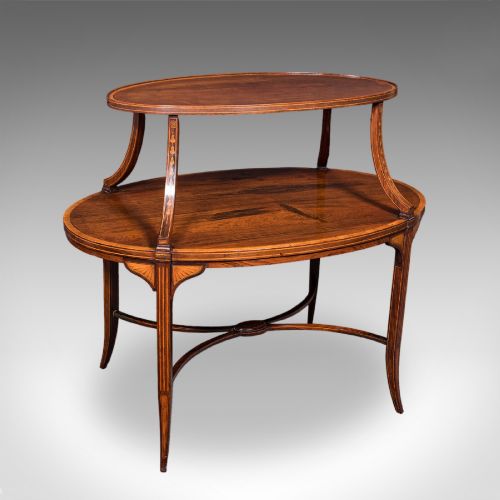
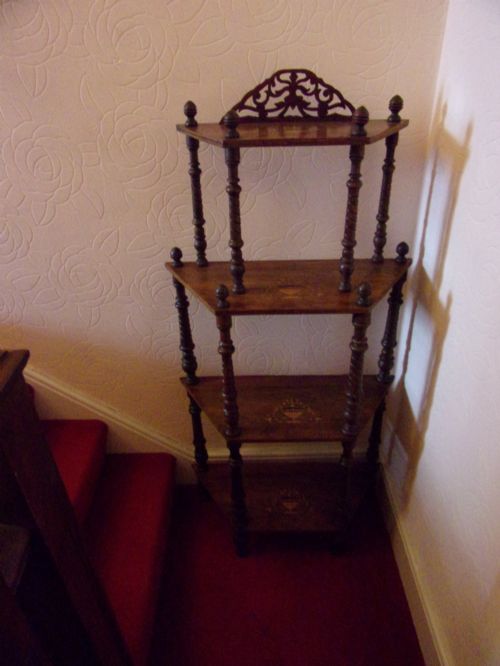
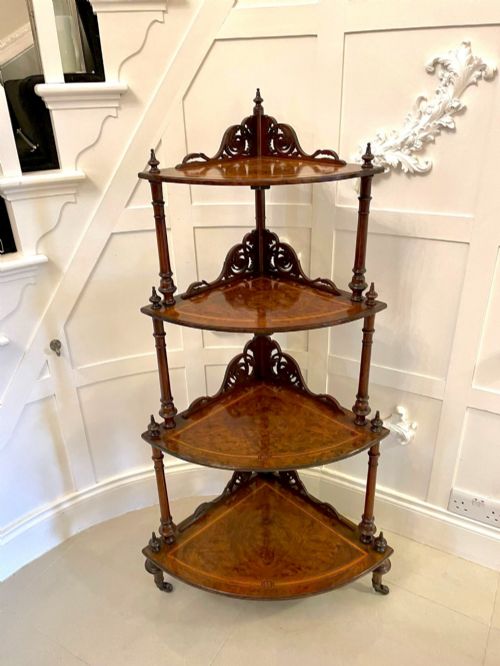
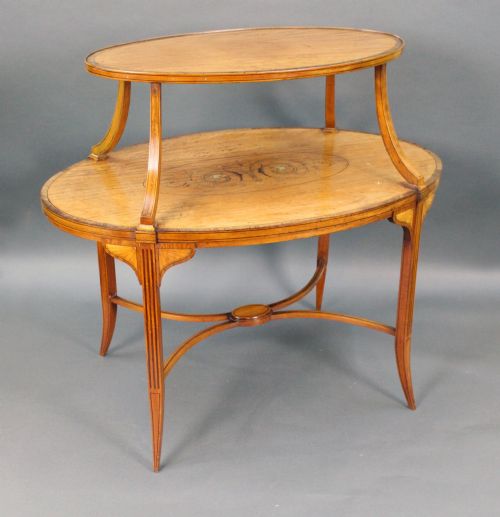
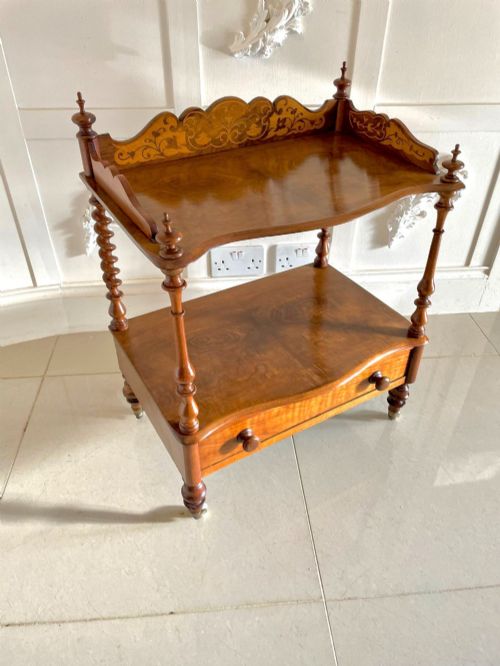
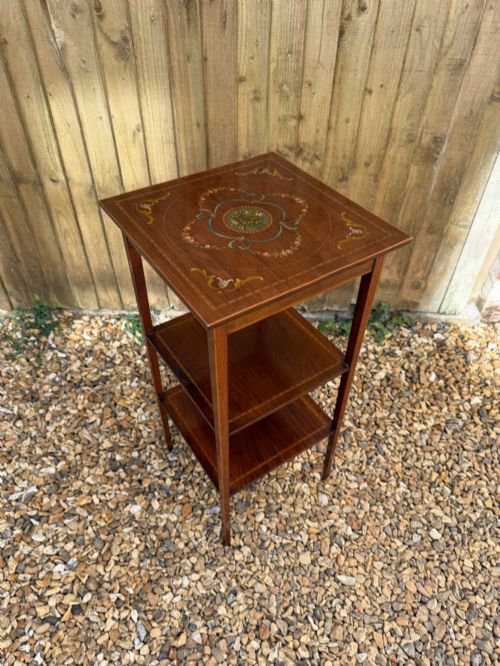
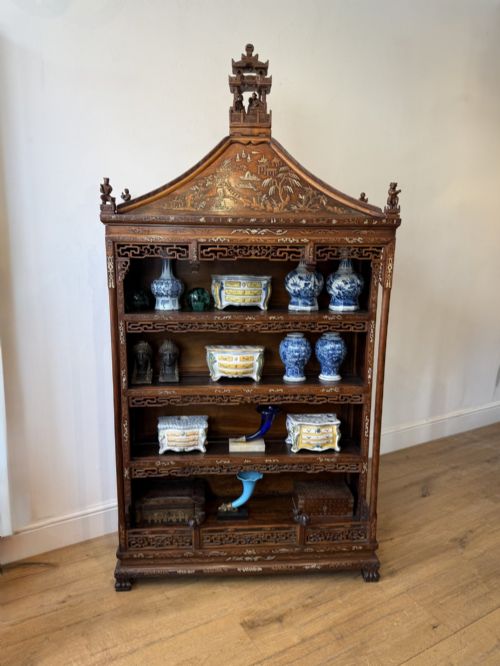
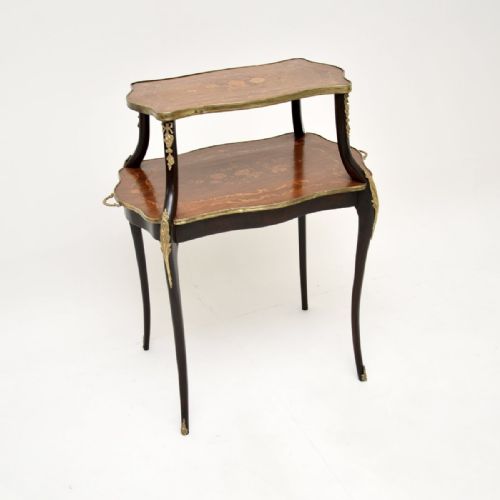
Forms range from two-tier occasional tables and corner whatnots to taller display cabinets and wall shelves. The standard version on this page is a mahogany or walnut two-tier table, often finished with satinwood inlay or marquetry.
Origins include English workshops influenced by Sheraton Revival designs alongside French Napoleon III and Louis XV style cabinets. Buyers often select them to hold books, ceramics, or small decorative items in sitting rooms.
How they were made
Cabinetmakers built these pieces using timbers such as mahogany, walnut, and rosewood, frequently applying contrasting veneers like satinwood for decorative effect. Marquetry inlay creates floral or geometric patterns across the top surfaces and shelves.
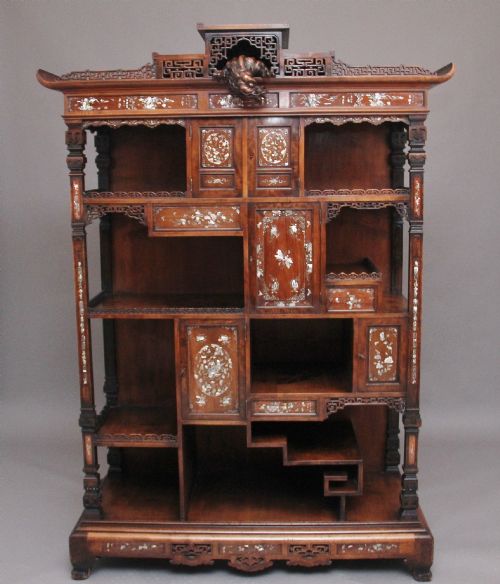
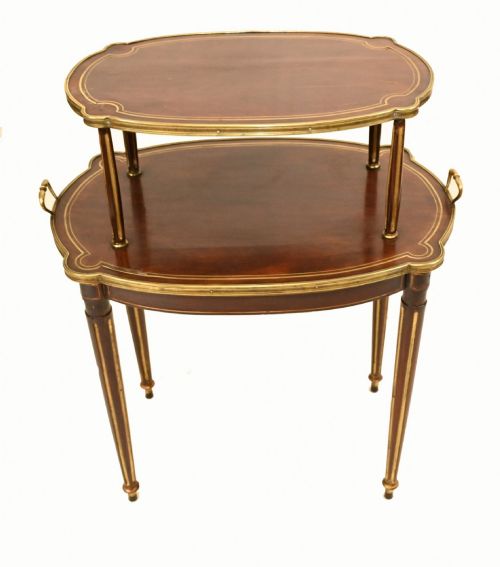
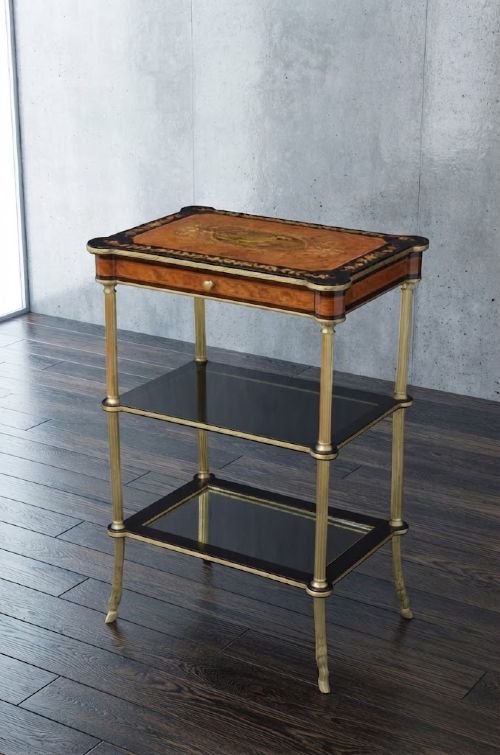
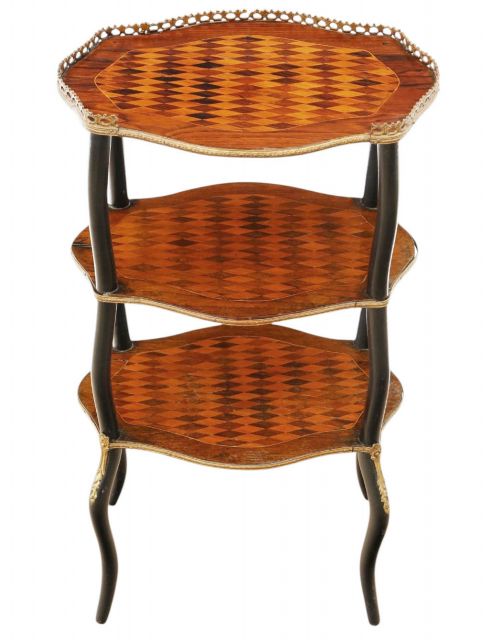
Many examples incorporate brass mounts, ormolu details, or mirrored glass panels within the tiers. Ebonised finishes and parquetry patterns also appear, reflecting French and Japanese design influences popular during the period.
Inlaid Etagere Retail Price Guide 2026
Typical asking prices for inlaid etagere among the pieces listed under this phrase on Sellingantiques today, from the lower quarter to the upper quarter. They describe what is for sale here now, not the wider market.
Several pieces include mirrored tiers designed to bounce candlelight around a Victorian drawing room.
What varies in quality
Quality depends on the precision of the inlay work and the choice of underlying timber. Burr walnut and finely figured mahogany show superior material selection compared to plain secondary woods.
The crispness of ormolu mounts, the stability of multiple tiers, and the fineness of the marquetry distinguish workshop production. Maker attribution and restrained proportions elevate certain pieces above standard commercial output.
Gabriel-Frederic Viardot·Edwards & Roberts
The Inlaid Etagere Glossary
- Etagere
- A piece of furniture consisting of open shelves for displaying small objects. The form originated in France during the eighteenth century.
- Marquetry
- Decorative veneer work formed by fitting together small pieces of wood, shell, or ivory to create pictorial or geometric designs. It covers tabletops and shelf surfaces.
- Whatnot
- A tiered shelving unit used for ornaments and books, popular throughout the Victorian period. Corner versions save floor space.
- Ormolu
- Gilt bronze mounts applied to furniture edges and legs. This technique adds decorative weight and highlights the contour of the piece.
- Parquetry
- Geometric wood inlay forming patterned surfaces such as cubes or chequers. It differs from marquetry through its strict geometric repetition.
Inlaid Etagere: Frequently Asked Questions
What is an etagere used for?
An etagere provides tiered shelving to display small decorative objects, porcelain, or books without crowding a room.
Its open structure allows light to pass through while offering multiple surfaces at different heights.
How do I date an inlaid etagere?
Dating relies on timber choice, inlay style, and structural characteristics. Pieces from the Victorian period often use burr walnut or heavy marquetry.
Edwardian examples tend to feature lighter mahogany frames with refined satinwood stringing and Sheraton Revival motifs.
Where should I place an etagere?
These pieces suit corners, blank wall spaces, or positions beside seating where they can function as occasional tables.
Corner whatnots make efficient use of unused angles in smaller rooms.
What is the difference between an etagere and a whatnot?
Both terms describe tiered shelving units, though whatnot often specifically denotes Victorian corner or standing shelf units.
Etagere frequently implies a French influence with lighter occasional tables and mirrored tiers.