

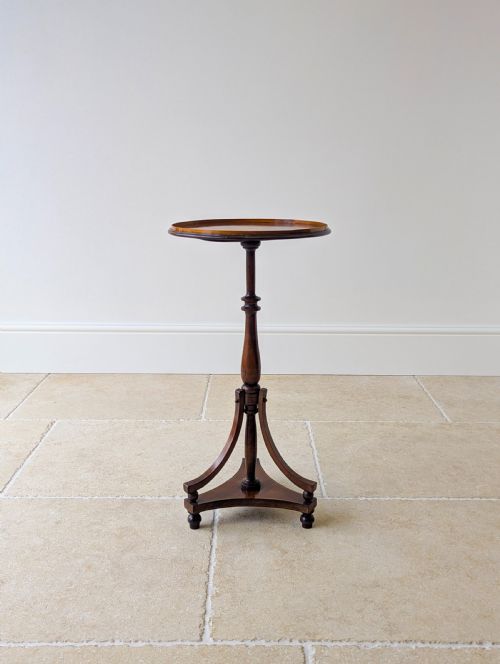

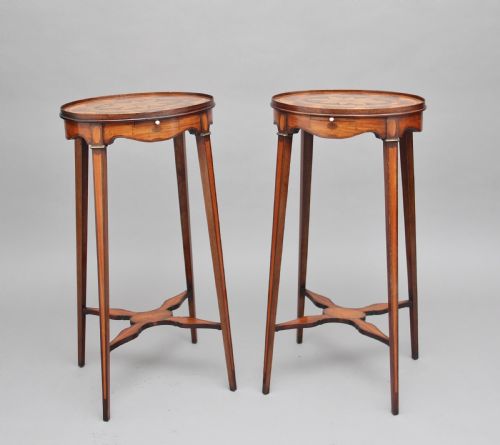


Inlaid Candle Stand
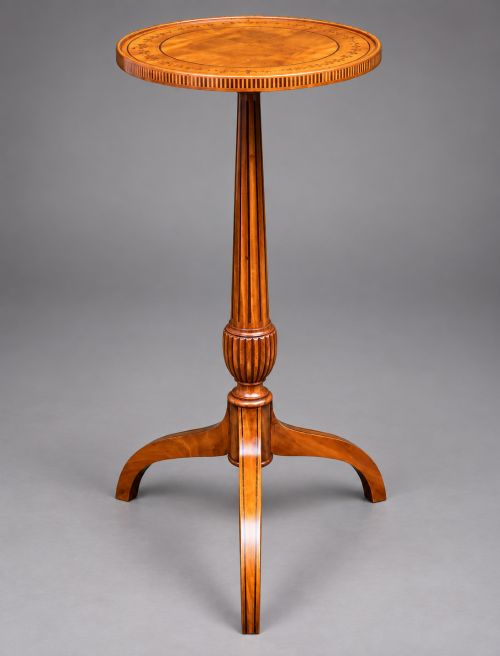
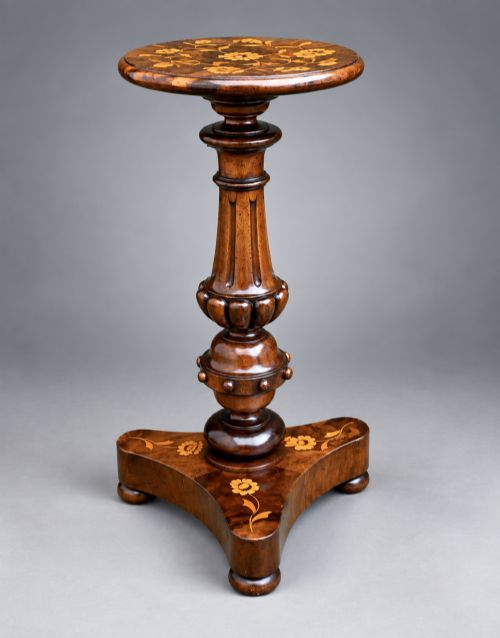
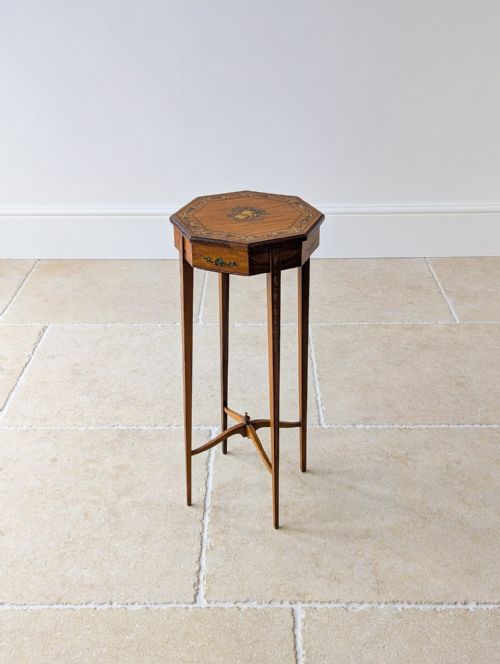
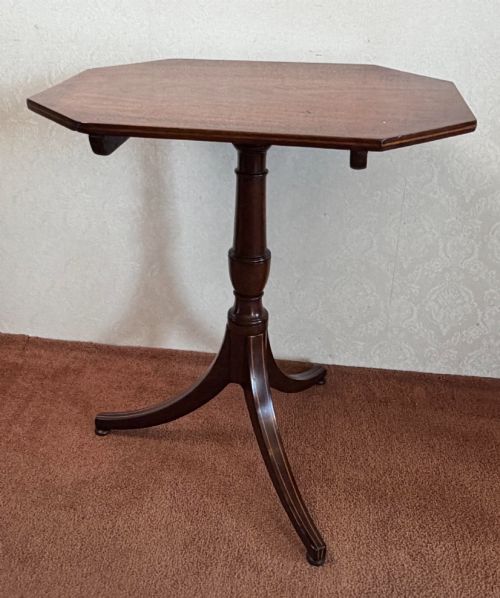
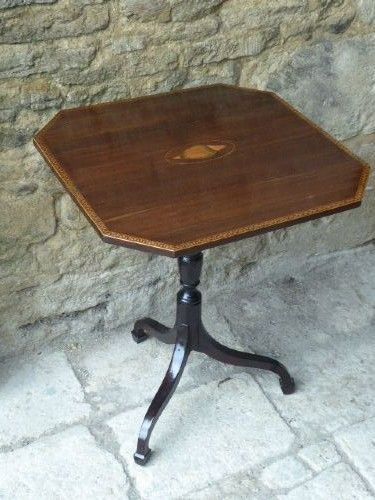
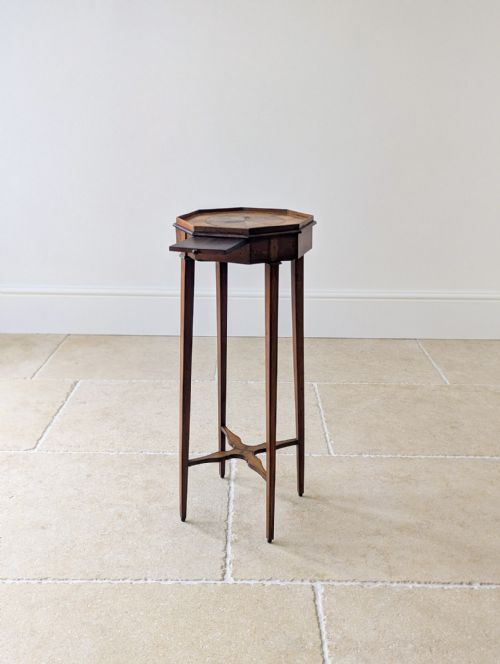
These inlaid candle stand pieces combine timber and decorative detail, offering a compact surface suited for quiet corners.
Inlaid Candle Stand
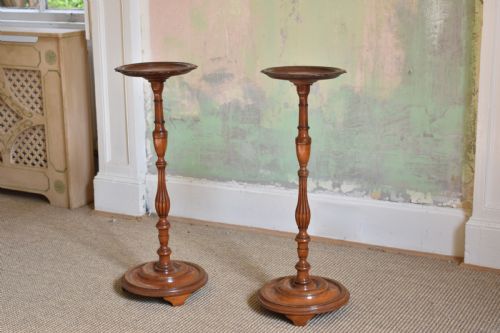
An inlaid candle stand functions as a compact table designed for illumination or small display purposes. You will frequently encounter forms originating from the Georgian, Regency, and Victorian periods.
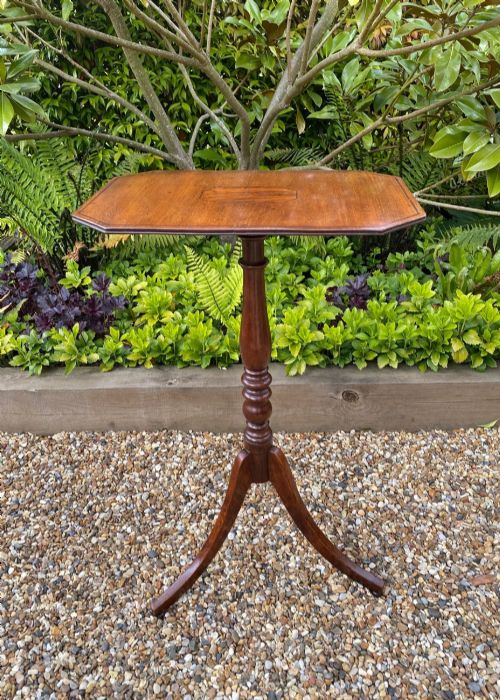
The selection ranges from tripod wine tables and urn stands to tilt-top occasional pieces. Satinwood, mahogany, and walnut provide the primary foundations for these items.
Makers utilised decorative wood inlay and marquetry to embellish tops and legs. Many examples incorporate round, octagonal, or oval surfaces supported by a central pillar.
Materials and construction
Cabinetmakers constructed the main bodies using dense timbers such as mahogany, rosewood, walnut, and satinwood. Tripod configurations generally employ turned wooden pillars secured to three shaped legs.
Surface decoration relies on contrasting elements like boxwood and brass inlay. Marquetry techniques introduce floral motifs and geometric patterns directly into the timber tops.
Materials documented across these listings include mahogany, satinwood, walnut, rosewood, boxwood, brass, and tortoiseshell.
Distinguishing quality
Superior examples display precise joinery at the pillar and leg junctions alongside crisp, well-defined wood inlay. The choice of timber grain, particularly in burr walnut and figured satinwood, dictates the visual impact.
Subtlety in marquetry work and original patination separate finer workshop production from standard utility pieces. The integration of tilting mechanisms and stable tripod bases reflects the skill of the original maker.
The Inlaid Candle Stand Glossary
- Marquetry
- The art of forming decorative patterns by fitting together small pieces of wood veneer. This technique creates complex floral or geometric designs on table tops.
- Tripod Table
- A small freestanding table supported by three legs radiating from a central pillar. This form allows the top to tilt on many period examples.
- Satinwood
- A durable, lustrous timber native to India and Sri Lanka with a yellowish colour. It serves as a pale contrasting ground for darker wood inlay.
- Tilt Top
- A hinged table top that folds vertically when not in use. This mechanism permitted easy storage against walls in historic interiors.
Inlaid Candle Stand: Frequently Asked Questions
What is a candle stand used for?
These small tables held lighting devices or small decorative objects near seating areas. Their compact footprints suited period rooms where floor space remained at a premium.
Today they function effectively as lamp tables or occasional surfaces next to armchairs.
How do I date an inlaid candle stand?
Dating relies on observing timber choices, leg profiles, and inlay styles relative to known decorative periods. Georgian and Regency pieces favour mahogany and satinwood with geometric banding.
Later Victorian and Edwardian revivals often utilise richer burr veneers and more elaborate marquetry motifs.
Are tilt top tables stable?
Period tilt-top tables rely on a brass catch or wooden wedge beneath the top to lock the surface in place. A well-adjusted mechanism maintains stability during normal daily use.
Testing the pivot point reveals the original precision of the brass or wooden hinge assembly.
Where should I place a candle stand at home?
The slender silhouette allows these stands to fit beside sofas, in hallways, or within empty alcoves. Their small surfaces accommodate a reading lamp or a drink.
Keeping them away from direct heat sources protects the timber and delicate inlay veneers.