




Ink and Wash Landscape
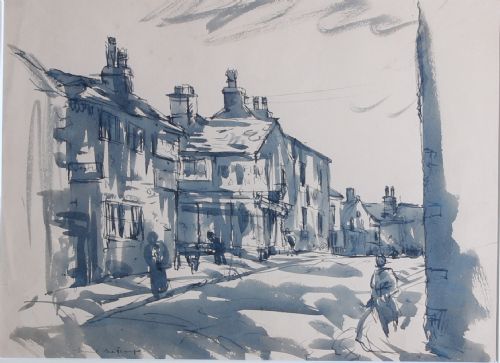
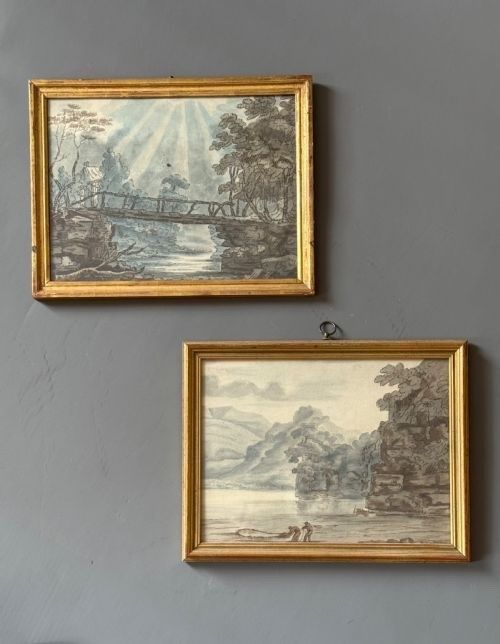
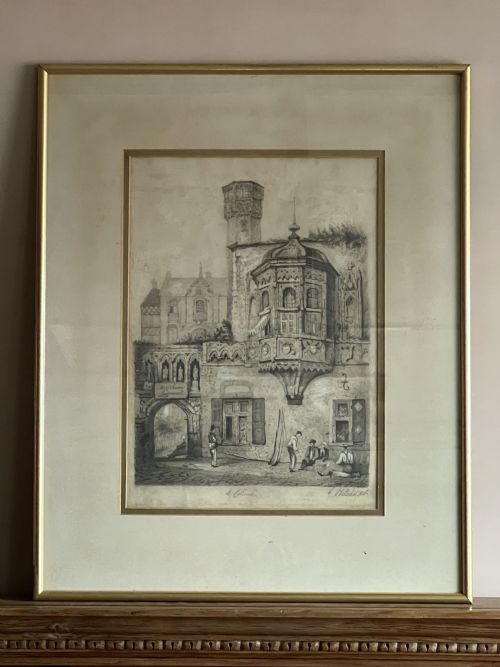
These ink and wash landscape works offer collectors expressive monochrome or tinted views executed on paper across several centuries.
Ink and Wash Landscape
When you search for an ink and wash landscape, you encounter original works on paper spanning the eighteenth, nineteenth, and twentieth centuries. These pieces encompass framed artwork, watercolour drawings, and paintings created by British and European artists.
What varies in quality
Quality rests in the assuredness of the pen line and the controlled application of tonal wash to establish light and form. Stronger examples display confident draughtsmanship and atmospheric clarity that elevate a simple landscape study into a compelling pictorial record.
The sophistication of the composition and the historical resonance of the handling distinguish the finest works from simpler topographical exercises. Preservation of the paper and the integrity of the framing materials also influence the overall presence of the piece.
Ink and Wash Landscape Retail Price Guide 2026
Typical asking prices for ink and wash landscape among the pieces listed under this phrase on Sellingantiques today, from the lower quarter to the upper quarter. They describe what is for sale here now, not the wider market.
Listings feature paper, ink, watercolour, glass, wash, wood, gilt wood, and graphite across Georgian, nineteenth-century, and twentieth-century styles.
Stanley Orchart·Edward Dayes·Fred Lawson·Peter Tillemans·Thomas Rowlandson·Thomas Lound·Thomas Monro·Joseph Barber
The Ink and Wash Landscape Glossary
- Wash
- A thin layer of diluted ink or watercolour applied across paper to create shadow, depth, or tonal gradients. This technique provides the atmospheric background behind fine pen lines.
- Capriccio
- An architectural fantasy placing together buildings, ruins, and other architectural elements in a fictional landscape. Artists often employ this classical style to evoke romanticized antiquity.
- Works on paper
- A broad category encompassing drawings, sketches, watercolours, and prints executed directly on paper supports. These pieces require careful framing beneath glass for preservation.
- Pen and ink
- A linear drawing medium utilising a nib and dark fluid to establish contours, details, and structural frameworks before or after applying washes.
Ink and Wash Landscape: Frequently Asked Questions
What is an ink and wash landscape?
An ink and wash landscape is an original work on paper combining linear pen work with diluted tonal washes to depict natural scenery. These pieces range from rapid topographical sketches to finished exhibition watercolours.
Such artworks capture topographical views, rural cottages, and classical ruins through the interplay of dark lines and graduated monochrome or coloured shades.
How should I frame works on paper?
Works on paper require protective glass and secure framing to shield fragile organic materials from dust, moisture, and handling damage. Proper mounting keeps the paper surface from touching the glass directly.
Exposing these delicate pieces to direct sunlight should be avoided to prevent fading of the inks, watercolours, and paper over time.
How do I date an ink and wash drawing?
Dating relies upon stylistic markers, paper characteristics, framing methods, and any recorded signatures or inscriptions left by the artist. Georgian and nineteenth-century works often exhibit distinct handling of pen lines and wash density compared to twentieth-century modern pieces.
Archival records and stylistic comparisons with known dated works by specific artists help confirm the era of creation.
Where were these landscape drawings created?
These landscapes originate from various British and European contexts, including English regional settings, the Lake District, and continental locations in France, Germany, and Switzerland. Artists travelled extensively to record picturesque scenery and architectural landmarks.
Many studies reflect direct observation from nature, while others capture imaginary classical compositions influenced by earlier European painting traditions.