



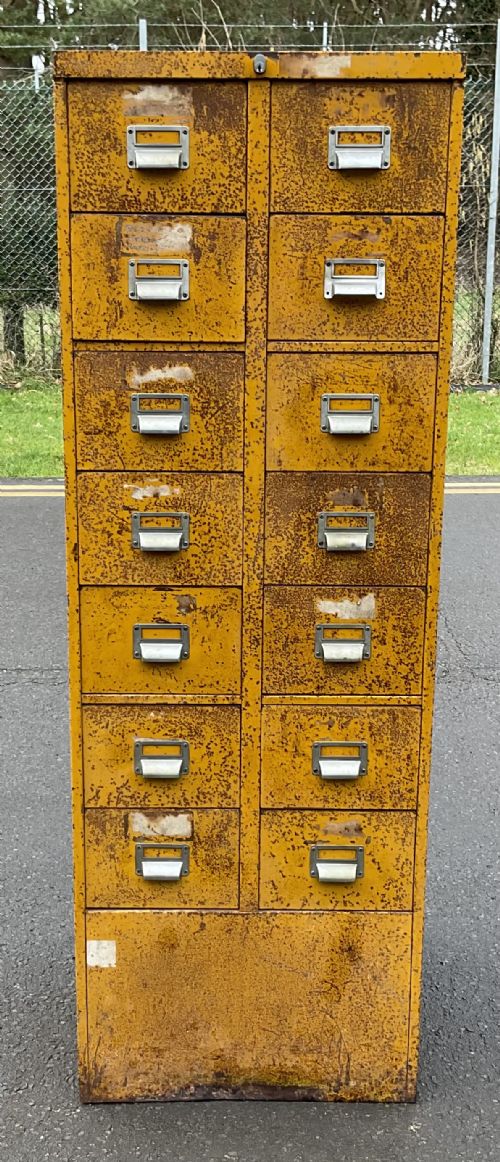


Industrial Office Cabinet
An industrial office cabinet brings purposeful utility and robust character to a workspace, combining heavy metal and honest timber for daily organisation.
Industrial Office Cabinet
An industrial office cabinet is a piece of workspace furniture designed for rigorous filing, sorting and storage. When you search for this phrase, you encounter heavy storage items intended for workshops, offices and mercantile use.
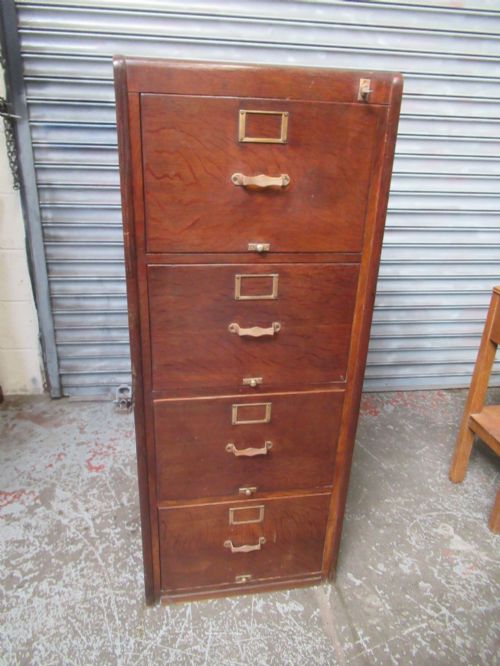
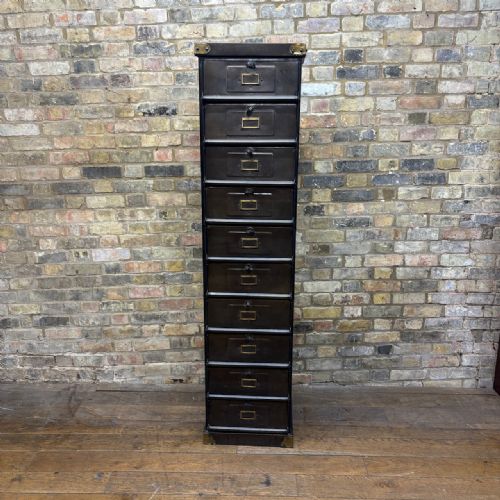
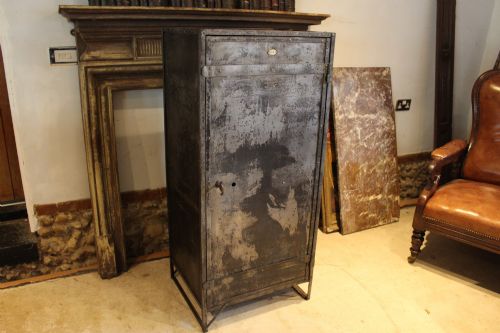
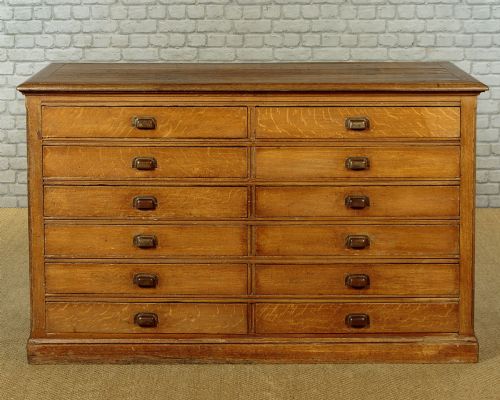
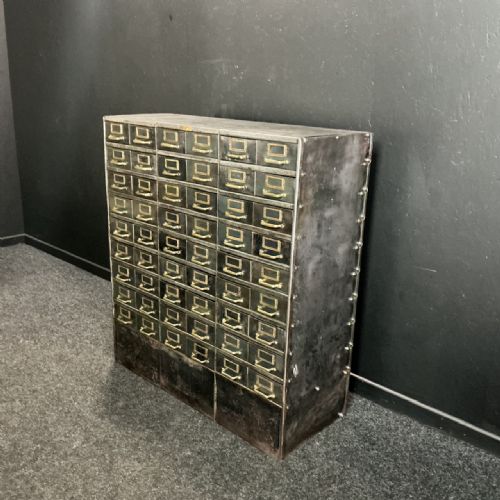
The pieces appearing on this page span several decades, ranging from late Victorian examples to mid-century utility forms. They take various shapes, including banks of drawers, pigeon holes, plan chests, and tall metal chests.
Materials vary between robust hardwoods like oak and mahogany alongside heavy metals such as steel, brass and iron. You will find items from English workshops as well as French industrial sources.
How they were made
These cabinets rely on sturdy construction methods suited to heavy daily use in commercial and workshop environments. Cabinetmakers and metalworkers utilised durable hardwoods such as oak and mahogany, pairing them with sheet steel, iron and brass.
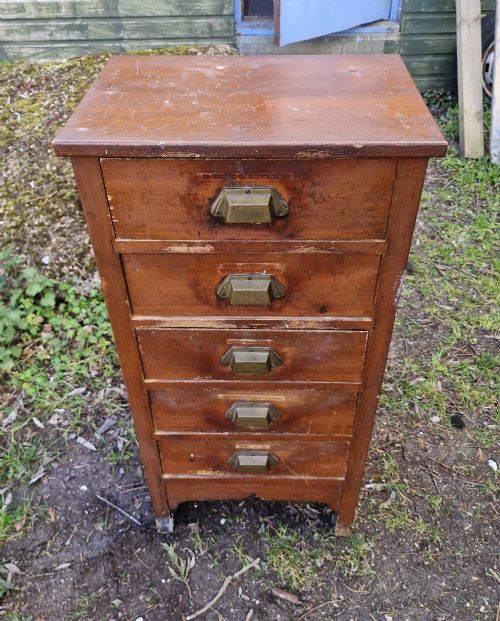
Handles and pulls are typically cast in brass or iron, fastened securely to accommodate frequent opening of deep drawers and cupboards. Joints in the wooden units reflect practical joinery designed to withstand decades of handling.
Industrial Office Cabinet Retail Price Guide 2026
Typical asking prices for industrial office cabinet among the pieces listed under this phrase on Sellingantiques today, from the lower quarter to the upper quarter. They describe what is for sale here now, not the wider market.
What varies in quality
Quality in these pieces is dictated by the integrity of the materials and the complexity of the internal configuration. A bank with numerous small drawers or specialised letter filing mechanisms demands greater precision in construction than a simple cupboard.
The choice of primary timber and the robustness of the metal framework separate standard utilitarian units from finer workshop examples. Original hardware, such as period brass handles and patent locking mechanisms, elevates the character of the piece.
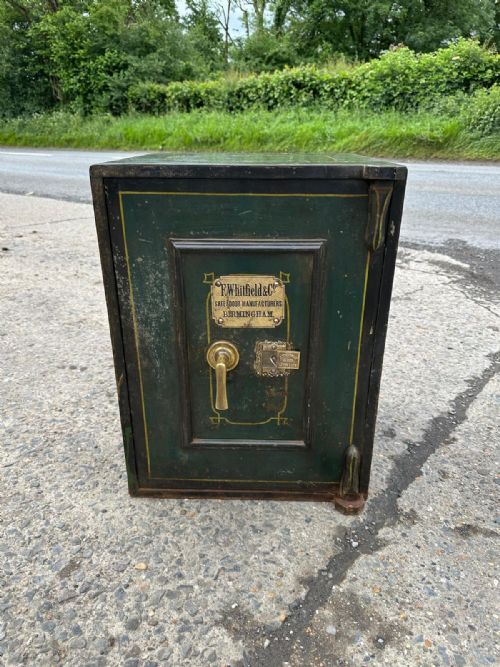
F. Whitfield & Co.
The Industrial Office Cabinet Glossary
- Plan chest
- A wide, shallow set of drawers originally designed for storing architectural drawings and large maps. These units provide substantial horizontal surface area.
- Pigeon holes
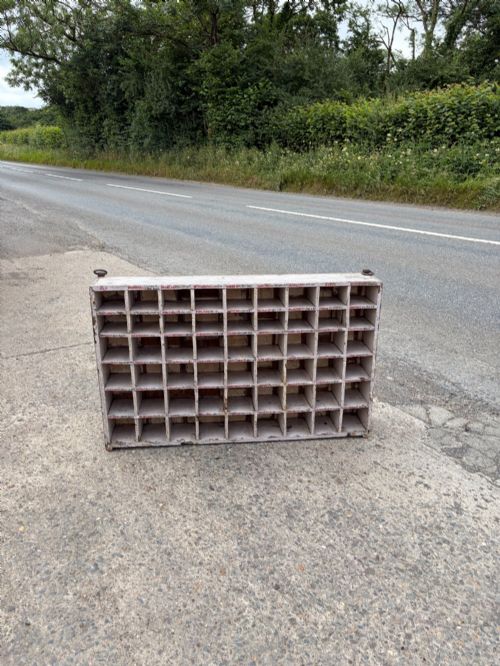
- An open shelving grid divided into small compartments for sorting correspondence and documents. This form is common in early office environments.
- Bank of drawers
- A multi-drawer storage unit built for systematic organisation of paperwork or hardware. They appear in varying scales from small desktop blocks to tall workshop towers.
- Sheet steel
- Flat rolled metal utilised in the construction of industrial storage bodies and cupboard doors. It offers enhanced durability compared to standard timber frames.
Industrial Office Cabinet: Frequently Asked Questions
What periods do these cabinets cover?
The pieces available range from late Victorian examples through the Edwardian era and into the 1920s and 1930s. Styles reflect functional design from these specific decades.
You will encounter both timber workshop furniture and early steel office filing systems from this broad timeframe.
How were pigeon holes used?
Pigeon holes served as sorting compartments for incoming and outgoing post in busy offices and mercantile operations. Each small cubicle held correspondence for a specific person or department.
They allowed clerks to manage high volumes of paper before the advent of modern digital filing.
Can I use a plan chest for storage?
A plan chest provides exceptionally deep and wide shallow drawers that accommodate large art prints, textiles or flat collections. The generous top surface also offers a useful display area.
Their sturdy construction makes them practical for organising bulky items in domestic settings.
What materials predominate in these cabinets?
Construction materials are split between utilitarian metals like sheet steel, iron and brass, and solid hardwoods such as oak and mahogany. Pine is also found in internal elements.
Metal components often feature patinated finishes developed through decades of commercial operation.