





Industrial Landscape Art
Industrial landscape art captures factories, mills, and docks through the eyes of painters working from the nineteenth century into the mid-twentieth century.
Industrial Landscape Art
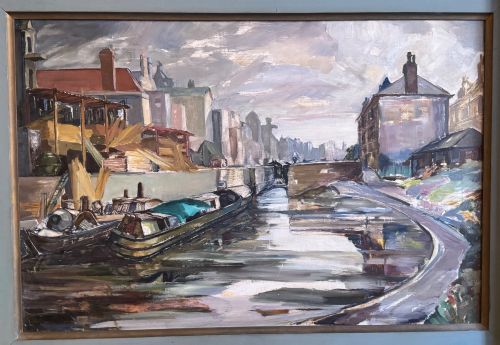
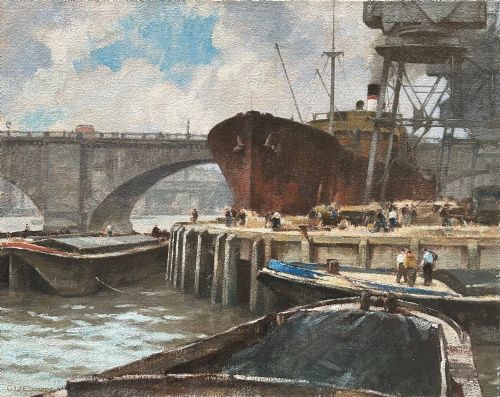
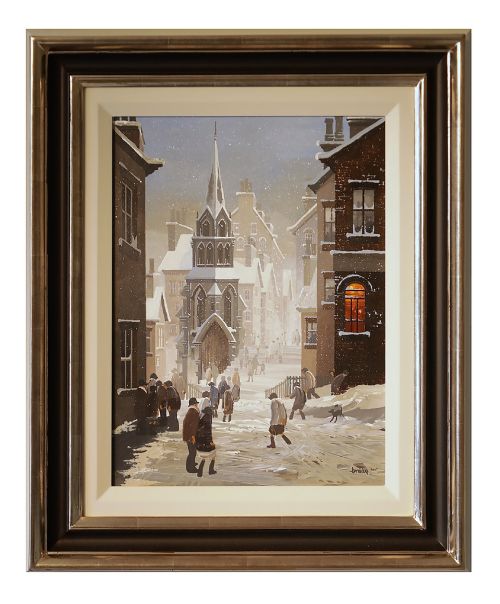
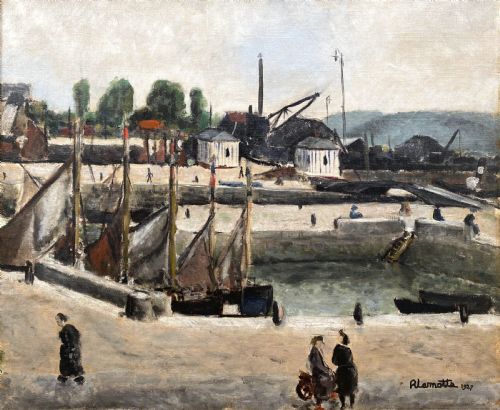
Industrial landscape art records working environments such as mills, breweries, quarries, and dockyards across Britain and France. These works reflect urban and manufacturing expansion from the nineteenth century into the mid-twentieth century, documenting the visual impact of industry on towns and rivers.
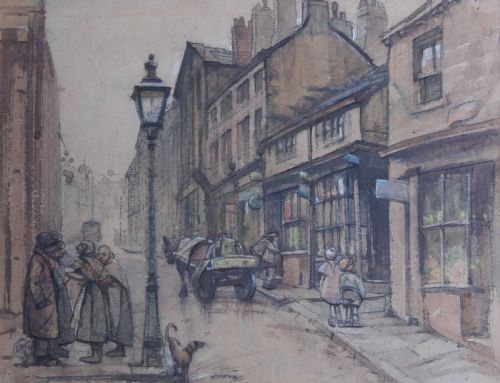
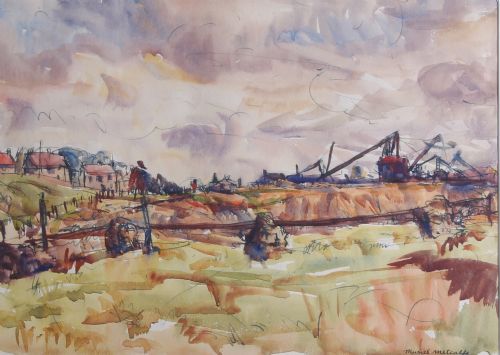
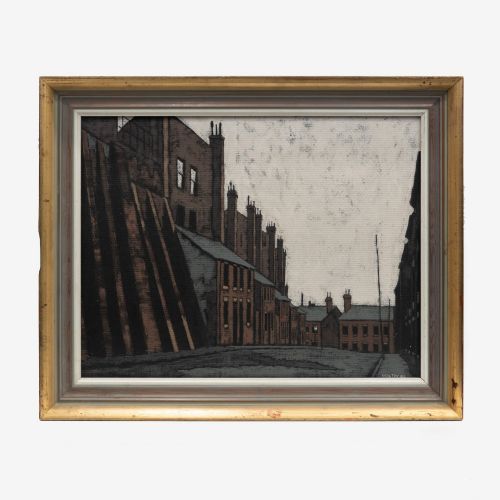
The selections available here range from detailed nineteenth-century watercolours of London and Sheffield to twentieth-century oil paintings and charcoal sketches. Northern School and British Realism perspectives appear frequently, alongside French post-impressionist harbour scenes and maritime subjects.
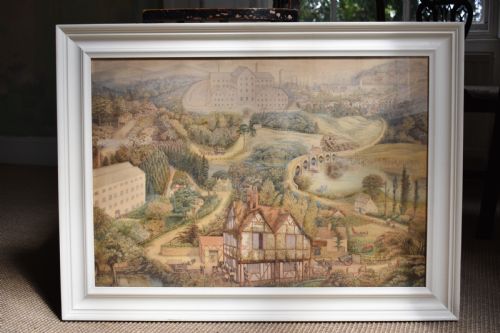
Watercolours on paper and oils on canvas or board form the core of the selection. Works span specific locations from Halifax and Bradford to the Thames and foreign canals, often bearing the signatures of regional artists or produced within recognisable British schools.
Materials and execution
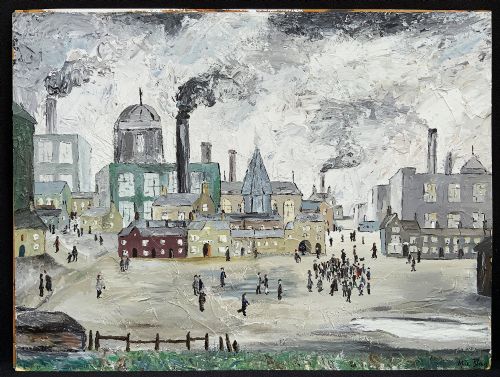
Artists deployed watercolour pigment on paper for transparent washes and fine topographical detail, particularly in early works depicting docks and urban streets. Oil on canvas or board provided heavier body and texture, allowing painters to build up impasto layers for industrial smoke and machinery.
Charcoal and ink were utilised for rapid sketching and tonal studies, capturing the stark geometry of factories and mills before final painting. Support materials range from traditional wooden panels to stretched canvas, reflecting the standard studio practices of the nineteenth and twentieth centuries.
Industrial Landscape Art Retail Price Guide 2026
Typical asking prices for industrial landscape art among the pieces listed under this phrase on Sellingantiques today, from the lower quarter to the upper quarter. They describe what is for sale here now, not the wider market.
Listings feature works executed in oil on canvas, watercolour pigment on paper, and charcoal sketch.
Quality and execution
Superior examples demonstrate confident handling of perspective and atmospheric tone, successfully integrating heavy industrial elements like chimneys and cranes into the surrounding landscape. Weaker pieces rely on formulaic compositions that lack the topographical precision and observational depth seen in works by established regional painters.
The strength of a piece rests in the artist's ability to render light and shadow across complex manufacturing sites, whether through the delicate washes of a nineteenth-century watercolour or the thick impasto of a mid-century oil painting.
Cuthbert Crossley·Muriel Metcalfe·Brian Shields Braaq·Stuart Walton·Fred Lawson·Frank Shenton·Arthur Netherwood·Frances E Nesbitt·Herbert John Finn·James W Booth·Walter J Hall
The Industrial Landscape Art Glossary
- Northern School
- A grouping of twentieth-century artists who painted the industrial towns, mill chimneys, and working-class life of northern England. Their palette often reflects the soot and brick of urban landscapes.
- Impasto
- Paint applied thickly to a canvas or board, standing out in relief from the surface. This technique allows artists to build physical texture into representations of industrial smoke, water, and masonry.
- Topographical
- Art that represents a specific real-world location with geographical accuracy. These scenes serve as historical records of nineteenth- and twentieth-century docks, rivers, and factories.
- Lithograph
- A print made from a flat stone or metal plate treated to retain ink in designated areas. This process enabled the mass reproduction of drawings and views for nineteenth-century audiences.
Industrial Landscape Art: Frequently Asked Questions
What periods do these paintings cover?
The works span from the mid-nineteenth century through the 1960s, capturing shifting attitudes toward industrialisation and urban expansion. Early examples lean toward topographical detail, while mid-century pieces embrace broader realist and impressionist techniques.
Changes in painting styles across these decades reflect both evolving artistic movements and the changing visual reality of Britain's working landscapes.
How should I display a watercolour?
Watercolours on paper require framing behind glass with acid-free mounts to prevent fading from exposure to direct light. Placing them away from strong sunlight preserves the integrity of the pigments.
Because paper is sensitive to humidity, stable indoor environments protect the support and prevent warping over time.
What subjects are included in these scenes?
Subjects range from northern wool mills and Yorkshire quarries to London breweries, docks, and French harbours. Artists focused on the architecture of industry, including chimneys, barges, shipyards, and urban waterways.
These compositions document both manual labour and heavy machinery embedded within natural or city environments.
Are these works signed by the artists?
Many of the pieces feature artist signatures, inscriptions, or contemporary titles written on the front or reverse. Some works are attributed to specific schools or executed in the manner of known painters.
Inscriptions often name the exact mill, dock, or town depicted, offering clear provenance for the location.