



Industrial Iron Workbench
Industrial iron workbench pieces combine heavy metal bases with timber tops, offering robust utility and striking form for modern interiors.
Industrial Iron Workbench
An industrial iron workbench brings heavy metal bases and timber surfaces together to create practical tables suited to daily use. When you search for an industrial iron workbench, you encounter nineteenth-century and early twentieth-century examples shaped by workshops, factories, and domestic spaces.
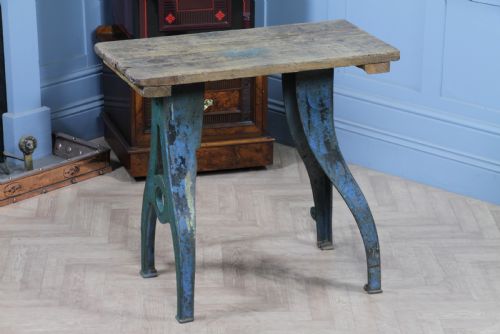
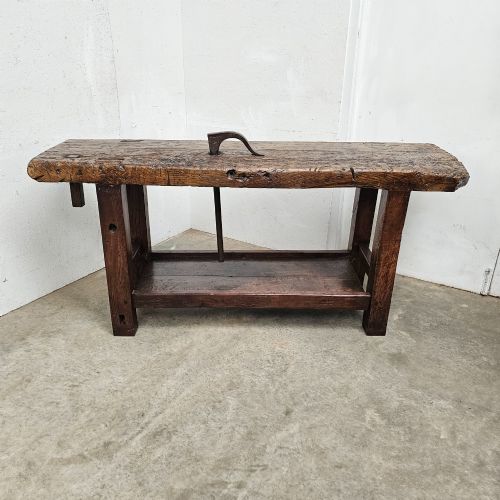
The pieces appearing on this page span several distinct forms, including console tables, dining tables, and traditional workbenches fitted with vices or clamping bars. Pine and oak feature prominently as top materials, paired with cast iron, forged iron, or steel structures.
French and English origins dominate the selection, ranging from rustic farmhouse designs to Victorian foundry tables. A buyer is most likely to meet reclaimed pine tops resting on up-cycled machine bases or trestle supports.
Materials and construction
Makers built these tables using substantial structural elements, combining heavy cast iron, forged iron, or steel bases with thick timber tops of pine or oak. Metal components provided the necessary rigidity for workshop tasks, while wooden surfaces offered a workable plane for crafts and preparation.
Construction methods include trestle supports, integrated metal table bases, and functional additions such as vices and clamping bars. Surfaces often retain traces of paint alongside natural grain, reflecting decades of hard use in industrial or artisanal settings.
Industrial Iron Workbench Retail Price Guide 2026
Typical asking prices for industrial iron workbench among the pieces listed under this phrase on Sellingantiques today, from the lower quarter to the upper quarter. They describe what is for sale here now, not the wider market.
Several tables started life squeezing water from laundry before finding a second career supporting dinner plates.
Judging quality in industrial iron workbenches
Quality rests upon the integrity of the marriage between base and top, particularly when original machine elements meet reclaimed timbers. A successful piece maintains balanced proportions where the weight of the iron base anchors the thickness of the oak or pine top.
The character of the materials dictates distinction, with genuine age showing through the patination of the metal and the honest wear upon the wooden surfaces. Pieces retaining working mechanisms like vises or clamping bars demonstrate a higher degree of original utility.
The Industrial Iron Workbench Glossary
- Trestle table
- A table featuring a horizontal beam supported by two pairs of sloping legs. This form provides sturdy clearance beneath the top.
- Mangle table
- A table incorporating iron framing originally designed to house laundry wringers. These repurposed heavy bases now support wooden surfaces.
- Clamping bar
- A built-in wooden or metal mechanism used to secure workpieces during assembly. It remains a hallmark of authentic craft benches.
- Patina
- The surface sheen and coloration developed through age, handling, and wear. It indicates the history of the timber and metal.
- Up-cycled
- The process of adapting discarded objects or materials into new functional items. In these listings, older machine bases receive new wooden tops.
Industrial Iron Workbench: Frequently Asked Questions
What is an industrial iron workbench?
These pieces are heavy-duty tables originally built for factories, workshops, and trade use. They combine robust metal frames with thick wooden tops.
Today, buyers use them as console tables, dining surfaces, or desks in residential and commercial spaces.
How do I date an industrial workbench?
Dating relies on the manufacturing techniques visible in the iron and the wear patterns on the timber. Nineteenth-century examples often feature heavy cast iron or forged elements paired with wide pine boards.
Early twentieth-century pieces frequently show simpler steel or metal table bases alongside painted pine surfaces.
Are these tables suitable for everyday dining?
Many of these pieces function well for dining, provided the height and legroom match your chairs. The sturdy iron bases offer excellent stability for daily use.
Consider the presence of vices or clamping bars, which can affect where people sit along the edges.
Where were these workbenches originally made?
The pieces originate primarily from workshops in England and France. Regional styles vary from French bleached trestle designs to English Victorian foundry tables.
Local materials dictated construction, leading to the frequent use of native pine and oak.