






Industrial Filing Cabinet
An industrial filing cabinet organises papers with heavy-duty metal or wooden storage designed for hard commercial and workshop use.
Industrial Filing Cabinet
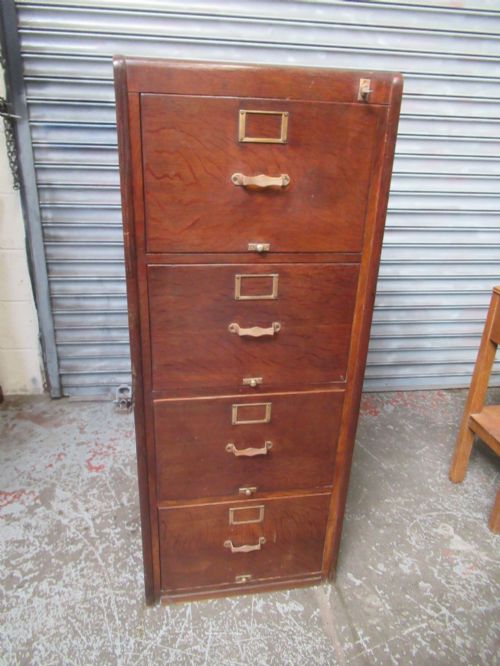
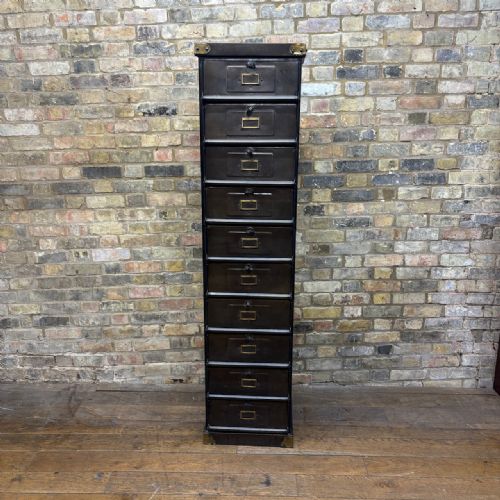
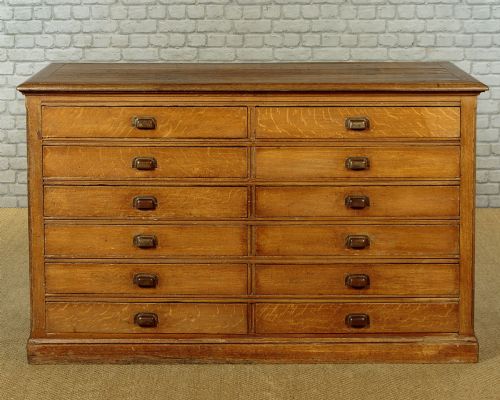
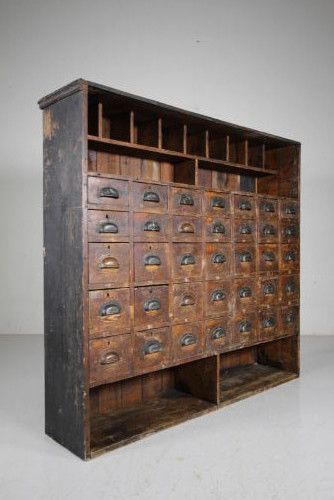
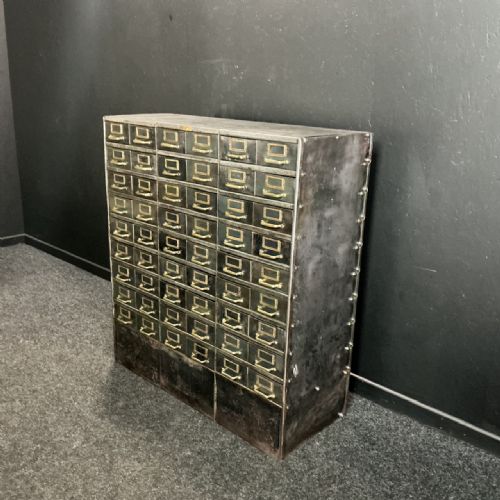
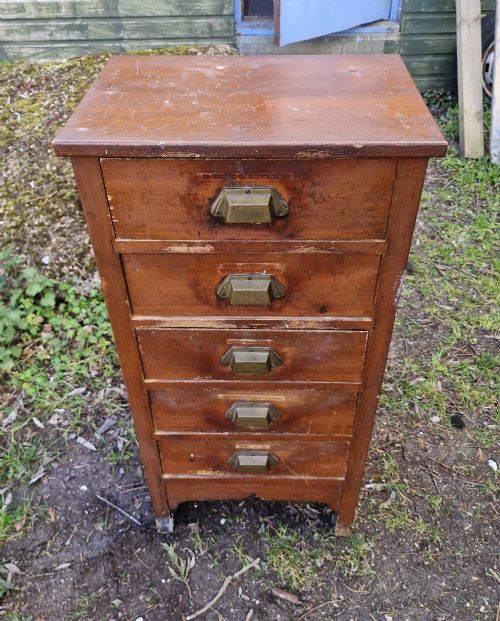
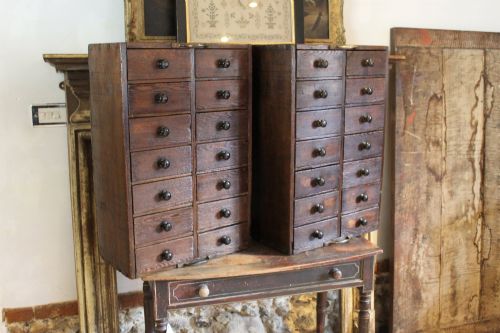
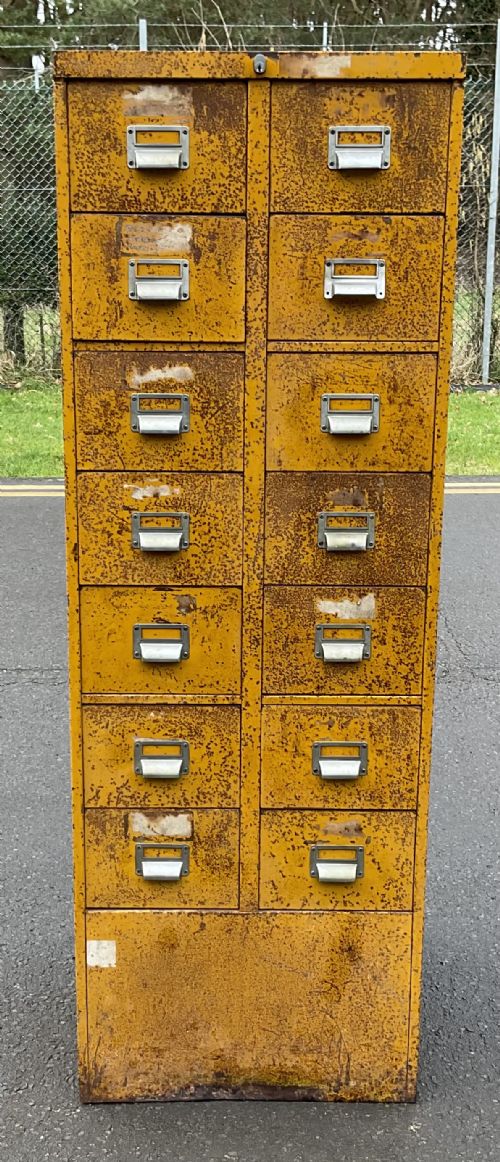
An industrial filing cabinet takes many forms on this page, including banks of drawers, plan chests, and specialised letter files. Buyers searching for an industrial filing cabinet often encounter multi-drawer configurations made for offices, workshops, and factories.
The periods represented span from the Victorian era and 1880 through the 1900s, 1910s, 1920s, 1930s, and into the 1950s. Origins vary between English and French workshops, utilising robust construction methods suited to heavy daily administration.
Materials and construction
Makers constructed these storage pieces using durable hardwoods such as oak, mahogany, and pine, alongside industrial metals including steel, iron, and cast iron. Brass hardware frequently appears on drawer fronts for handles and card holders.
Joinery and assembly reflect utilitarian purposes, combining solid timber carcases with robust metal mechanisms like tambour doors or patent letter filing systems designed to withstand demanding commercial environments.
Industrial Filing Cabinet Retail Price Guide 2026
Typical asking prices for industrial filing cabinet among the pieces listed under this phrase on Sellingantiques today, from the lower quarter to the upper quarter. They describe what is for sale here now, not the wider market.
Listings feature oak, pine, mahogany, steel, iron, and brass across pieces dated from the Victorian era to the 1950s.
Judging quality and finish
Quality in these pieces rests upon the integrity of the original materials and the complexity of the drawer arrangements, such as high-count banks of drawers or patent mechanisms. Pieces featuring specialised hardware like period brass pulls demonstrate superior original specification.
The distinction between workshop items and standard office furniture lies in the thickness of the timber, the weight of the metal components, and the preservation of original surfaces accumulated through decades of working use.
D Napier and Sons·Amberg
The Industrial Filing Cabinet Glossary
- Plan chest
- A wide, shallow multi-drawer cabinet originally designed for storing architectural drawings, maps, or large prints.
- Tambour
- A flexible door constructed from narrow slats of wood glued to a canvas backing, allowing it to slide smoothly around a curved track.
- Bank of drawers
- A multi-tiered stack of storage drawers built into a single upright housing or cabinet frame.
- Patent letter file
- A specialised filing apparatus incorporating mechanical indexing or letter-holding devices protected by a specific inventor's patent.
Industrial Filing Cabinet: Frequently Asked Questions
What is an industrial filing cabinet used for?
These cabinets were originally built for commercial offices, factories, and workshops to store documents, correspondence, and technical drawings securely.
Today, buyers use them in modern homes and studies as practical storage units that bring distinctive utilitarian character to a room.
How do I date an industrial filing cabinet?
Dating relies on observing construction techniques, timber choices, and specific hardware styles associated with periods from the Victorian era through the mid-twentieth century.
Patent markings and manufacturer names stamped on metal fittings or locks also provide precise chronological reference points.
Are these cabinets made of wood or metal?
The inventory includes examples built entirely from solid timbers like oak, mahogany, and pine, alongside pieces constructed from steel, iron, and cast iron.
Many designs combine timber carcases with metal internal mechanisms or brass handles to withstand heavy commercial use.
How do I care for wooden and metal filing cabinets?
Wooden surfaces benefit from occasional application of traditional wax to nourish the grain and protect the finish from drying out in heated rooms.
Metal components and brass handles simply require gentle dusting and occasional cleaning to maintain their original industrial appearance without stripping patina.