



Industrial Display Unit
An industrial display unit brings raw utility and honest structure into a room, offering open shelving forged from iron and steel.
Industrial Display Unit
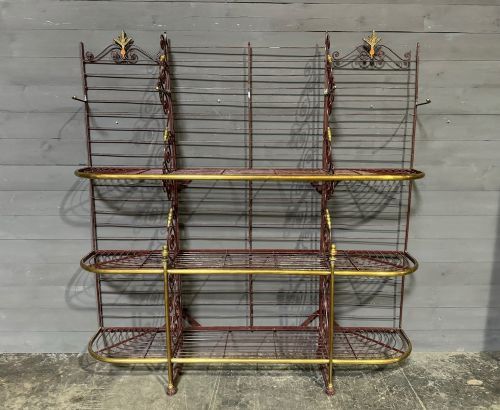
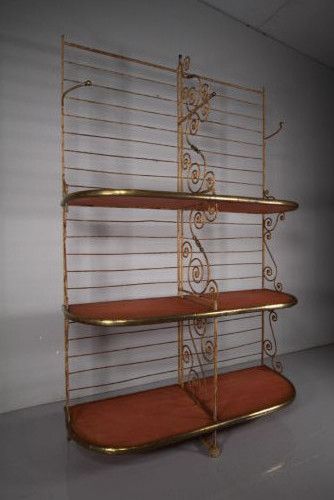
An industrial display unit encompasses robust metal shelving and storage pieces originating from commercial and domestic settings across the nineteenth and early twentieth centuries. When searching for an industrial display unit, buyers encounter utilitarian forms designed for hard work, such as French baker's racks, medical cabinets, and shop display stands.
The pieces listed on this page span several distinct periods, including Victorian examples alongside French provincial and Parisian pieces. Forms range from baker's racks and boulangerie shelving to slate shelving and shop display stands.
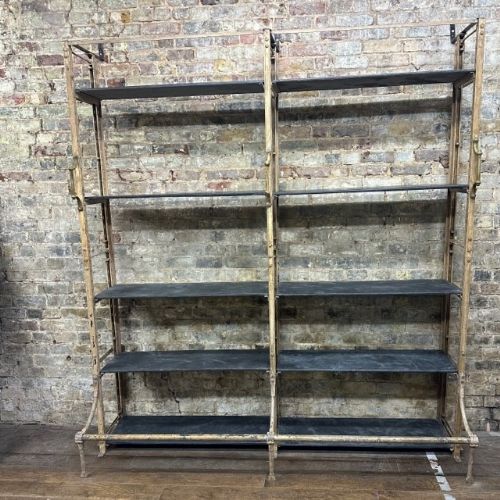
Most examples rely on open iron frames paired with wooden or slate tiers, reflecting their origins in patisseries, bakeries, and retail shops. These units provide substantial open storage while maintaining a transparent silhouette that suits contemporary interiors.
How they were made
Construction relies heavily on durable metals like wrought iron, cast iron, steel, and brass to build weight-bearing frames capable of supporting heavy goods. Blacksmiths and metalworkers shaped scroll-work and structural supports by hand, joining them with rivets and traditional fixings.
Shelving surfaces incorporate dense materials such as slate, pine, and glass, chosen for their practical utility in commercial environments. Painted finishes and patinated metal surfaces bear the marks of decades of active service in bakeries and shops.
Industrial Display Unit Retail Price Guide 2026
Typical asking prices for industrial display unit among the pieces listed under this phrase on Sellingantiques today, from the lower quarter to the upper quarter. They describe what is for sale here now, not the wider market.
Some French baker racks still carry the faint aroma of nineteenth-century flour dust deep within their iron scroll-work.
What varies in quality
Quality in an industrial display unit rests upon the integrity of the metalwork and the originality of its construction. Pieces featuring hand-forged scroll-work and stamped maker marks command greater interest than plain utility frames.
The condition of secondary materials like original slate shelves or antique glass panels alters the character of a piece. Honest surface wear and undisturbed patination distinguish genuine period pieces from later reproductions.
The Industrial Display Unit Glossary
- Boulangerie rack
- A heavy metal shelving unit originally utilised in French bakeries for cooling bread and pastries. These racks typically feature multiple open tiers.
- Wrought iron
- A tough, malleable form of iron easily hammered and bent into decorative scroll-work while hot. It forms the structural skeleton of many nineteenth-century display pieces.
- Patination
- The natural surface sheen and colour acquired by metal, wood, and paint through age and handling. This gradual change indicates authentic period use.
- Scroll-work
- Ornamental curving metalwork shaped into spirals or scrolls. Makers applied this technique to soften the rigid utility of iron frames.
Industrial Display Unit: Frequently Asked Questions
What is an industrial display unit?
An industrial display unit is a sturdy storage piece originally built for commercial use in shops, bakeries, and medical environments. These units typically combine metal frames with shelves made from wood, slate, or glass.
Today, buyers use them in homes to display books, tableware, and decorative objects while adding historic character to a room.
How were baker racks used originally?
Original baker racks served a purely functional purpose in European bakeries and patisseries. Bakers used the open metal tiers to cool freshly baked bread and loaves.
Because they needed to hold heavy trays of food day after day, makers constructed them from durable wrought iron and sturdy timber.
How do I date an antique display unit?
Dating these pieces involves examining the manufacturing techniques, materials, and fasteners used in the frame. Nineteenth-century examples often feature hand-forged wrought iron, scroll-work, and heavy slate or pine boards.
Later twentieth-century pieces tend to utilise welded steel tubing and simpler industrial designs found in medical cabinets and office storage.
Can these units support heavy items?
These units were originally engineered to carry heavy loads of bread, medical supplies, or retail goods. Their iron and steel frames provide exceptional structural strength.
When placed in a home, they easily support books, heavy ceramics, and kitchen equipment on their sturdy shelves.