

Indian Inlay Furniture
Indian inlay furniture comprises intricate tables, chests, and mirrors crafted from hardwoods and detailed with bone, brass, or mother of pearl.
Indian Inlay Furniture
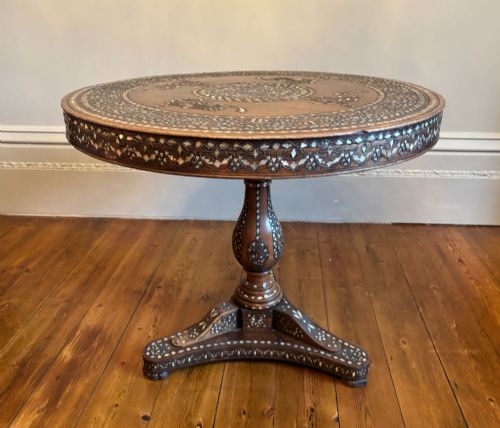
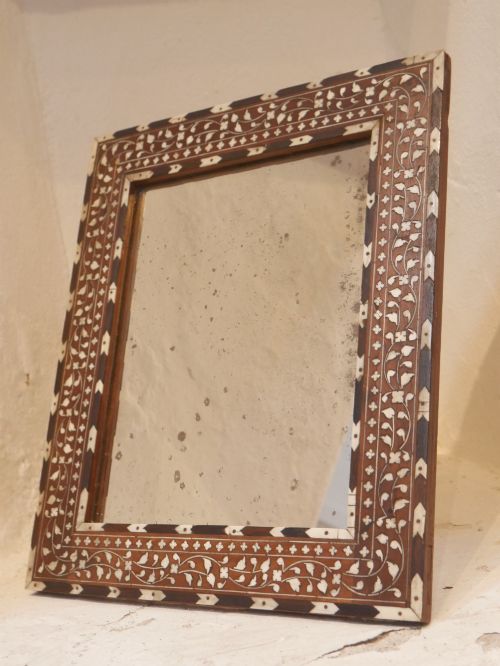
Indian inlay furniture brings together decorative tables, chests, and wall mirrors created across the nineteenth and early twentieth centuries. These pieces reflect diverse regional traditions, including Anglo-Indian and Moorish styles.
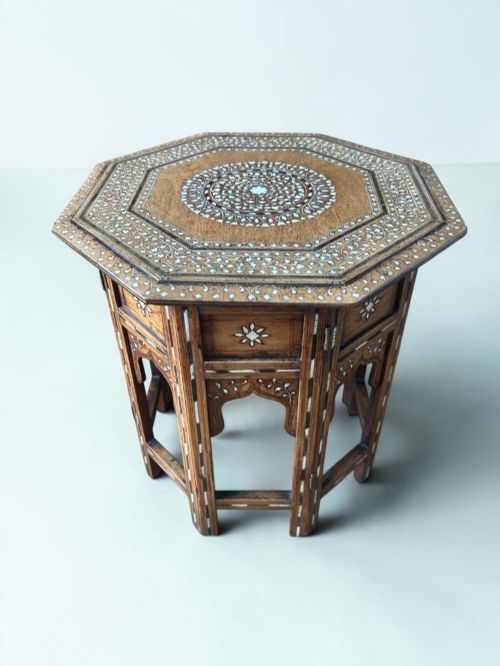
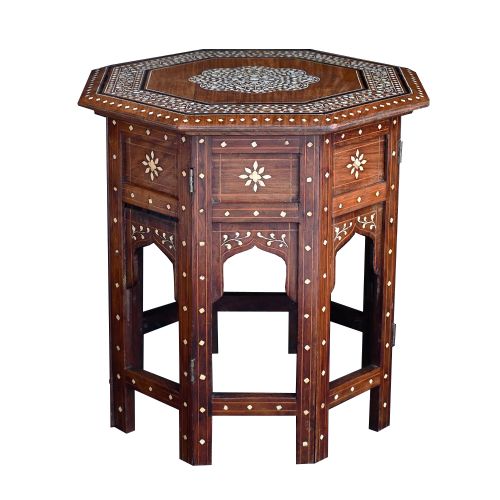
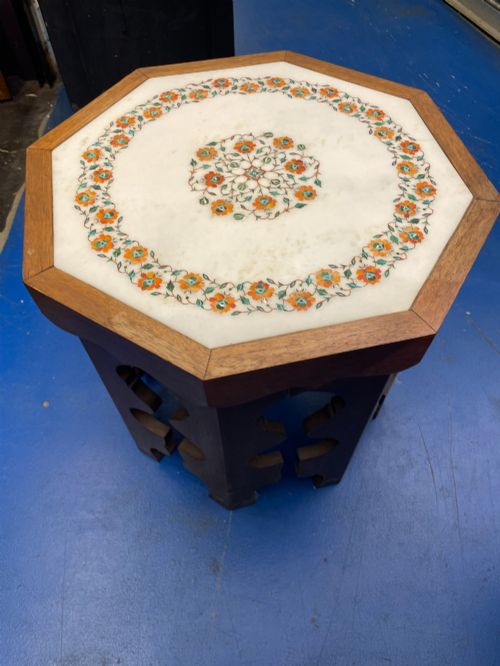
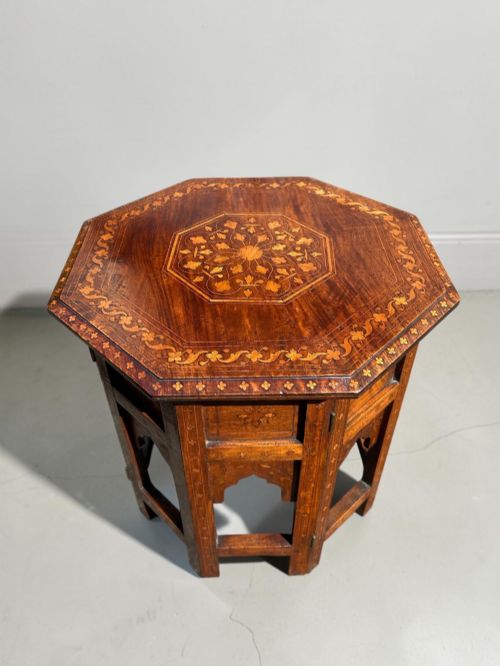
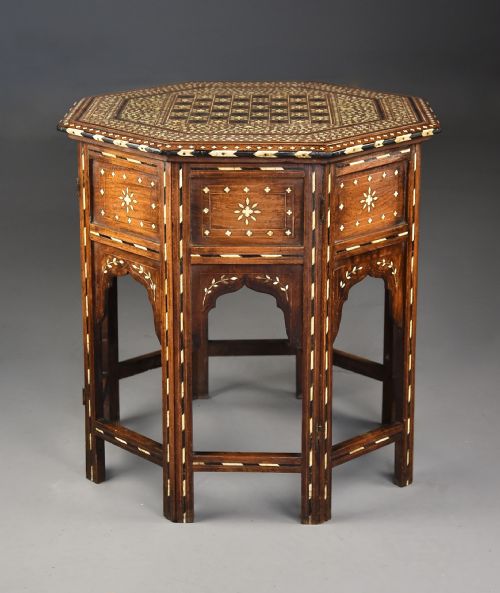
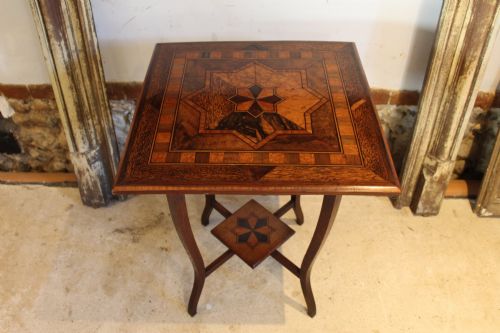
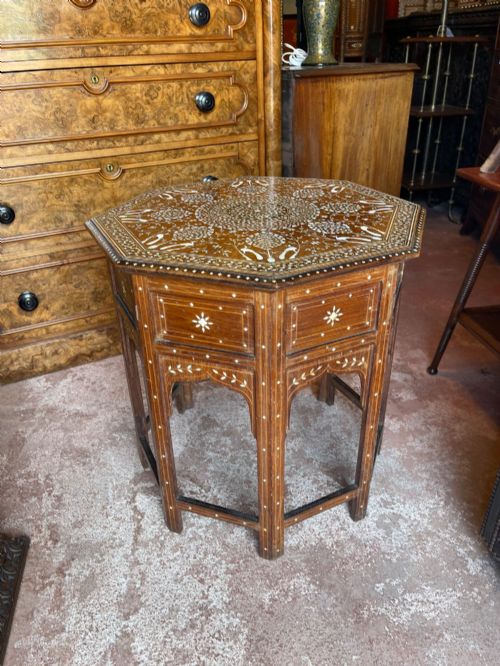
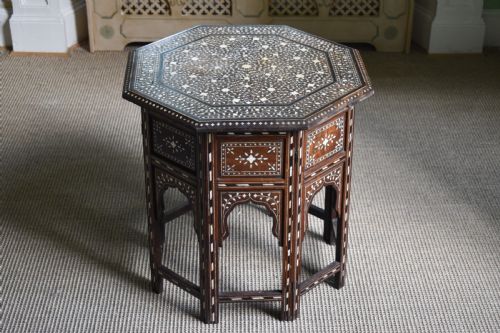
Octagonal and square occasional tables dominate this selection, frequently associated with the Hoshiarpur region. Buyers regularly encounter hardwood pieces detailed with geometric and floral patterns.
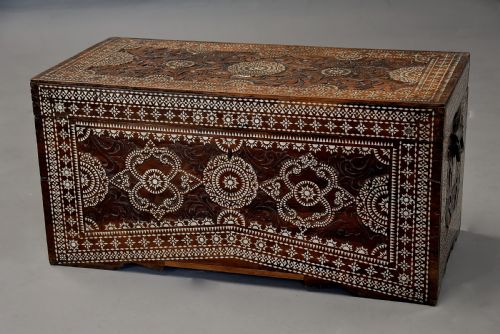
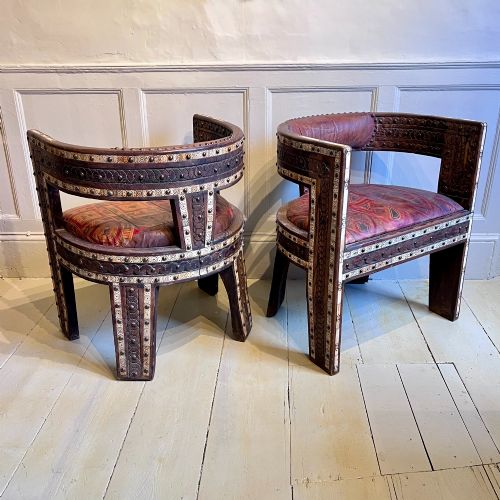
Larger forms such as centre tables, storage chests, and armchairs appear alongside smaller lamp tables and collector chests. Many items combine British domestic furniture forms with intricate South Asian surface decoration.
Assessing the work
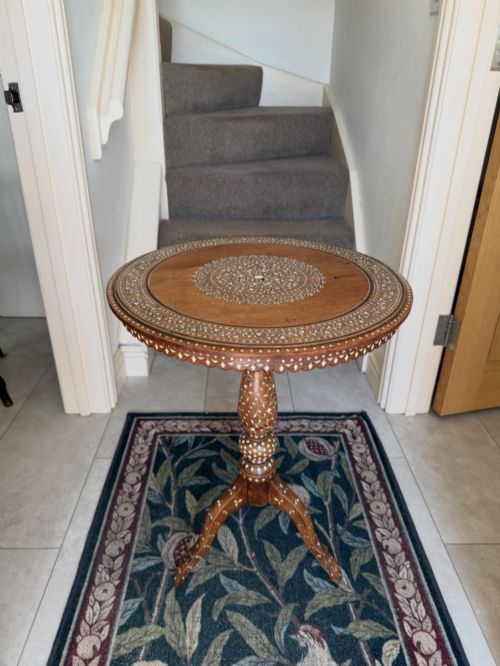
Quality rests upon the density and precision of the surface pattern. Finer examples display tightly fitted bone or mother of pearl segments with minimal gaps and crisp carving in the surrounding wood.
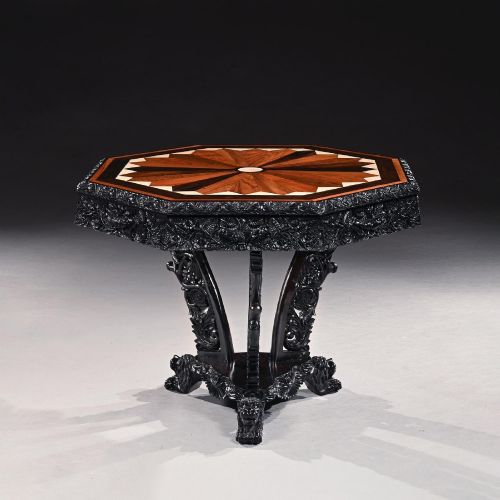
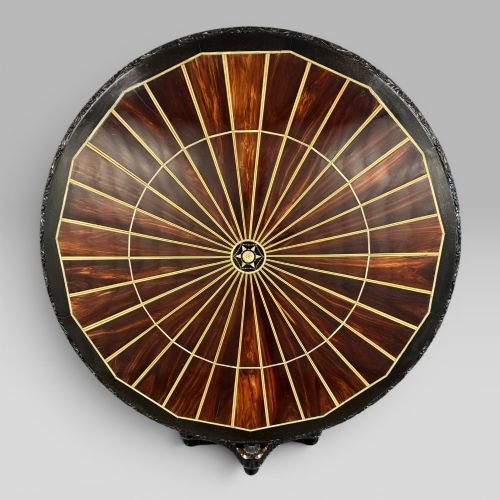
Structural stability distinguishes better construction, particularly in octagonal tables where leg joints meet the top. The variety of timber used, from standard hardwood to exotic ebony or calamander, marks the distinction between standard production and exceptional workmanship.
Indian Inlay Furniture Retail Price Guide 2026
Typical asking prices for indian inlay furniture among the pieces listed under this phrase on Sellingantiques today, from the lower quarter to the upper quarter. They describe what is for sale here now, not the wider market.
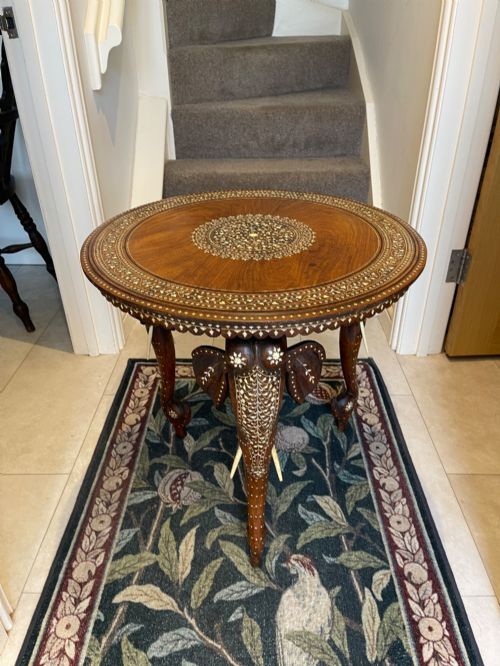
Elephant motifs appear on several occasional tables, featuring carved trunks that serve as structural tripod supports.
The Indian Inlay Furniture Glossary
- Hoshiarpur
- A district in Punjab known for producing wooden tables and furniture decorated with intricate bone and brass inlay.
- Anglo-Indian
- A descriptive term for nineteenth-century furniture made in India for British colonial residents, combining local craftsmanship with European forms.
- Specimen wood
- Furniture constructed using multiple contrasting decorative timbers, often arranged in geometric patterns or marquetry panels.
- Moorish style
- A design influence featuring Islamic geometric motifs, cusped arches, and dense surface carving found on Victorian and Edwardian tables and chairs.
- Damchiya
- A traditional carved wooden storage cabinet or dowry chest originating from western India.
Indian Inlay Furniture: Frequently Asked Questions
What is Indian inlay furniture?
Indian inlay furniture consists of tables, chairs, and chests produced primarily during the nineteenth and early twentieth centuries using native hardwoods decorated with bone, brass, or mother of pearl.
These pieces range from small occasional tables to large storage chests, reflecting both traditional South Asian motifs and British colonial taste.
Where were these pieces made?
Production centred on specific regions renowned for woodworking, notably Hoshiarpur in the Punjab, alongside workshops in Ceylon and other colonial centres.
Local artisans adapted indigenous carving and inlay techniques to create items suitable for both local use and export to Britain.
How do I care for inlaid wood?
Keep inlaid items away from direct heat sources and strong sunlight to prevent the hardwood from drying and shrinking, which can loosen the bone or metal elements.
Dust surfaces gently with a soft cloth and avoid liquid polishes that might seep beneath the delicate inlay work.
What timber was used?
Workshops utilised dense regional hardwoods, including teak, rosewood, ebony, and padouk, which provided a stable base for detailed carving.
Contrasting timbers like satinwood and calamander also appear in specific regional pieces alongside imported pine or secondary woods used for internal structures.